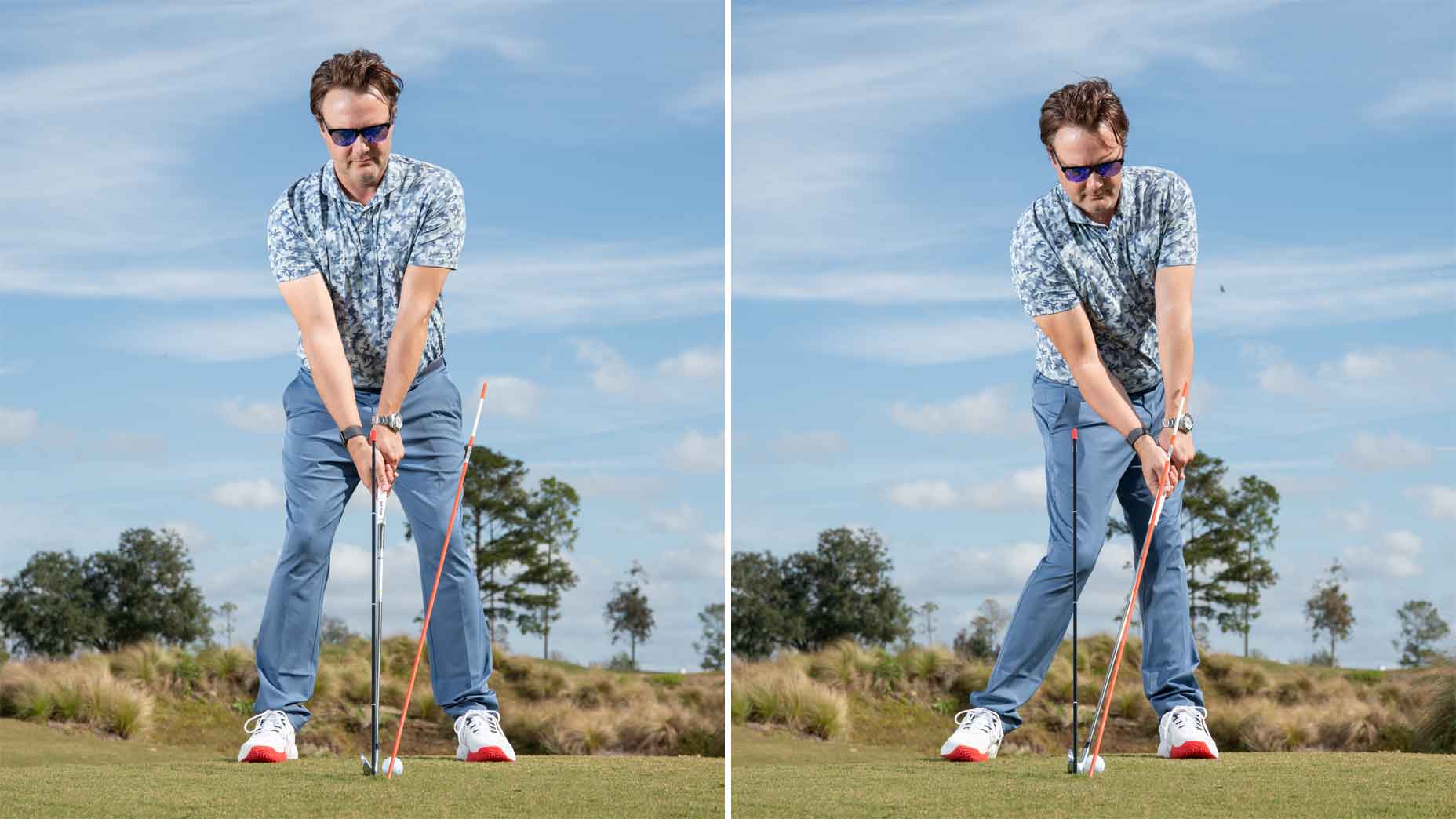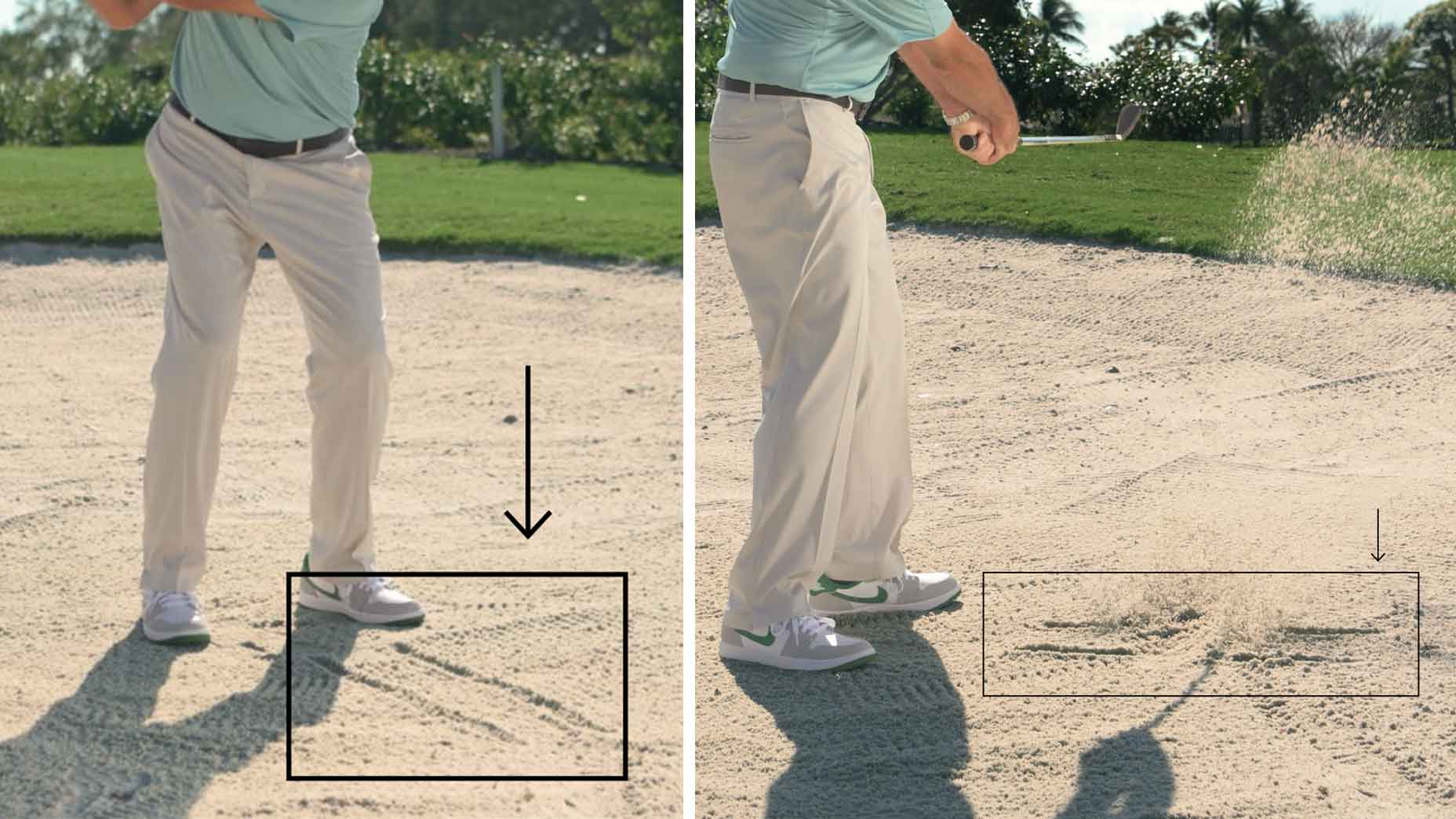
Becoming a great bunker player requires sound technique and a solid understanding of how different adjustments affect your shot outcome. Let’s start with the fundamentals and then explore the key factors that influence distance control in the sand.
Bunker shot basics
To execute a successful bunker shot, you need to use a club with loft and bounce — typically a lob wedge, sand wedge or gap wedge.
Position the ball slightly forward in your stance. This helps ensure that the club enters the sand before the ball and stays beneath it through impact. Your swing should be larger than a standard chip or pitch, with the intention of “splashing” the sand out of the bunker and onto the green. Once you’re able to do this consistently, the next step is learning how to control distance.
5 keys for distance control from the bunker
1. Club selection
One of the simplest ways to control distance is by changing your club. The more lofted the club, the higher and shorter the shot will travel.
Lob wedge: Produces the highest trajectory and shortest distance.
Sand wedge: Slightly lower flight with more distance than the lob wedge.
Gap wedge: Flies even lower and farther, often with more roll after landing.
2. Open clubface — or not?
Opening the clubface adds loft and bounce, allowing the club to glide through the sand more easily. However, it also makes the ball fly higher and land shorter.
There are times when an open face is necessary — particularly for very short or soft shots — but if you need more distance, keeping the face more square may be a better option. Always consider your total distance requirement when deciding how much to open the face.
3. Swing pace
Most greenside bunker shots require a full or nearly full swing, but the pace of that swing also matters. A smoother swing with less acceleration results in a shorter shot. A faster, more aggressive swing propels more sand (and the ball) farther. Adjust your swing speed with intention, depending on the distance you want to cover.
4. Backswing path
Many bunker techniques are taught with high clubhead speed in mind, but not all players generate that speed easily. If you’re struggling to take enough sand or to get the ball out with sufficient distance, consider adjusting your backswing path. A more vertical backswing (straight back and up) tends to produce a steeper angle, more loft, more spin, and less distance. A more rounded backswing (similar to your full swing) creates a shallower approach, resulting in a lower flight and more roll — ideal for covering longer bunker shots.
5. Release pattern
The way you release the club through impact influences both trajectory and distance. A full-swing release (less wrist action, more body turn) keeps the clubface less lofted, sending the ball farther. A pitch-style release (letting the clubhead pass the hands) increases loft and bounce, which produces higher, softer shots with more spin and less distance.
Final thoughts
Effective bunker play comes down to understanding what adjustments suit your swing speed, technique, and the shot you’re facing. Whether you’re choosing a different club, adjusting your face angle, modifying your swing path, or tweaking your release, make each change with purpose — based on the distance and trajectory required.