When I moved to Wisconsin eight years ago to work for the Green Bay Packers, I didn’t know much about the Badger state. I’d never seen a snow plow in action and had no clue what a Friday Fish Fry was. I’d never been inside a Festival Foods nor had I tasted a Culver’s ButterBurger. Worst of all, I didn’t realize just how much great golf the state boasted.
Since leaving Wisconsin, I still kick myself for not taking advantage of the abundance of great golf the state has to offer. Luckily, I’ve been able travel back to the midwest in recent years — and I’ve made sure to bring my sticks in an effort to explore all the great golf Wisconsin has to offer.
This summer, my friend group decided to take our annual buddies’ trip to Milwaukee to explore some of the great golf in the area. Check out below for a rundown of the three courses we played, at three distinct price points.
Day 1: Brown Deer Park
Date: July 31, 2026
Tee time: 1:06 p.m.
Green fee: $81
Brown Deer Park is a humble muni located on the north side of Milwaukee — but this isn’t just any muni. For 15 years, the course played host to the Greater Milwaukee Open on the PGA Tour and, famously, was the host of Tiger Woods’ professional debut in 1996.
When you walk into the clubhouse, you are quickly reminded of this fact with a hallway mural dedicated to the tournament’s history featured between the pro shop and the grill. There aren’t a ton of munis that allow you to walk the same fairways that Tiger did, but Brown Deer Park is one.

We played the course from the tips, and from the back box, it offered quite the challenge. There is more elevation change than you’d expect from a suburban muni, and the greens have more movement than meets the eye. And with trees squeezing the corridors off just about every tee box, you’d better have a reliable drive in the bag. If you don’t you can expect to be in for a long day.
Overall, it’s tough to beat the value that Brown Deer Park offers. For less than $100, you get a well-manicured course that is a part of golf history. You aren’t gonna find that combination at very many places.
Day 2: Lac La Belle
Date: Aug. 1, 2026
Tee time: 11:04 a.m.
Green fee: $170
Day 2 of our boondoggle was supposed to feature a round at The Club at Lac La Belle, located in the outer suburbs of Milwaukee. However, when after a massive rainstorm parked itself over the area for 24 hours, the round got rained out.
Luckily (for me, at least), this course was the lone round on our itinerary that I’d played before. So although my pals did not get to experience this delightful design, I can still offer some insights.
When I first played Lac La Belle last summer after the U.S. Women’s Open, I was stunned. Here in the middle of a cast of heavy hitting courses like Whistling Straits and Lawsonia Links sat one of the most fun courses I’d ever played — and I had no idea it even existed.
I won’t get too deep into the history of the club (if you’re curious about that, check out this writeup from The Fried Egg), but suffice to say, its roots in the game run deep. But even if you aren’t a history buff, this place is a ton of fun. With massive greens that feature some insane slopes, you can go for some fun hero shots. Or, if you’re trying to post a score, you can use the slopes to your advantage and access some tough pin placements.
New this year on property is a nine-hole short course called Uncle Henry’s Backyard, and there’s a putting course evocative of Pinehurst’s Thistle Du just outside the clubhouse, too. With all the fun to be had at Lac La Belle spoiled by the rain, I was incredibly bummed to be rained out — but it does give me something to look forward to next time I make it out that way.
Day 3: Erin Hills
Date: Aug. 2, 2026
Tee time: 10:24 a.m.
Green fee: $495
The final day of our trip featured the crown jewel of the weekend — Erin Hills. The course is about 45 minutes west of Milwaukee in Hartford, Wis. and has played host to two major championships and three other USGA amateur events, with five others on the docket over the next 13 years.
As soon as you step on property, you understand why so many championships come here. Not only is the golf course a challenge for the best players in the world, the property is big enough to handle any size buildout you could think of.
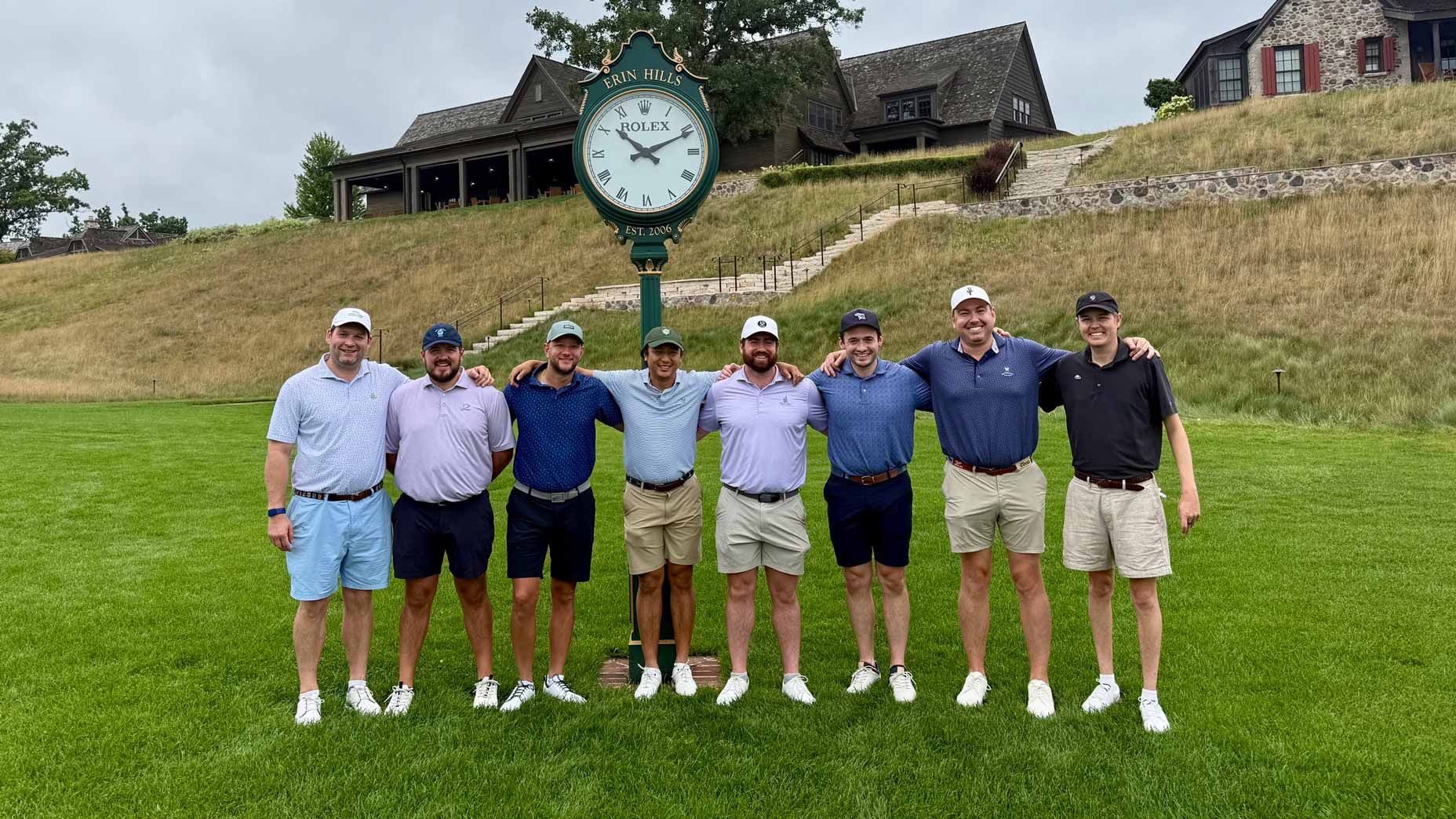
I was on site last summer for the U.S. Women’s Open, so I had an idea on the scale of the property. But until you are in the fairways hitting the shots, it’s difficult to understand just how serious this golf course can be. It felt like every fairway had a “speed slot” that propelled your ball toward the green, but if you miss those spots, it leaves some lengthy approaches into the greens. Speaking of the putting surfaces, while they may be large, that doesn’t always work in your favor. Sure, you may bolster your GIR stats, but expect to three-putt your fair share of times.
Heading into the round, it was recommended we take caddies — and after playing, I’m glad I followed that advice. The walk is tough even without a bag, but more crucially, there are numerous blind tee shots that have you shipping the ball over massive hills to parts unknown. I shudder thinking of how many golf balls we would’ve lost in the fescue without the help of our loopers.