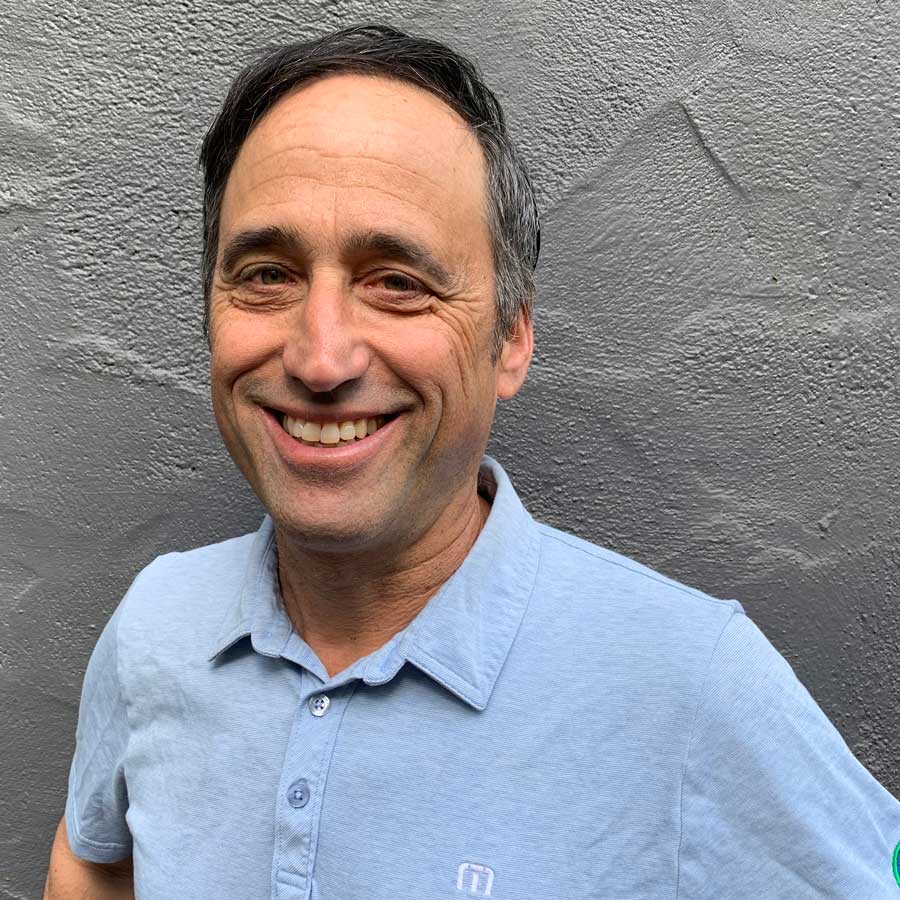
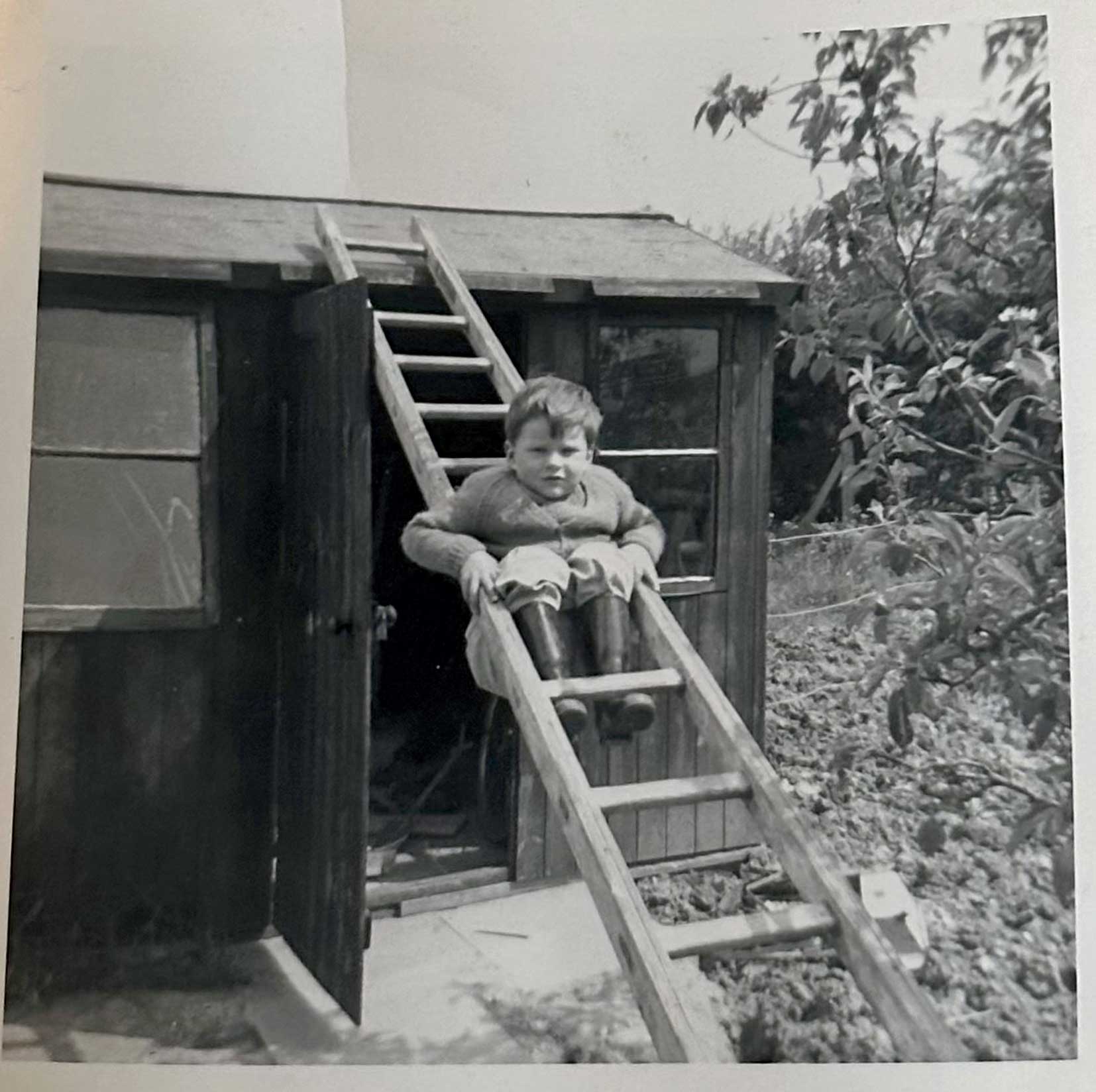
Sir Nick Faldo wasn’t born of aristocratic blood. The knighted World Golf Hall of Famer was raised in public housing, north of London, the only child of an accountant and a dressmaker whose acquisition of a color TV counted as a luxury purchase — one that altered the course of their son’s life.
It was on that screen that a then-13-year-old Faldo watched Jack Nicklaus compete in the 1971 Masters, against a dazzling backdrop of dogwoods and azaleas. It was his first glimpse of golf, and the last time he wondered what he wanted for his future.
“I always figured I would work an outdoor job, but I thought it would be something like landscaping or forestry,” he says.
With a hodgepodge set of clubs, guidance from a local pro and tunnel vision that would become his trademark, Faldo morphed into a teenage range rat. At 16, he quit school to make room for his obsession. At 19, he turned pro, setting off on a path to Ryder Cup stardom, six major titles, nearly 50 tournament wins around the globe, and a 97-week run as the top-ranked golfer in the world — with plenty of tumult along way.
In 1985, almost a decade into his professional career, Faldo all but started over, retooling his swing under David Leadbetter. Two painstaking years later, he emerged with a more resilient game, and the same single-mindedness that made him easy pickings for the British tabloids. “Arrogant” and “prickly” were two of the kinder terms that Fleet Street had for Faldo, who often hurt his own cause by playing the part.
“If I could do it over, I might take a different approach to public relations,” says Faldo, whose marital troubles became headline fodder, too. “But at the time, all that intensity and focus, everything I did — that’s what I felt I needed to be able to compete at the highest level.”
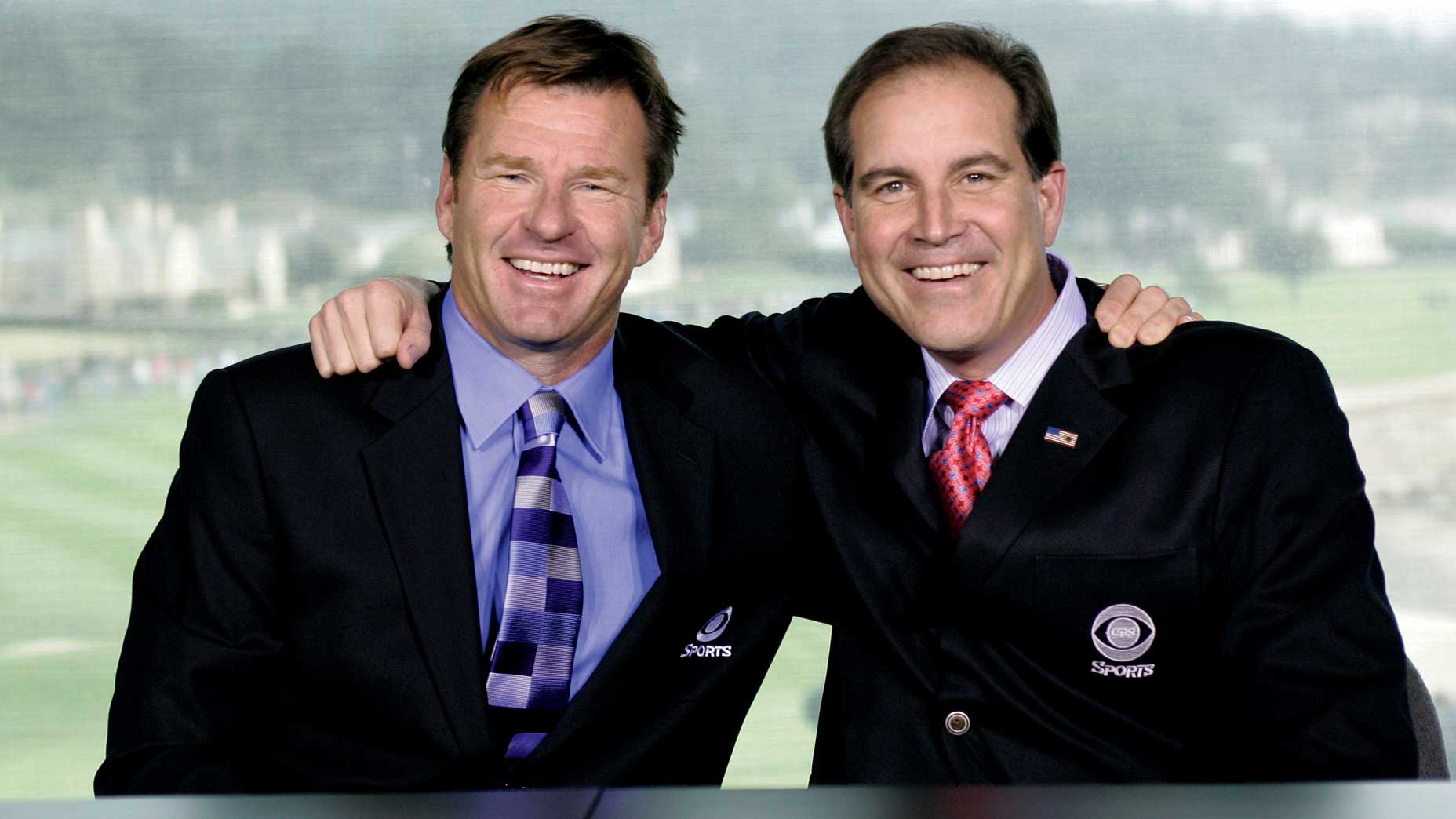
Given his testy rapport with the press, many saw it as ironic, in 2006, when Faldo became a member of the media himself, signing on as the lead golf analyst for CBS. The new role, though, revealed Faldo as everything his reputation wasn’t: funny, incisive, self-effacing. In their farewell broadcast, after 16 years in the tower together, play-by-play man Jim Nantz praised his partner not once but twice for having been “the best in the world.”
Retiring for a second time did not mean retreating from public life. In his third act, Faldo remains busy as a course designer, a brand ambassador and a driving force behind the Faldo Series, a competitive circuit for junior golfers. He still picks his spots as a commentator, too.
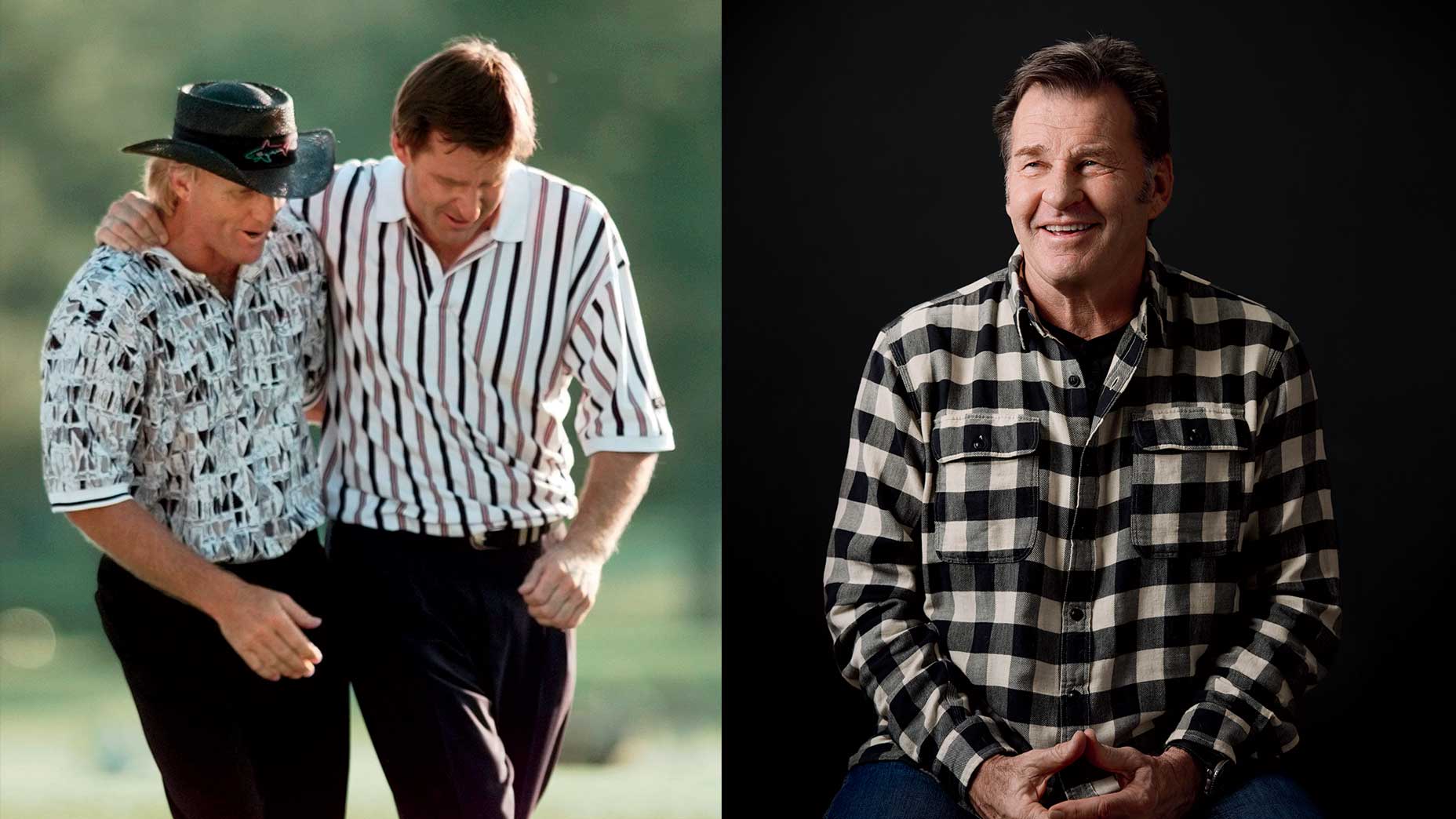
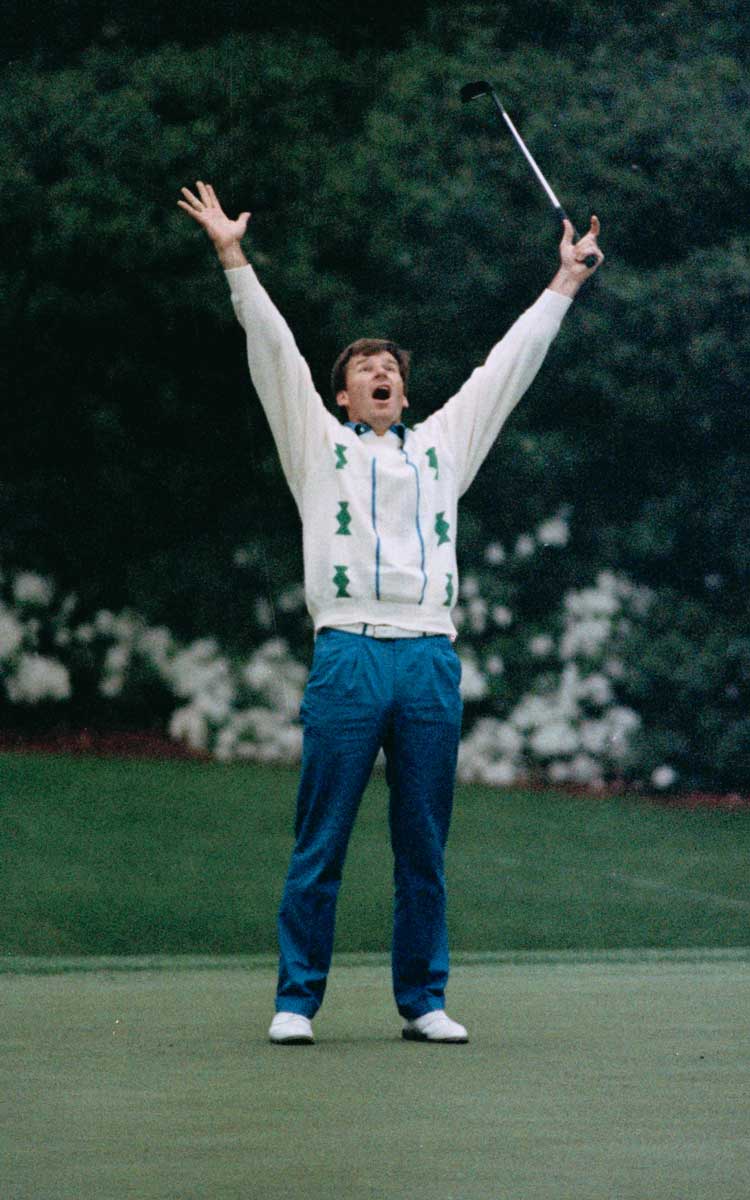
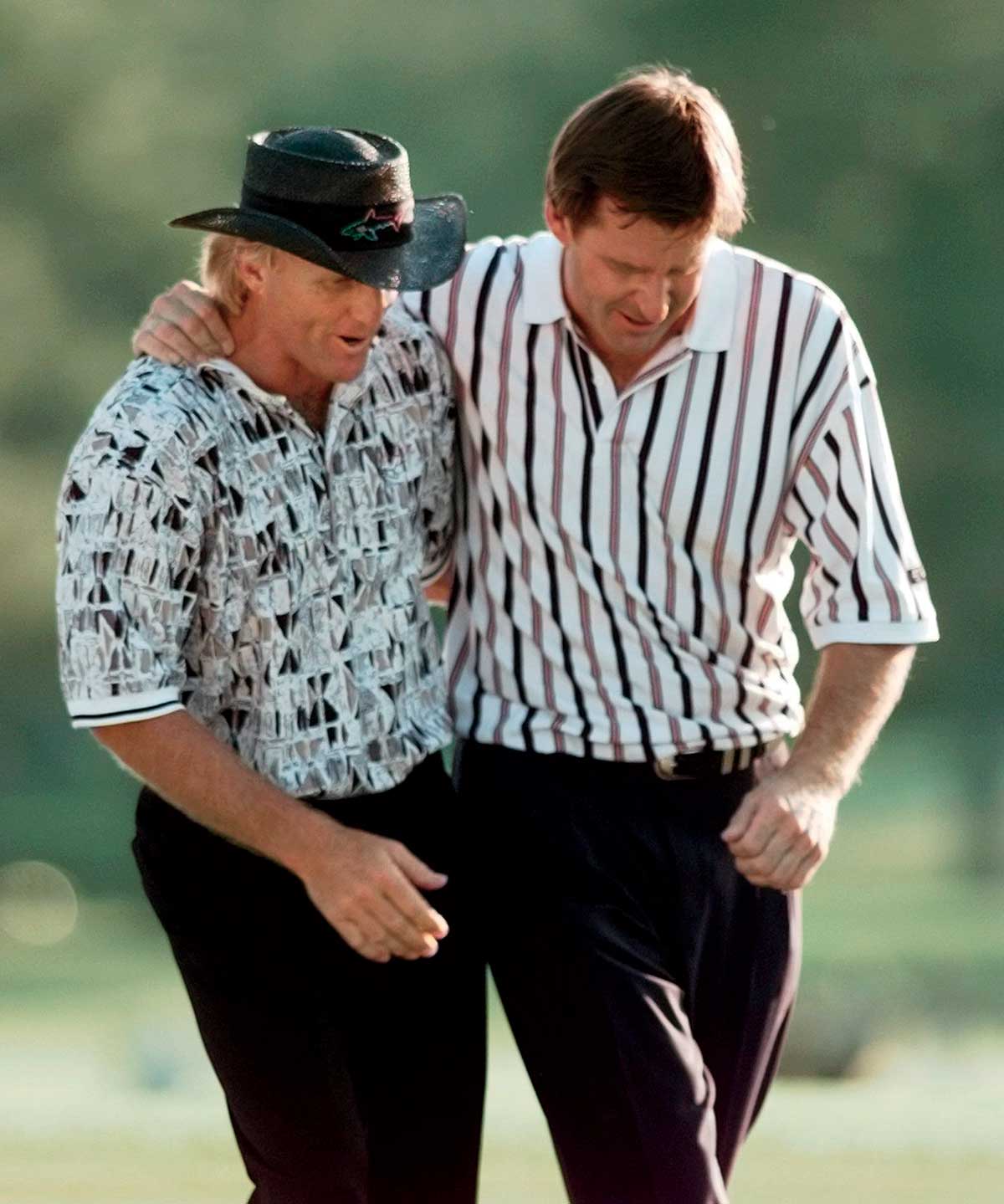
As he did last spring, Sir Nick will be sitting in this year with Sky Sports at the Masters, a tournament he won three times, none more memorably than in 1996, when he hunted down Greg Norman, who’d entered the final round with a six-stroke lead.
A cold-eyed killer then, Faldo, 66, looked vulnerable on a recent weekday morning, as he hobbled around a sprawling rental house in Scottsdale (he and wife, Lindsay, had escaped their snowy home in Montana for the desert sun), nursing a bum hip that has since been surgically replaced. Smacking shots is harder than it used to be for him. But talking shop comes easy. With another trip down Magnolia Lane awaiting, GOLF sat with Faldo to ask about his favorite Masters memories, his early reputation and later reinvention, and whether he ever rings up the Shark to discuss the current state of golf.
JS: Did you think the picture painted of you was inaccurate?
NF: I think I suffered from the media wanting a good guy and a bad guy. In my era, they wanted Sandy Lyle to be the good guy, and me to be the bad guy. But there are two sides to a story. You can either make something look good or something look bad. And it felt like they were leaning toward making me look bad. And there are plenty of silly examples.
JS: Such as?
NF: One year, I walked off the green at the PGA Championship and went to the press tent, and I must have signed 50 autographs in those 50 yards. As it got to the door and it was closing, there’s one kid going, ‘Please, please, please.’ And he was the ‘no.’ And that was the story. Faldo didn’t sign. It sounds harmless. But they build that up. And people judge you on it.
JS: You had a reputation of being icy and aloof. But it seems like you cared a lot what people said about you.
NF: Well, you do. I think most people want to be liked, or loved, or respected. Whatever level it is.
JS: You also really wanted to be the best, and so you remade your swing. That was a tough transition. Did you ever question what you were doing?
NF: Never. Not even when I couldn’t see the end of the tunnel. I was constantly thinking about my swing. Constantly working. And playing badly. Getting walloped in the press. I lost pretty much all my sponsors except for Pringles. It wasn’t pretty. But for me, it was really just sheer determination to come out of the other end.
JS: Of all the big wins that came on the other side, the one that stands out for most fans has to be the ’96 Masters. How often do you think about that?
NF: I get reminded about it all the time. If I go through an airport, literally every time someone will come up to me and say, ‘You and Greg! It’s why I took up golf.’ Or, ‘great going, mate. I just wanted to say that.’ Or I’m sitting in a meeting with chairman or even government officials, and they’ll say, before we get started, tell us about ’96.’
JS: You ever get tired of it?
NF: Are you kidding? It’s an honor. I’m also fortunate. Thankfully, I’m telling good side of the story rather than the other side.
JS: I remember a newspaper account of that final round describing Norman as having faltered —and this line still sticks with me — “under Faldo’s pitiless pursuit.” Was that your mindset? A kind of ruthlessness?
NF: I probably had a bit more than pity in me. I’ve said this before, but the message you always try to send the other guy was, as we say in Britain, ‘I’m all right, Jack. I can handle this.’ Inside, you’re churning, and you are running doubts in your mind. But if you stand there and look confident and chin up, the other person looks at you and thinks, ‘Bloody hell. He’s all right. He can handle it.’ So that’s what I was probably going for. But I wouldn’t say it was a conscious effort.
JS: When you hugged Norman at the end, some people said that helped humanize you in the public eye. Do you think that’s true?
NF: What I can say is that it was totally genuine. I am very lucky. I have lost majors. But I have no scars. I don’t sit there and think, ‘Oh, f—k. I screwed up the U.S. Open.’ I haven’t blown a major. I got close. I nearly blew the Open Championship in ‘92. I know the knife’s edge. So, I genuinely felt for (Norman). So, I said, ‘I don’t know what to say, mate. But I feel for you, and I’ll give you a hug.’ And it was 100-percent genuine, because I know I would have been scarred from that.
JS: Ten years later, you played in your last Masters. How did you know it was time to stop?
NF: The course had gotten so long. I’m pretty sure it was ’06. I had my son the bag. And I stood on top of the hill on the 9th hole, and it was damp and a bit cold and I’ve got three-iron in my hand coming into the green. And I was like, ‘Let’s see. I’ve got the ball below my feet. I can’t hit a fade over those bunkers down the left because they’re as big as houses. There’s no way I can hit the ball on the green. So, when CBS said, ‘If you’re coming to the tower, you’ve got to stop playing golf, I said, ‘Great. Thank you very much. I’d have made the decision myself.’
JS: Without the TV offer, you really would have stopped?
NF: I don’t know. I think you battle on. But it was a tough period. I felt like I was losing my game at the end the ‘90s. And you’ve gone four or five years not playing well. And that didn’t suit my mentality. So, when the TV opportunity came along, I said, ‘Yeah. I can do that.’ I made myself one rule: I’m not going to sit in that TV tower and wish I was playing. And that worked. It actually turned out to be the opposite, where I’d be watching a champion come down the stretch and how they pieced it all together, and I thought, ‘That was cool. I could do that.’ And instead of regret, what you find is gratitude for what you’ve had.
JS: We all learn through mistakes. Did you make any big blunders in the booth that taught you any important lessons?
NF: TV is hilarious. You sit down and they go. ‘That’s your on key. That’s the producer. That’s your cough button. Off you go.’
JS: No training?
NF: That was it. But it was okay, probably thanks to my dad who told me, ‘Stick to what you know.’ I know nothing about politics. I know nothing about religion. So, I thought, just stick to golf. And that’s all I ever did.
JS: Ben Hogan once asked to meet you because he said you were the only pro he ever saw who reminded him of himself. Have you seen anyone who reminds you of you?
NF: I remember sitting with (Jim) Nantz and talking about a player and saying, ‘He’s got a little of this and a little of that.’ And Nantz looked at me and said, ‘Remind you of anyone?’ And I knew what he was thinking.
JS: Who was the player?
NF: For the life of me, I can’t remember.
JS: That itself seems telling.
NF: I’ll let you know if it comes to me. But bottom line is I think a lot of golfers in the era after me thought, I’ll just waltz out there and win some majors. But they’re not quite as easy as you think, you know?
JS: Did you feel broadcasting finally gave people a chance to see the real you?
NF: I think so. You’ve got to try to have fun and try to entertain. Or at least entertain yourself. Some people thought it was false because I’d been so serious on the course. But I did that because it’s what I thought was best for me. It wasn’t like it is in the game today. I walked through the locker room when I was doing TV, and the four leaders were having lunch together. And I came back on TV, and I’m like, ‘I’m in shock. Do you think I ever sat with Seve and Greg?’ Never. You had to win to change your lifestyle.
JS: Nowadays, it seems like all we hear about on Tour is money.
NF: In all my years on TV, and we were not allowed to mention prize money. I might have said, ‘Wow, the FedEx Cup is worth $10 million.’ But you never said, This putt’s for a million dollars. I cannot think of five times when I mentioned it. But now money is all anybody talks about. And it’s gone to this new level where someone like (Sergio) Garcia says, ‘We’re finally getting paid what we’re worth.’ Hang on a minute, mate. Not insulting anybody’s intelligence, but I don’t think there’s more than 10 percent of guys out there who could make a really good wage if they weren’t playing golf. I won five times one year for $100,000, total. Today, all you’ve got to do is arrive on the practice green and tip your balls out, play nicely. Sure. You’ve got to play nicely. Pat a few kids on the head. You might not even have to do an interview. Might not get seen on TV. You can finish 12th and get a quarter of a million dollars.
JS: Is all that money a bad sign for the game?
NF: I think it’s definitely gotten out of hand. It doesn’t represent where golf is. Because golf fluctuates anywhere between 10th and 13th most popular sport in the world. It’s about fifth or sixth most popular sport in America. And we are struggling right now with TV ratings. Look at (the Farmers Insurance Open). It was less than 1.5 million viewers. Down 27 percent from the year before. All the people I’ve talked to, more have switched off in their minds to watching golf than have switched on.