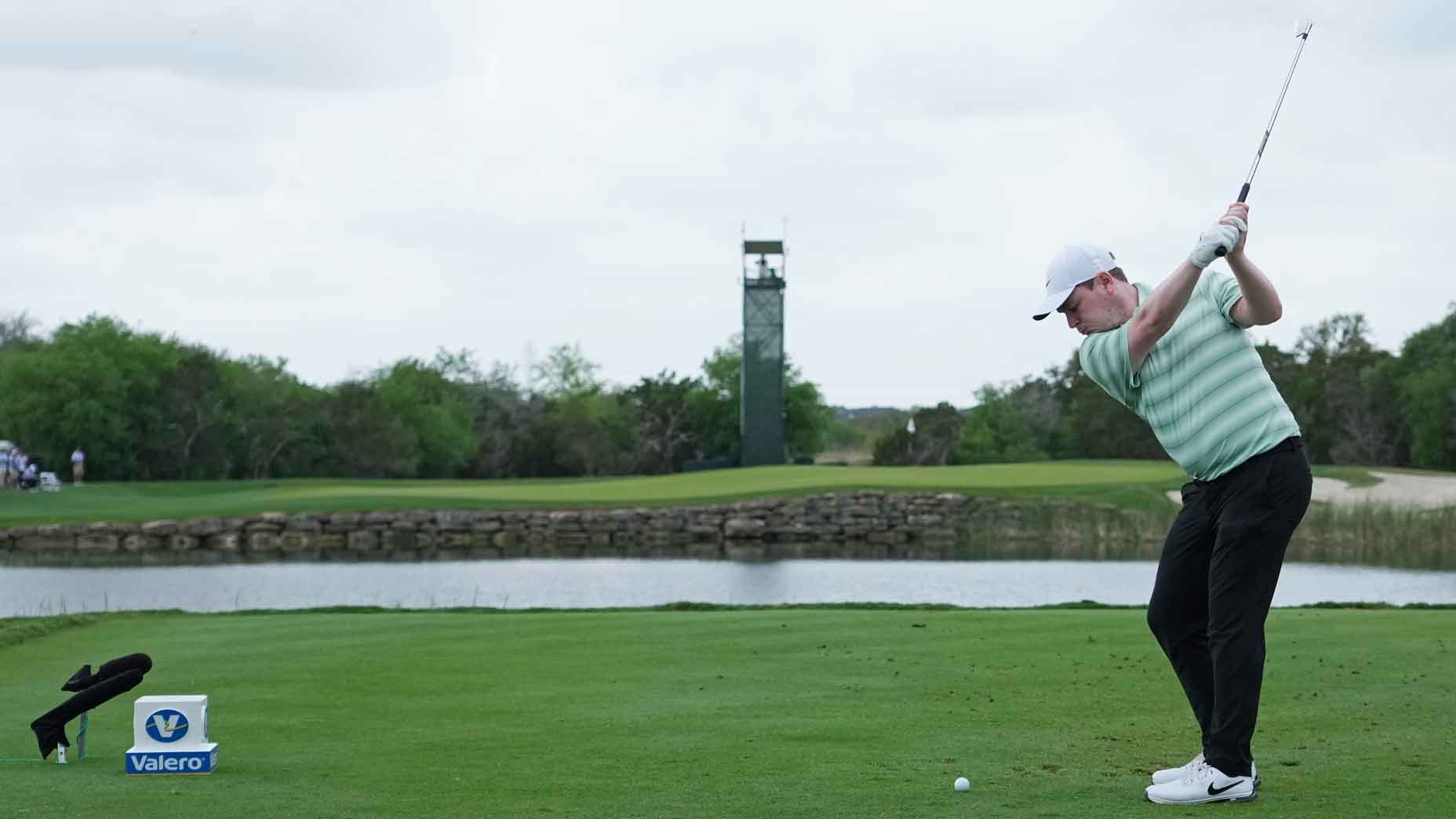
Welcome to Bag Spy, a GOLF series devoted to understanding the crucial equipment choices that define a player’s bag. With the help of players and/or their expert fitters, we dig deep beyond the photos to examine setups, specs and the thinking behind them. In this installment, GOLF Associate Equipment Editor Jack Hirsh takes you inside Tony Finau’s bag and new equipment setup for 2026
***
While last week’s feature in this spot, Rickie Fowler, is a certified gear nerd, Tony Finau is the other end of the spectrum.
Ping Tour Rep Dylan Goodwin said Finau is a “man of few words” when it comes to his equipment. When it works, it works and he doesn’t need to question it too much. If it doesn’t, he tries something else.
Ping’s Kenton Oates said the Tour team built Finau a total of just five clubs one season, which was likely the fewest of any player on the Ping staff.
“It maybe puts a little more pressure on us as a staff when he does come in to get it right, because you know he doesn’t want to be testing during the year,” Oates told GOLF. “If he is testing product throughout the year, then it’s probably frustrating to him, since that’s really something he doesn’t want to do. So we just got to make sure that we get everything down at the beginning of the year.”
He prefers to do most of his club work in the offseason.

“He’ll usually come in here two or three times from like November 1 till that first event of the year, whether it be Hawaii or in the desert or wherever he starts up,” Oates said. “But once we get going in the season, he doesn’t make a lot of changes at all.”
That doesn’t stop Finau from having one of the more unique bags on the PGA Tour with his heavy swingweights, huge grips and a new Ping prototype putter. He’s also made a few more tweaks this year and he’s started to see some progress after recording just one top-10 in 2025.
One of those tweaks, switching to Ping Prototype Scottsdale Tec Ally Blue Onset putter, has paid off in a big way. Finau ranked 155th in Strokes Gained: Putting after his first two events but has rallied up to 58th. That’s after finishing 111th in the category last year. He led the field in putting at Pebble Beach during an 18th-place finish.
Keep reading below to dive into one of the more unique setups on the PGA Tour.
Breaking down every club in Tony Finau’s bag
Ball
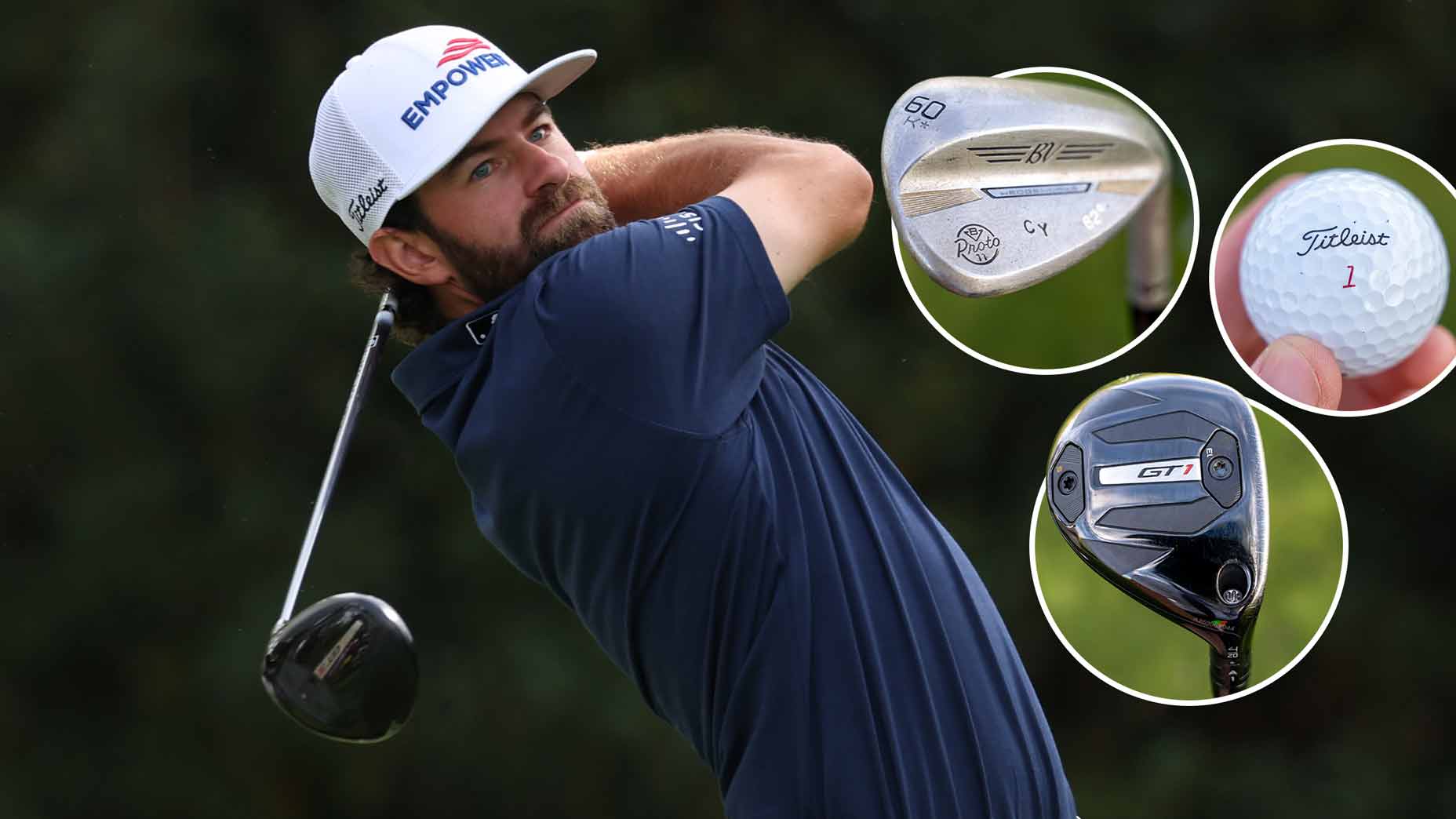
Titleist Pro V1 Left Dot

For Finau, the golf bag starts and ends with golf ball and for much of his professional career, that golf ball has been Titleist’s Pro V1 Left Dot.
Finau is one of the most well-known Left Dot players, which is a Customized Performance Option (CPO) version of the standard Pro V1. Compared to the retail version, the Left Dot is lower flying and lower-spinning, but has the same, softer feel that Pro V1 players prefer.
For an ultra-high spin player like Finau, that’s a perfect recipe.
“I think equipment starts with the golf ball, not with the clubs, not with the woods, not with any other piece of equipment. It starts with the golf ball. I’ve always been a believer in that,” Finau told Titleist. “The Left Dot golf ball is right for me because I’ve always put a lot of spin on the golf ball … and right away, it caught my eye because of the ball flight. I think if you can control your ball flight, you can control the distance. And it’s been such a reliable ball flight for me from the first time that I hit it … I can count on the golf ball in crosswinds, into the wind, downwind. I know how far the golf ball is going to go.”
Finau did experiment with Titleist’s new Pro V1x Double Dot prototype golf ball from last summer until January, but made the switch back to the Left Dot at the American Express.
He also has an interesting tradition of marking his golf balls with his children’s and wife’s initials. He told Titleist he’ll usually start with his son, Sage, and change out depending on how the round is going.
“It’s a cool way to keep my kids involved, and they’re always with me on the golf course,” he said.

Titleist Pro V1 Golf Balls
View Product
Driver

Specs
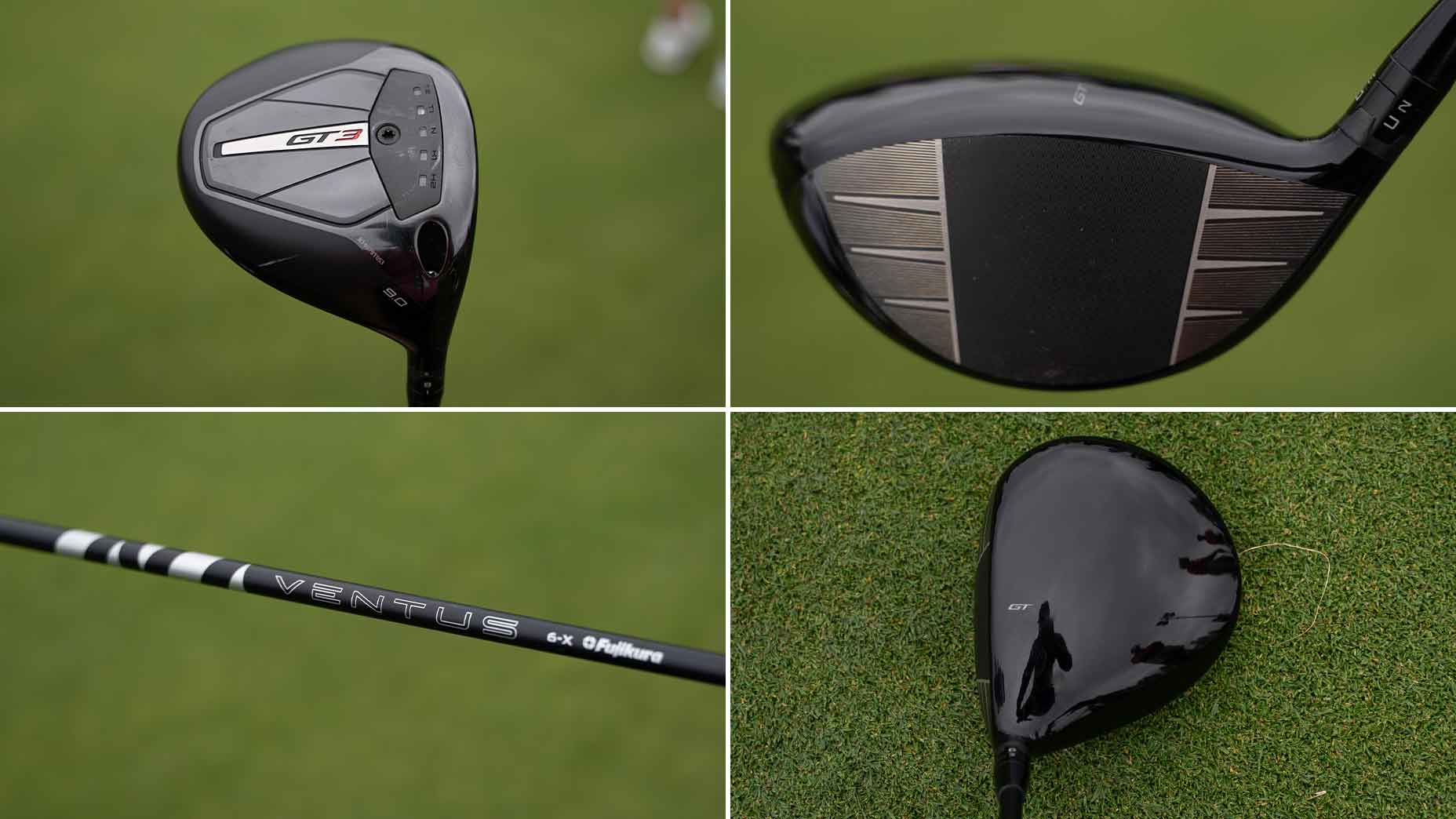
Ping G440 LST
Loft: 9.0˚ @ 7.75˚
Trajectory 2.0 Setting: Big Minus (—)
Shaft: Fujikura Ventus Black Velocore+ 7-X
Length: 45.25″
Tipping: 1″
CG Shifter: 35 g, neutral
Hot Melt: 5 g, toe
Swingweight: D8+
Finau has already made a mid-season tweak, going from a 7.5˚ Ping G440 LST to 9˚ head in the Big Minus setting. Finau is a high-spin player, but with the lower-lofted head, he was seeing his misshits drop to 2200 while good strikes were around 2500.
Those are not atypical numbers on the PGA Tour, but Finau has plenty of speed in the tank, so he values control. While he typically cruises around 180 mph ball speed, Oates describes him as having one of the biggest governors on the PGA Tour.
“If you brought him to the range, in three golf swings, he could have 200 mph of ball speed,” he said.
Because of that range, Finau is more comfortable with the 9˚ head that produces a spin range around 2700 and 2400 on misses to help him stay in control.
That was also the driving factor behind a move to the Fujikura Ventus Black with VeloCore+ last season.
“He wasn’t happy with his driving, and he had started testing a few different shafts, and he ended up liking the stability of the Velo+,” Oates said. “So he went into that at Travelers last year.”
You’ll also notice Finau prefers a rather beefy D8+ swing weight for his driver and that actually carries over to his irons two, with them sitting at D6+. The reason was mainly feel-based and has to do with a change Finau made with his grips a few years ago. We’ll get into that change below, but basically, Finau made his grips lighter, which raised the swingweight.
“He liked that feeling,” Oates said. “Then we walked through kind of what that would look like downrange from a ball-flight standpoint. Obviously, the heavier the clubhead, the easier it is to fade it. It’s a little bit easier to release because you have more mass down there. So he mentally liked that as well.”

PING G440 LST Custom Driver
View Product
ALSO AVAILABLE AT: PGA Tour Superstore
3-wood

Specs
Callaway Paradym Ai-Smoke Triple Diamond T
Loft: 14˚ @ 13˚
Lie: 59˚
Shaft: Mitsubishi Diamana D+ Limited 80 TX
Length: 42.5″
Tipping: 2″
Swingweight: D5
Finau used more shallow-faced 3-woods for much of his career until a few years ago, when he realized he wasn’t using 3-wood off the deck much. That was when he was first drawn to Callaway Triple Diamond T fairway wood shapes and he’s used one since.
“With the height he can hit it and the distance he can hit it, he really likes a deep 3-wood, and that head is just a little bit deeper than anything we had,” Oates said.
Uniquely, the Triple Diamond T Fairway Woods are specifically designed for Jon Rahm, who also prefers a deeper-faced 3-wood, along with a beveled sole to help him get it through the turf. Both Rahm and Finau are still playing the Paradym Ai-Smoke Model that’s now two-seasons old.
Ping has started working on a deeper-faced club for that spot in the bag, their Ping Mini Proto, which debuted at the Sony Open. Finau has been testing it, but at this time, he’s got a very unrelatable problem.
I think the thing that we struggle with there is it might just go a little bit too far right right now,” Oates said. “But we’ll continue to work on that.”
Utility Iron

Specs
Nike Vapor Fly Pro 3-iron
Shaft: Graphite Design Tour AD DI-105 X Hybrid
Probably the most famous club in Finau’s bag and with the return of Brooks Koepka on the PGA Tour, one of just a handful of Nike clubs left in pro golf.
Finau has had this Nike Vapor Fly Pro 3-iron since 2016, his lone year on staff with the Swoosh before they exited the hard goods business. But it actually disappeared from the bag for a few seasons before jumping back in during the 2020 season.
Ping has plenty of options to replace this club, including their current iDi driving iron, which is in the bag of Viktor Hovland, but that club, and many before, might be too forgiving for Finau, Oates said.
“The thing we run into with our crossovers and clubs in that space is they’re a little bit more forgiving and they go a little bit higher, which is great for the everyday player,” Oates said. “Unfortunately, Tony doesn’t really need the extra help with the height.”
Oates isn’t sure how many Vapor Fly Pro heads Finau has left, but he brings in four or five every year to have the specs checked. Safe to say, until he finds a better option, this club isn’t going anywhere.
Irons

Specs
Ping Blueprint T 4-PW
Shafts: KBS $-Taper 130 X
Lofts: 22.25/26/29/32.5/37/41/45
Lies: 61/61.5/62/62.5/63/63.5/64
Length: 36.88″ 7-iron
Swingweight: D6-D7+
This is actually a spot where Finau has done some tinkering.
For nearly his entire career, Finau has played the Nippon Modus3 Tour 120 TX shaft in his irons, but during his offseason at the end of last year — unbeknownst to Oates or the Ping Tour team — Finau did some testing on his own and switched to the KBS $-Taper 130 X.
That’s actually why there is loads of lead tape on his clubs now, because with the new shaft, the clubs swing-weighed lighter.
“KBS shafts in general are slightly counterbalanced compared to most every other iron shaft,” Oates said. “So whoever installed those did a great job and they got it back to swing weight — so they had to add the lead tape.”
Had Ping made the change, Oates said they simply could have changed the weight screws in the toe of the club to bring them back to D6+, but the lead tape accomplished the same thing.
Finau has almost exclusively played a full set of muscle-back irons for his whole career with the exception of 2024, when he played the Blueprint S cavity-back iron. While he finished second in Strokes Gained: Approach that season, Finau looked at specific yardages and saw he was actually better with the original Blueprints (he was fifth in Approach in 2023) and switched to the Blueprint T blades he has now.
Unlike the modern trend on the PGA Tour, Finau plays that same blade through the entire bag.
“Tony Finau’s ability to hit a properly-hit 5-iron — where he’s not hung back, he’s just down on top of it, thumping it and sending it up to the clouds — is one of the biggest gifts that he has. He can launch and spin a 4- and 5-iron like nobody in the world,” Oates said. “Not a lot of players from 230 can hit a 4-iron spinning at 5200 and have it get there. And then when it does get there, it’s going to land close to the hole and stop.”
You may notice his lie angles are fairly standard, if not slightly upright, despite his distinctive low hands address position. His irons aren’t flatter on account of both his 6’4″ height and his preference to see the club upright.
“I think a little bit of his visual, like he’s a player that’s put the club down like that and wants to see the toe where it is, which is a little upright,” Oates said, before adding that it also helps him with a left start line. “He’s always played his best golf when he starts it a little left of his target and cuts it back. So I think the upright lie angle just forces it over to the left a little bit.”

PING Blueprint T Custom Irons
View Product
ALSO AVAILABLE AT: PGA Tour Superstore
Wedges

Specs
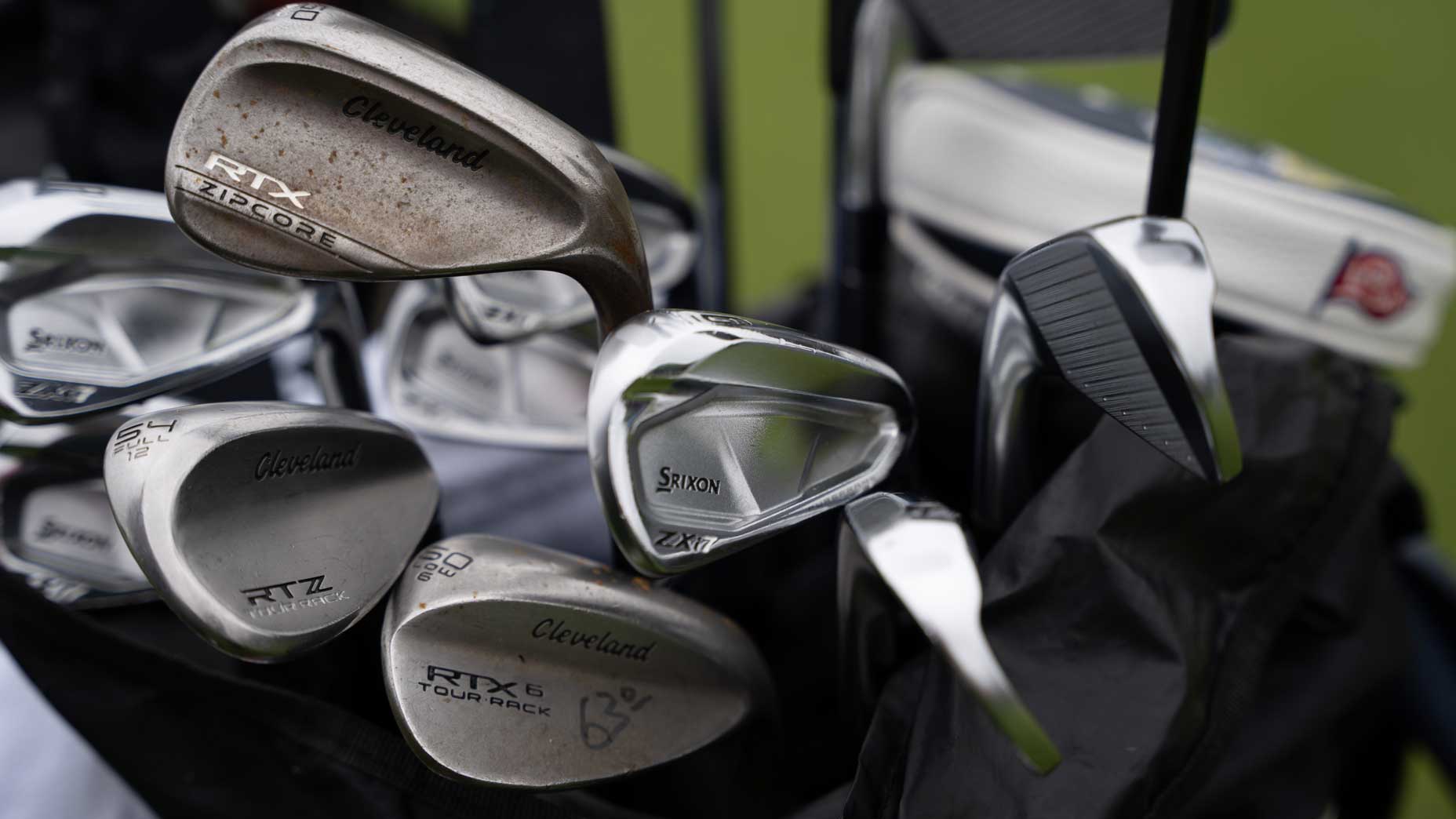
Ping S259 (50/S @ 49, 56/S @ 55), Titleist Vokey SM11 (60T)
Shafts: Nippon Modus 3 Tour 125 Wedge
Lie: 65-65.5˚˚
Length: 35.75″, 35.5″, 35.25″
Swingweight: D8
Like many on the Ping staff, Finau has made a quick and easy transition into the new S259 wedges for his gap and sand wedge, but he remains using a Titleist Vokey T-Grind for his lob wedge, having recently updated to the new Vokey SM11.
“Those middle two wedges in s259, they look a little cleaner,” Oates said. “They capture the ball visually a little bit better with that cleaner transition in the hosel. They feel, if anything, probably a little softer than s159, and they just have the same great performance: low launch, high spin.”

PING s259 Custom Wedge
View Product
ALSO AVAILABLE AT: PGA Tour Superstore
Putter

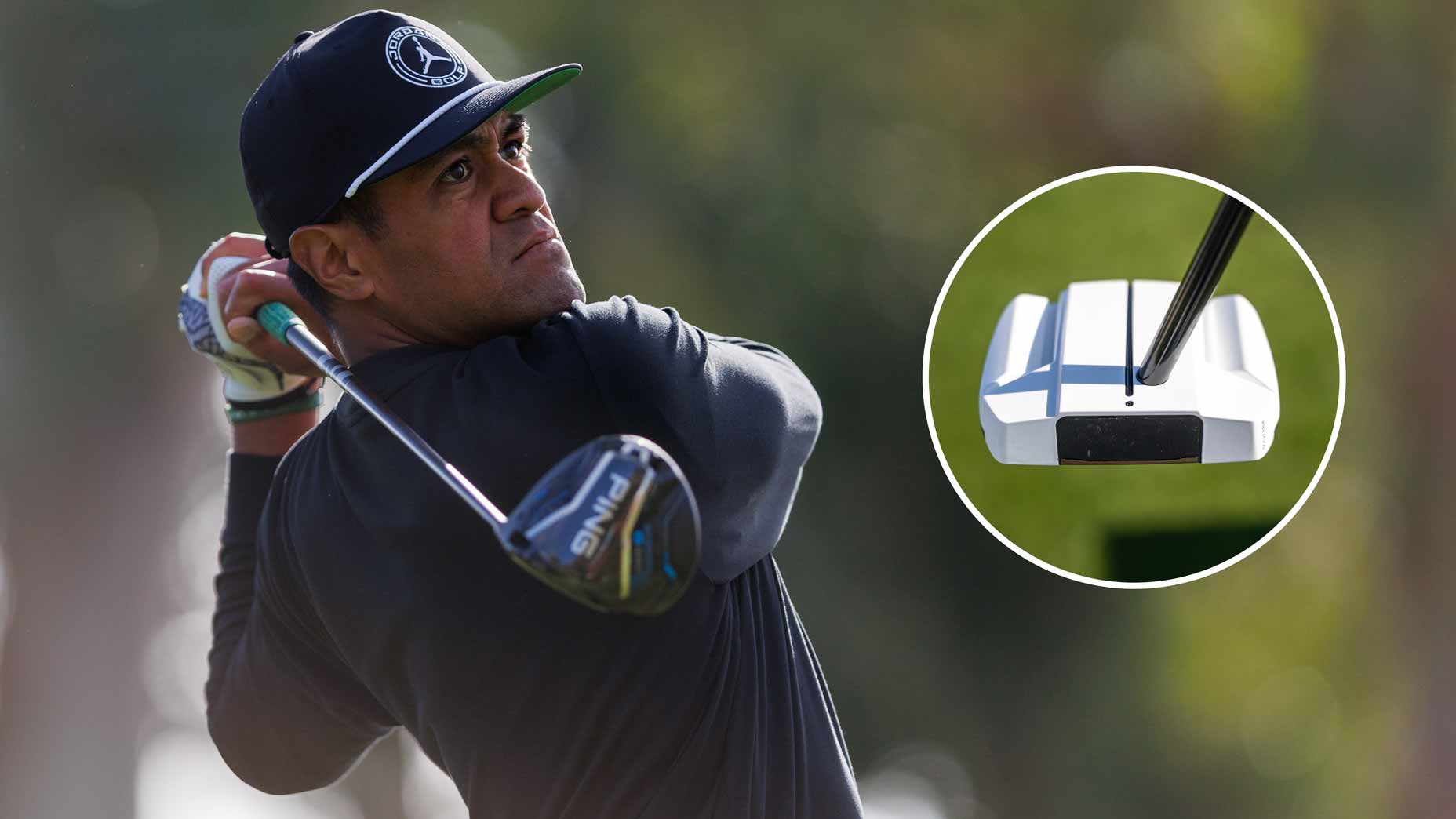
Putter: Ping Scottsdale Tec Ally Blue Onsett
Loft: 3˚
Lie: 70˚
Length: 35″
Toe Hang: 5˚
Grip: SuperStroke 2.0 Pistol
For most of his career, Finau has stuck with more traditional Anser-style blade shapes, with his preferred head being a wide-body Anser 2D.
But last summer, he started experimenting with mallets and landed on a Ping PLD Milled Ally Blue Onset putter. That switch was short-lived, but it sent Finau down the rabbit hole that eventually led him to try the head shape again at the Farmers’ Insurance Open this year. This time, it was Ping’s prototype Scottsdale Tec platform.
He actually tested two models that week.
“Tony gravitated towards the Ally Blue Onset again and the Ketsch 4, which has a hosel he had used in the past on a blade putter,” Goodwin said. “After going back and forth between the putters, the Ally Blue Onset ultimately matched better to his stroke and delivered the face at impact more consistently. As a result, his start line improved, and he liked the contrast between the white finish of the head and the black sight line, which he found easier to line up with.”
Finau’s T11 at Torrey Pines was his best finish since a T5 at the 2025 Genesis, so clearly he was onto something.
Two weeks later, at Pebble Beach, he led the field in putting, gaining more than eight shots on the greens for the week, the first time in his career.
What makes the switch more interesting is that not only is this the first non-blade to get some staying power in Finau’s bag, it’s also the first putter with a non-milled face.
However, the putters sounded the same to him, so he didn’t mind the softer feel of the insert. Clearly, it’s been working thus far.
Extras
Grips: Lamkin UTX Midsize (+4 wraps + 3 RH)

As we mentioned before, Finau is one of the few pros using mid-sized grips, but he builds them up even further with an additional four wraps of tape across the hole grip and three more for the right hand.
But that tape job pales in comparison to what gripping his clubs was like 2-3 years ago when he had an aggressive build up of wraps every inch until there were maybe 10 wraps at the bottom end of the grip. This results in a grip that essentially had no taper.
Relief came for Ping’s builders when Finau decided to switch to a midsize grip and use fewer wraps. That led to heavier swing weights since Finau’s previous grip was so heavy that Ping needed to add a ton of weight to the head to keep it from feeling counterbalanced.