Unquestionably, the techies and engineers who design the game’s newest equipment are fully fit to do the job — and, with each new club, to deliver dazzle to your own game. But some gearheads like to go in a very different direction, because disruption isn’t merely about breaking things. It’s about being radically better.
The golf equipment industry is loaded with big brains and lofty diplomas. Ballistics PhDs from aerospace. Engine designers from the automotive industry. Materials scientists from advanced manufacturing. They make up a vast army of eggheads, pouring their expertise into a game governed by conformance rules and rooted in tradition.
Innovation happens constantly, though not always as dramatically or regularly as advertisements suggest. Golfers crave the next breakthrough. Manufacturers promise it with every product cycle.
But genuinely disruptive ideas are rare. They don’t arrive on schedule and can’t be conjured by a marketing blitz. On the face of it, they seem to appear out of nowhere, like a hole in one, but they spring from tireless effort, a tolerance for risk and a willingness to question what others accept as settled.
Innovators like Cobra Golf’s director of innovation, Ryan Roach, whose story you can read below, didn’t just contribute to groundbreaking products — they challenged assumptions about how gear should be designed, built and sold.
***
RYAN ROACH WAS the kind of kid who could spend Saturday morning at the driving range and Saturday night rolling a 20-sided die. An athlete with nerdy inclinations, he played on his high school golf team but was just as drawn to Dungeons & Dragons as he was to grinding on the practice tee.
“Looking back, the kind of imagination that game required, I think that was probably good training in a way,” Roach says. “You could build whole worlds.”
At 51, Roach retains the boyish enthusiasm of someone always scheming his next experiment. Except now those experiments involve lattice structures and powder-bed fusion, and the designs he’s building are made of metal, printed layer by microscopic layer.
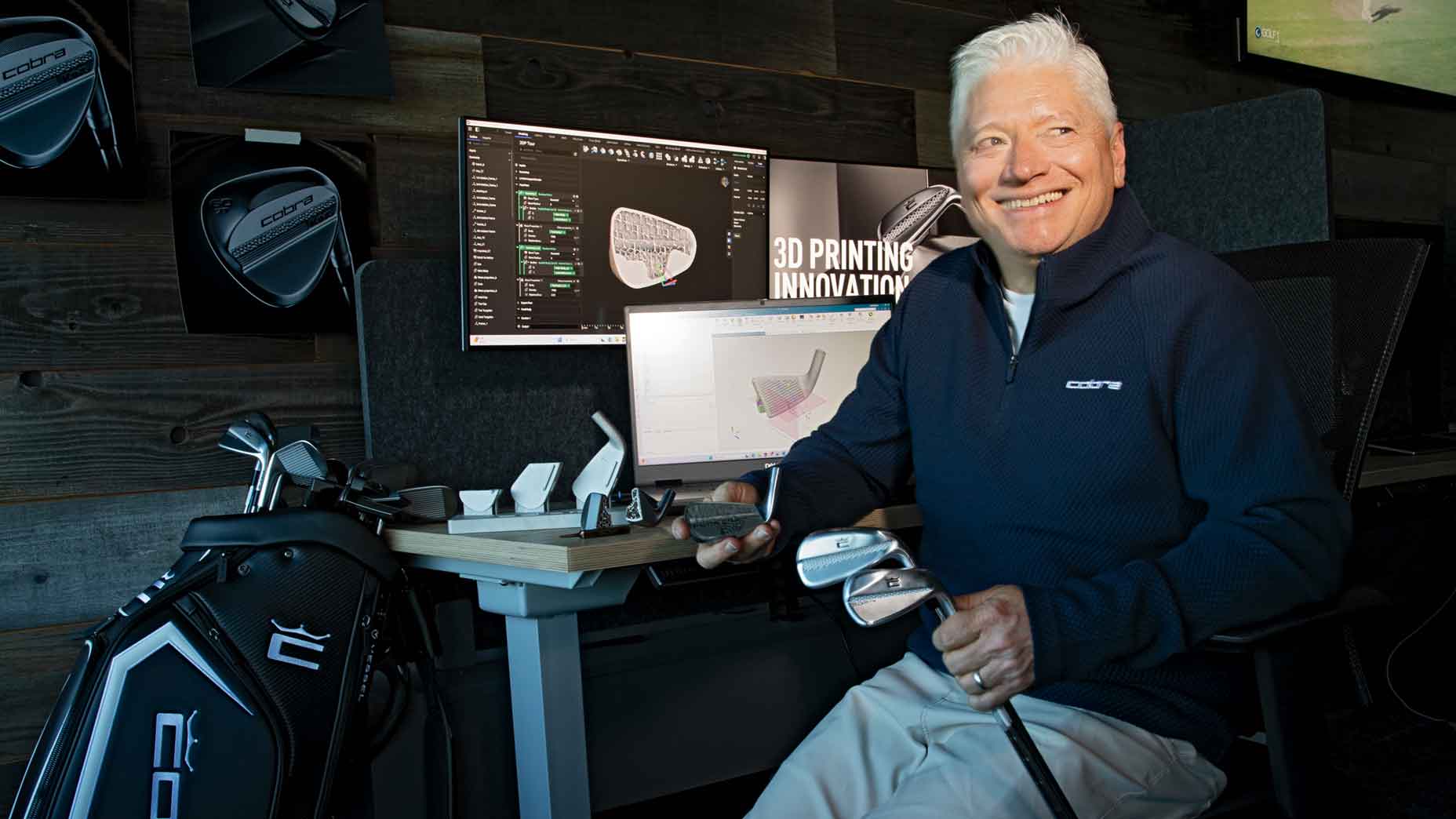
From his office in a boxy building in a Carlsbad business park, Roach has become a driving force in what he believes is golf’s next great manufacturing revolution: 3D printing.

Cobra 3DP X Custom Irons
View Product
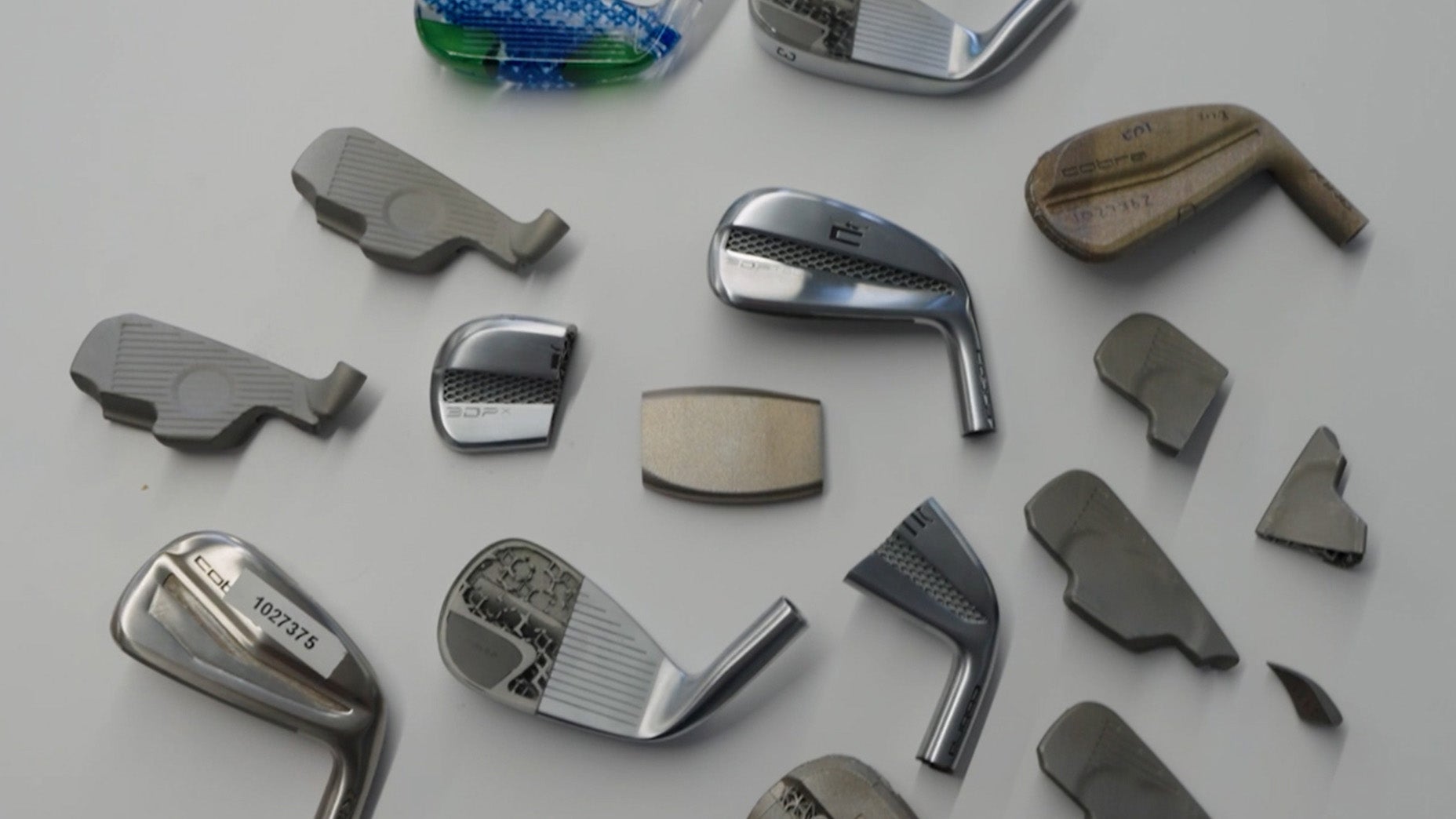
Inside, the bland exterior gives way to an engineer’s playground. Roach’s desk is crowded with iron prototypes in various stages of completion — some cut in half to reveal their insides, others with grooves not yet machined. His computer screen flickers with CAD renderings of impossible geometries. Walk the hallways with him and he’ll pull open drawers packed with more prototypes: putter heads, wedges, designs that once were and might someday be again.
Roach, who grew up in Sacramento, joined Cobra Golf straight out of UC San Diego and, aside from a brief stint with Spalding, has been with the company ever since. During his 26-year tenure, he’s witnessed watershed moments: titanium drivers that pushed size and forgiveness to new extremes, adjustable weights and hosels that gave players on-the-spot control. To Roach, 3D printing — or additive manufacturing, as people in the industry call it — is every bit as revolutionary.
By the early 2010s, Roach had watched 3D printing transform prototyping and medical devices. He wanted to know what it could do for golf. The potential was clear, but the costs were high: the technology was unproven in performance applications, and the industry was hesitant.
“It was kind of underground but not entirely clandestine,” Roach says. “We kept working on it despite some people saying maybe we shouldn’t be.”

Cobra 3DP Tour Supernova Custom Putter
View Product
Enough believers inside Cobra were willing to gamble. In November 2020, the company released its first 3D-printed club, a SuperSport-35 putter. Roach, who’d long specialized in irons, was convinced the technology could go further.
The process isn’t like making a Xerox copy. Additive manufacturing builds objects by adding material — fine metal powder, in this case — layer by layer, guided by digital files. The result is a structure of extraordinary internal complexity. Cobra’s 3D-printed irons are hollowed to reduce mass, then filled with intricate lattice patterns that balance strength and flexibility. Weight gets added back with tungsten inserts, letting engineers control not just how much mass a club has, but exactly where it lives.