For nearly a century, we played golf balls composed of materials not out of place at Office Depot — or at Cinnabon. Thankfully, a more solid idea emerged.
By the mid-1990s, many top-shelf golf balls featured urethane covers not dissimilar to what’s used today. Inside that was a middle layer of rubber bands — hence the name “wound” balls. And inside that was a sack of corn syrup or saltwater in the core with yeast or bacteria injected to pressurize it. Weird? Well, it worked.
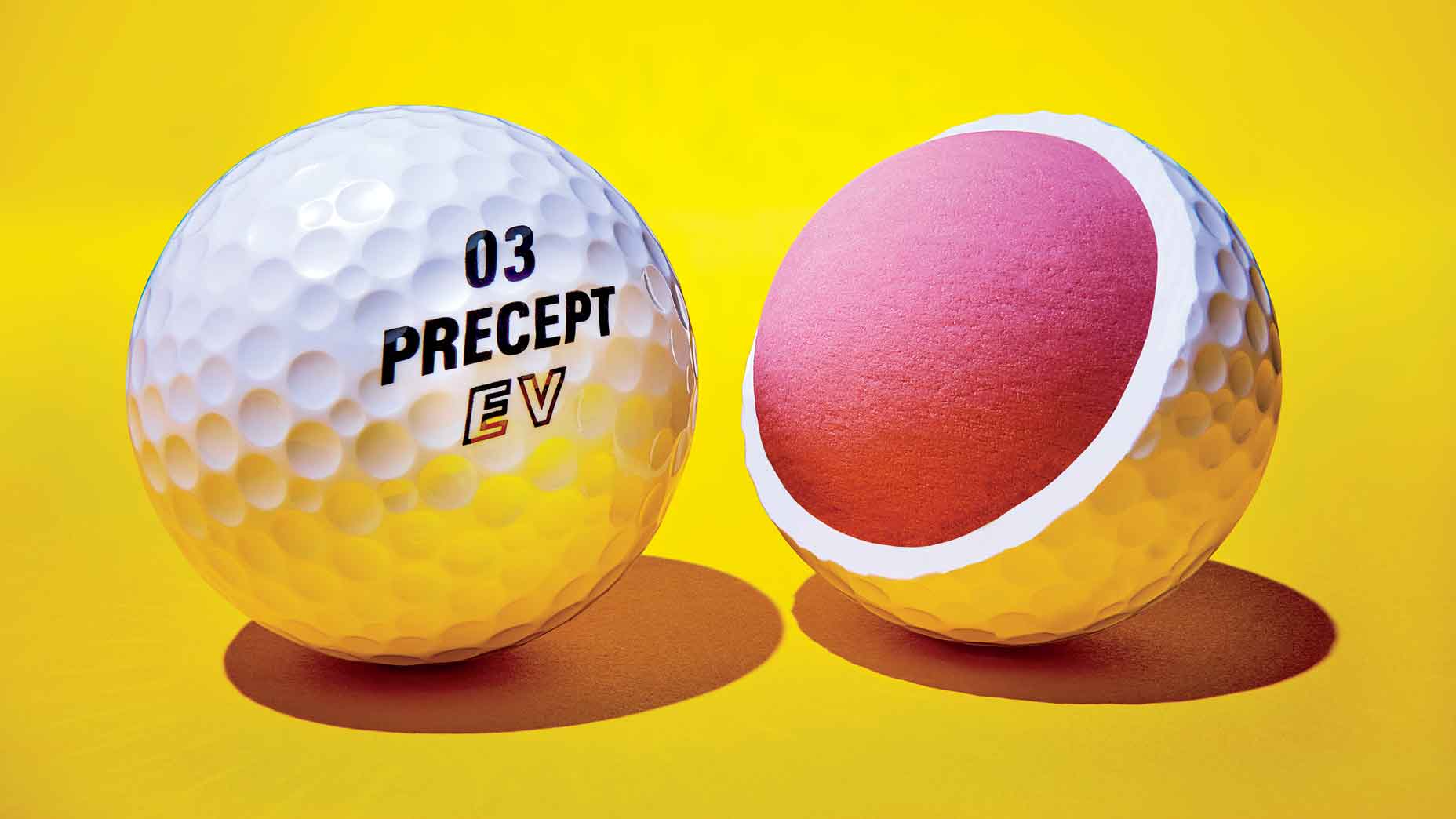
In 1994, Bridgestone’s Precept brand introduced the EV Extra Spin, a two-piece, solid-core ball designed to take on the category’s best wound offerings. The pitch: The Extra Spin was long and long-lasting, like a traditional two-piece ball, but with the short-game feel needed to compete at the highest level … minus the rubber bands and gooey centers.
In golf balls especially, Tour validation changes the game. Nick Price using the EV Extra Spin to win that year’s Open Championship and PGA Championship was ultimate mic-drop moments.
Wound, liquid-center balls didn’t vanish overnight: Tiger Woods won the 1997 Masters Tournament by a record 12 strokes with one. But by the time Mark O’Meara earned his green jacket the following year with a solid-core Strata — a three-piecer, with a solid middle layer added — corn syrup was drying up and the rubber band’s relevance had snapped.
In 1999, Titleist introduced its own multilayer, solid-core ball: the Pro V1. Maybe you’ve heard of it?
Shop the latest golf balls at Fairway Jockey

Bridgestone 2026 Tour B RXS MindSet Golf Balls
View Product

Titleist Pro V1x RCT Golf Balls
View Product

TaylorMade 2026 TP5x Pix Golf Balls
View Product

Callaway 2026 Chrome Tour X TruTrack Golf Balls
View Product

Wilson 2026 Staff Model Golf TRK360 Balls
View Product

Srixon Z-STAR XV Golf Balls
View Product