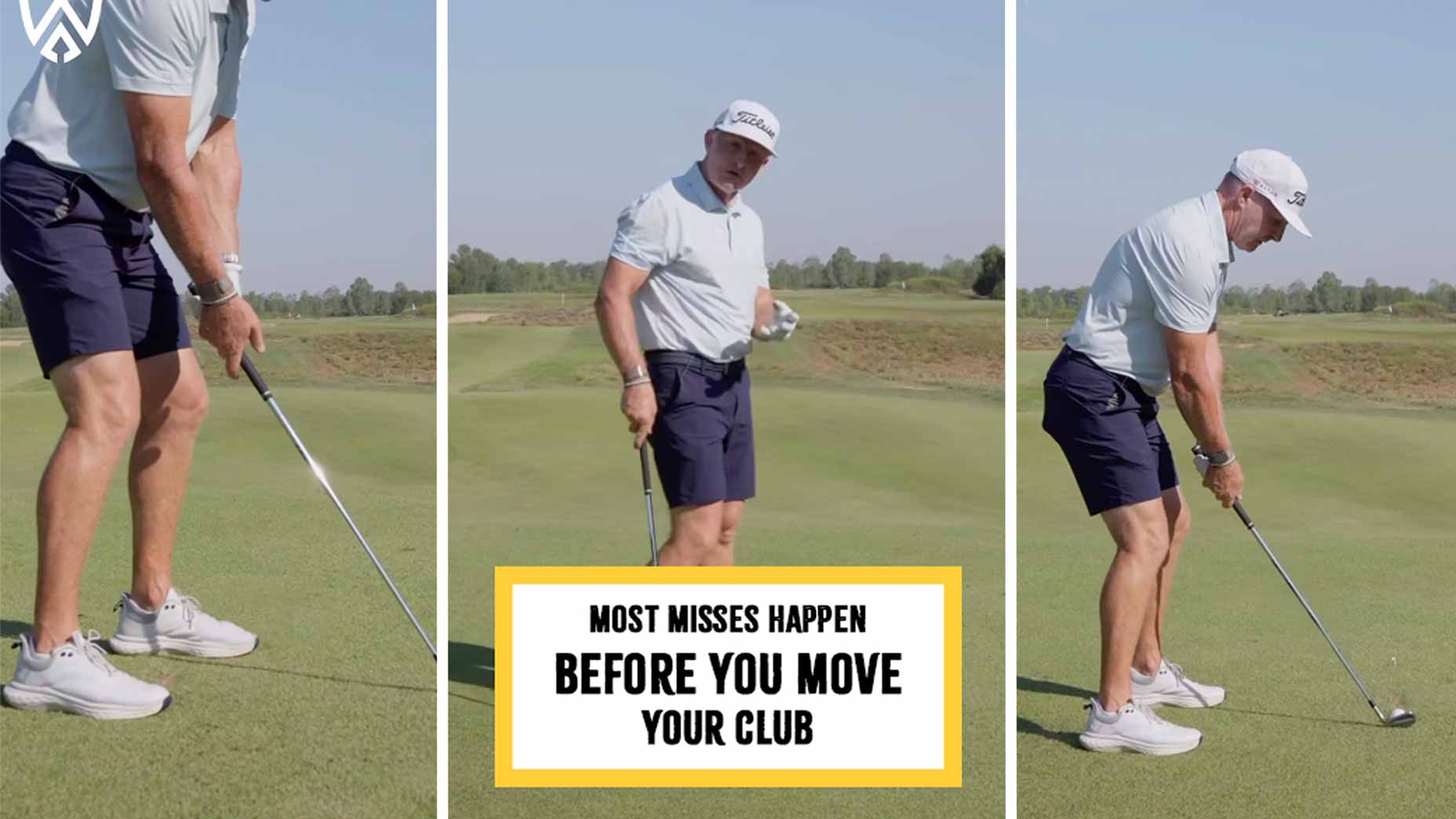
When you’re battling a hook or slice, it can feel almost impossible to straighten out your shots. So, like most golfers, you do what feels natural: aim for your shot shape.
Depending on the severity of the curve, this could mean aiming anywhere from a few yards off line to an entire fairway’s width to compensate for your exaggerated ball flight. But, Cameron McCormick, a GOLF Top 100 Teacher, says that habit could actually be what’s preventing you from hitting it straight.
Stop aiming for your miss
“Most golfers aim for their miss,” McCormick says.
His meaning: players whose shots typically curve left aim right of the target, while those who have a tendency to bend the ball to the right aim left. Unfortunately, what seems like a simple fix, McCormick explains, is often making the issue worse.
“The problem is, that [aiming for your miss] only exacerbates the error,” he says, “It increases the chance of you hitting that shot you’re trying to avoid.”
Aim tighter for straighter shots
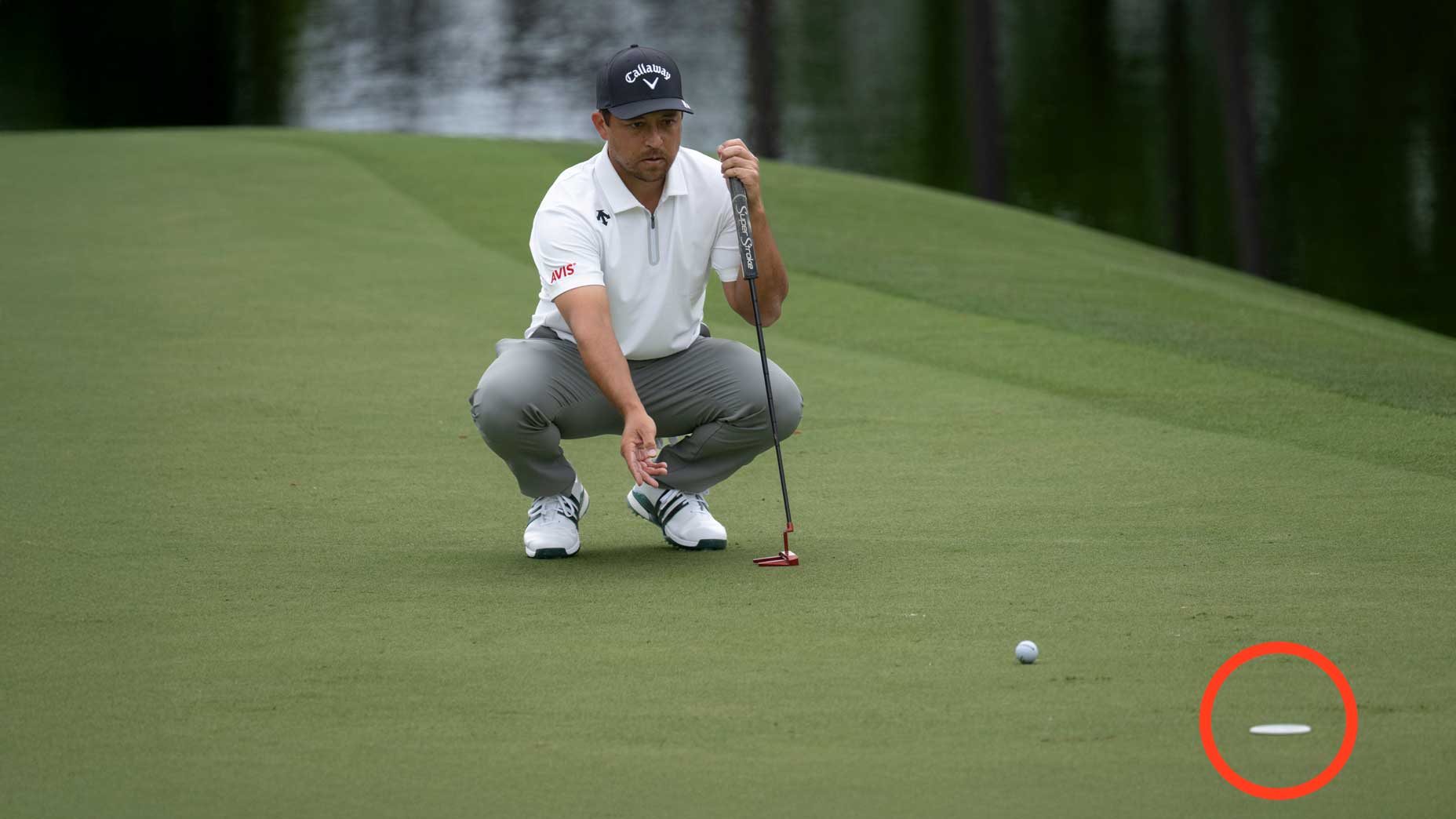
If you want to shrink your misses and tighten your dispersion, McCormick recommends using an intermediate target when lining up to your shots. Having a small reference point a few feet in front of your ball will help you ensure you’re aimed on line every time.
Your intermediate target can be anything from a dead patch of grass to an old divot and practicing on the range with one will help you incorporate it into your routine so it becomes second nature when you use it on the course.
To try it out, simply place a tee about three to four feet in front of your ball, directly on your target line. Then, step up to the ball and set up like you normally would.
Remember: face, then feet
The key to aiming correctly — whether you’re using an intermediate target or not — is how you set up your clubface and body. Many golfers don’t realize that the order in which you aim your club and feet actually matters. As McCormick demonstrates in the video above, the proper sequence is: clubface first, then body.
“I’m going to force myself to aim straighter by aligning the clubface to the tee, then splitting my feet,” he says.
Now that you’re aimed properly, go ahead and pull the trigger. It might feel weird at first, but with a bit of practice, you should start seeing your dispersion window narrow.
“My brain tells me I need to accommodate my error, but I’m going to force against that and I’m going to learn to hit a much straighter ball flight,” McCormick says.
By breaking the habit of aiming for your miss, you’ll rein in your shots and be able to play confidently to the target, not around your mistakes.

Alignment Pro Golf Training Aid
View Product