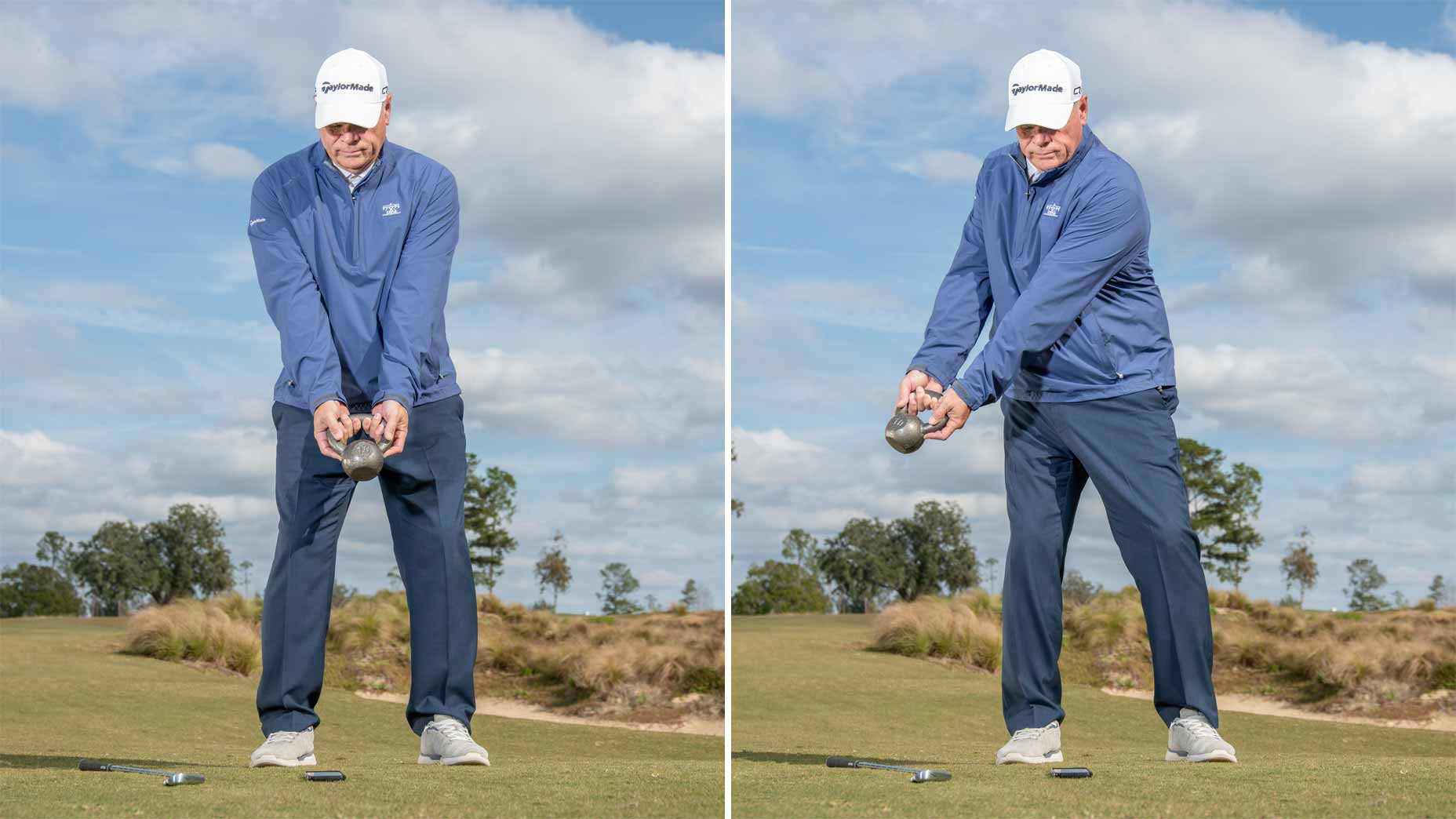
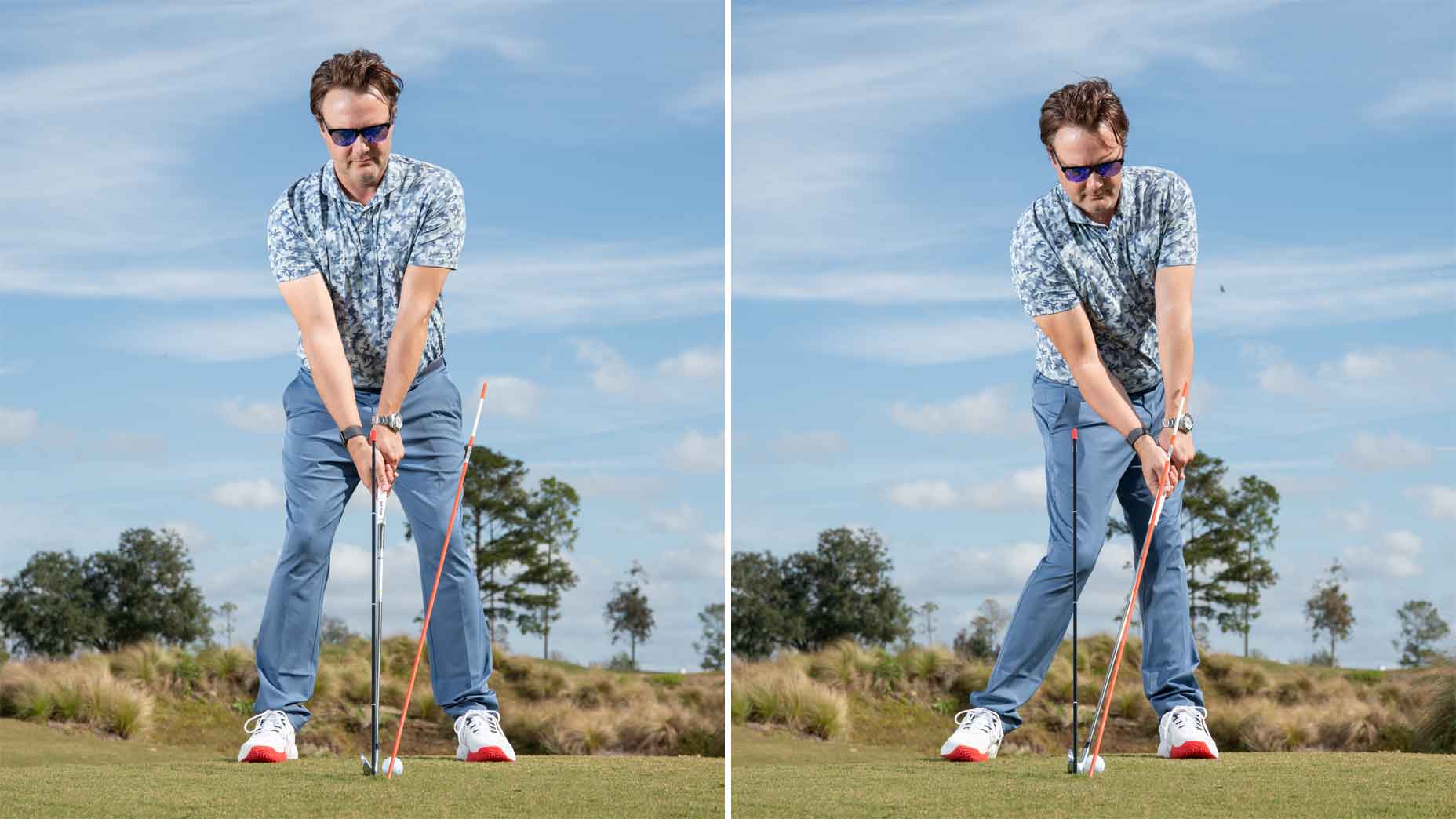
These six rules will help you practice more efficiently.
Getty Images
In my 44-plus years of teaching and coaching this incredible game, I have found that a surprisingly small percentage of recreational players have a logical and repeatable practice plan. Even after a lesson, most players still wander onto the practice tee with no structure, no intention and no accountability.
Let me touch on a few things you should never do — and a few things you must do — when going to the practice tee to actually improve your golf game.
1. Never practice without alignment
Aim and alignment are never “once learned and done.” They must be reinforced constantly. That is why alignment sticks should be a permanent fixture in every practice session. The best players in the world practice daily with guidance. Visual references keep them honest and ensure their setup remains consistent. If the best players on the planet still rely on these tools to check their aim and alignment, it raises an obvious question: why would an amateur assume they don’t need the same help?
2. Never rapid-fire balls
Rapid-fire ball beating is one of the fastest ways to destroy tempo, sequencing and awareness. Instead of mindlessly hitting ball after ball, practice should be deliberate and paced. In fact, many recreational players would improve faster by simply limiting how quickly they hit balls.
Place a single ball a few yards away, walk to it, set it down deliberately and then go through your full pre-shot routine before hitting the shot. Afterward, take a moment to evaluate what just happened before moving to the next ball. Practice should resemble the rhythm and intention of actual golf.
3. Always practice your full pre-shot routine
This is one habit I wish every amateur would adopt without exception. If you don’t rehearse your routine in practice, you cannot expect it to magically appear on the golf course when pressure rises. Every ball you hit is training a habit, whether it is a good one or a bad one. By committing to your full pre-shot routine during practice, you are teaching your mind and body how to prepare consistently for each shot. Simply put, practice the way you intend to play.
TheStack + Stack Radar Bundle
Save over 15% when you combine TheStack + Stack Radar with our most popular bundle. Enjoy personalized speed training with TheStack, gamified wedge practice with Stack Wedging, Tour-caliber insights with Stack Putting, and 60+ instructional videos in the Learning Library – along with our Bluetooth-enabled Stack Radar, which sends your speed data directly to TheStack App for seamless training
Stack Radar is a great multi-purpose launch monitor that packs into your golf bag easily, making it perfect for speed training with TheStack, Stack Wedge practice on the range or indoors, and measuring your speeds on the course.
TheStack App – Speed Training, Wedging, and Putting
Rated 4.9 with over 5,500+ Reviews on the App Store
Includes 1-Year Membership to TheStack App
Now on iOS, Android (Beta), and Chrome Web (Beta)
Adaptive speed training formulated by Dr. Sasho MacKenzie
Guided workout timer for reps, sets, and rest intervals
Custom speed metrics to track your gains
Bluetooth Connectivity to integration devices. Hands-free data entry using voice entry technology for non-integrated devices
Membership includes Bundled access to Stack Putting (iOS), Stack Wedging (iOS), and the Learning Library (All Platforms)
Train and track up to twenty local (i.e. family) users under one login. App works with Family Sharing so the entire family can train easily on separate devices
Connect to any other Stacker using Share Codes
Are you a Coach? Learn about our Coaches License
TheStack Hardware
5 milled Stack weights enable 30 weight combinations between 0g and 300g
Dual-purpose weight case / phone stand
Precisely engineered training club – Adult (41.5″). For Junior sizing, see Fitting Juniors
Stack training requires a speed device that can measure swings without ball contact. This bundle includes our own Stack Radar. View all compatible devices here.
Stack Radar
Measures Swing Speed and Ball Speed. Calculates an estimated Carry Distance and Smash Factor. Can capture swing speed without ball contact
Powers Stack Wedging (iOS), our newest gamified practice feature. Enjoy Seriously Fun wedge practice indoors or outdoors and get accurate feedback regardless of range ball quality or practice environment conditions.
Pairs with TheStack App via Bluetooth to enable advanced features. Adjust for temperature and altitude while fine-tuning ball speed and launch angle for the most accurate feedback
Set speed trigger threshold at 25, 35, 45, or 55 mph to avoid false triggers from fast backswings
Includes a stylized carry case to protect the screen while stored (available exclusively for purchases from our website)
Platform Availability
iOS: Access TheStack App from the App Store when your order arrives. Requires iOS 15.0 or newer. Access Speed, Wedging, Putting, and the Learning Library. Android & Web (Beta): Install TheStack App from the Google Play Store or access it on Chrome Web when your order arrives. Access Speed + Learning Library today; Wedging + Putting coming in a future update.
See our FAQ pages for questions about membership access.
4. Never practice in a crosswind (without purpose)
Practicing in the wind can be valuable, but it must be intentional. For a right-handed player, repeatedly hitting balls in a strong left-to-right or right-to-left crosswind can quickly encourage an over-the-top swing path as the player subconsciously fights the wind.
In my experience, one extended practice session in a strong crosswind can take several days to undo in terms of swing pattern. Wind practice should therefore be occasional and purposeful, not the default condition under which you groove your swing.
5. Always trust the ball
Players often say to me, “I thought I did it that time.” My response is always the same: “What did the ball do?” The flight of the golf ball is the most honest feedback you will ever receive. If the result wasn’t good, then whatever you believed you did probably wasn’t what actually happened. The ball never lies. Take that to the bank.
6. Always have an objective
Before every practice session — even today — I make one simple decision: what is the one thing I want to improve? That entire session is then devoted to that single objective. The golf swing lasts less than three seconds, and there is a limit to how many thoughts you can manage in that time. Improvement rarely comes from piling on more ideas. It comes from clarity, focus, and repetition. Get better at one thing today, and tomorrow you can move on to the next.