All golfers know the frustration of coming up short with a club they were sure was “perfect.” Most of the time we blame it on the conditions, a faulty range finder or the assumption that we must not have hit it as well as we thought we did.
But the truth is, it’s usually not the club or the conditions — it’s the player. And fixing the problem starts with understanding one key concept: the difference between carry distance and total distance.
For those who don’t know, carry distance is how far the ball travels in the air, while total distance includes the distance your ball gains after it lands. Unfortunately, most amateurs focus only on total distance — and that mistake not only distorts their understanding of their game but also leads them to overestimate how far they really hit the ball.
As Joey Wuertemberger, a GOLF Top 100 Teacher, explains, “a majority of amateurs always think they hit it farther than they really do.”
To fix this, Wuertemberger says to focus on your carry distance rather than total distance.
“I rarely focus on total yards because players need to understand what it takes to carry a bunker, a hazard, or any penalty area — rather than how far the ball rolls afterward.”
To figure out your carry distances, Wuertemberger says you can use a launch monitor to figure out exactly how far the ball is flying. But, there are a few additional keys that will help you dial in your irons like the pros.
Don’t only use your best shots
When most amateurs work out their carry distances, they tend to focus only on their very best shots — those that travel the farthest. But if ask any high-level player, they’ll tell you that’s a mistake. To get an accurate number, you need to factor in the off-center hits and those slightly shorter yardages, because that’s a more honest reflection of how far you actually hit it on the course.
“Players have to understand they’re not always going to hit it perfect,” Wuertemberger says. “If you only rely on your best shots, the numbers get skewed. Sure, if you hit it perfectly you could carry the full distance — but nine times out of 10, it won’t be quite as solid, and you’ll come up a few yards short.”
Track your ball marks
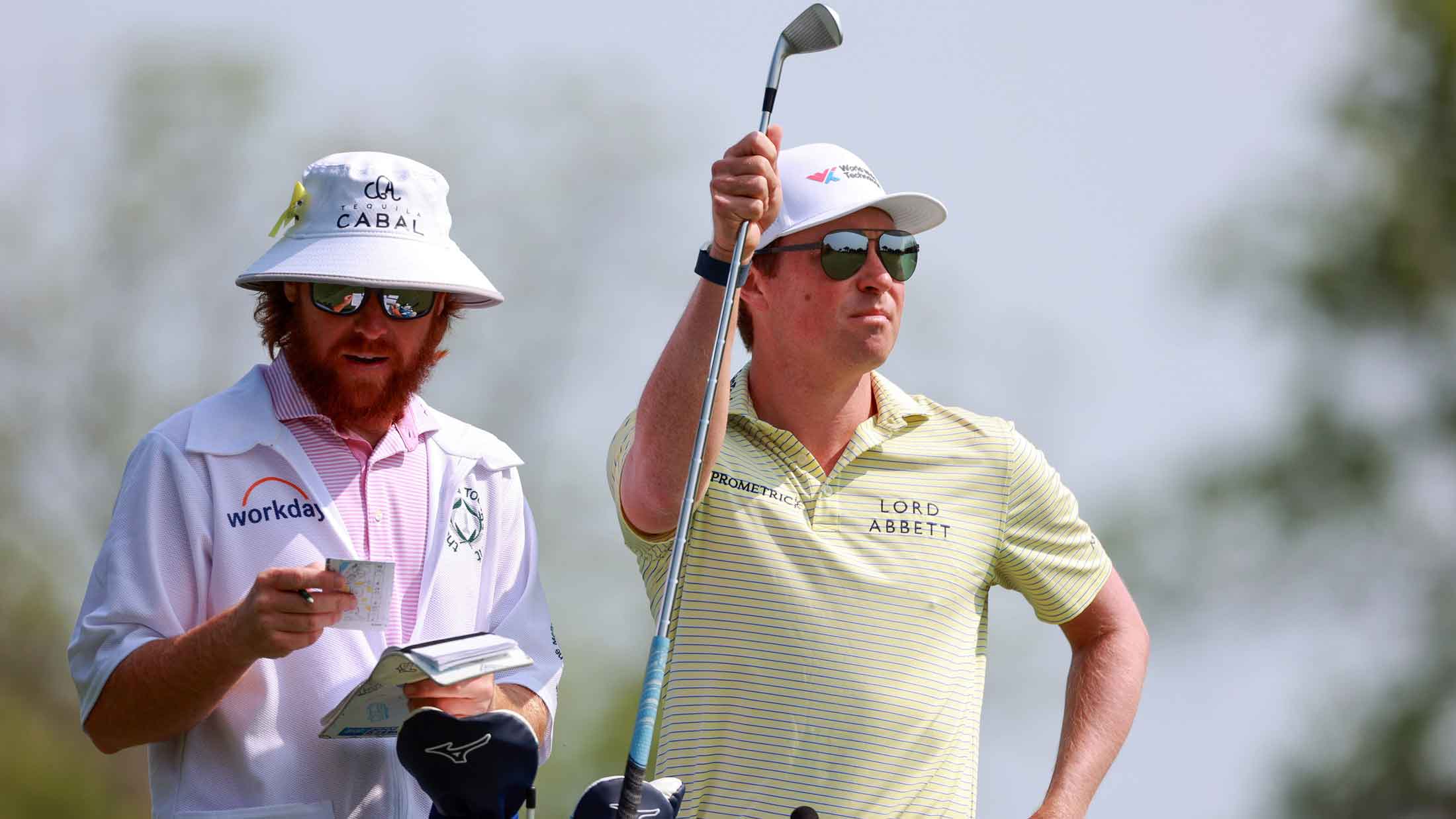
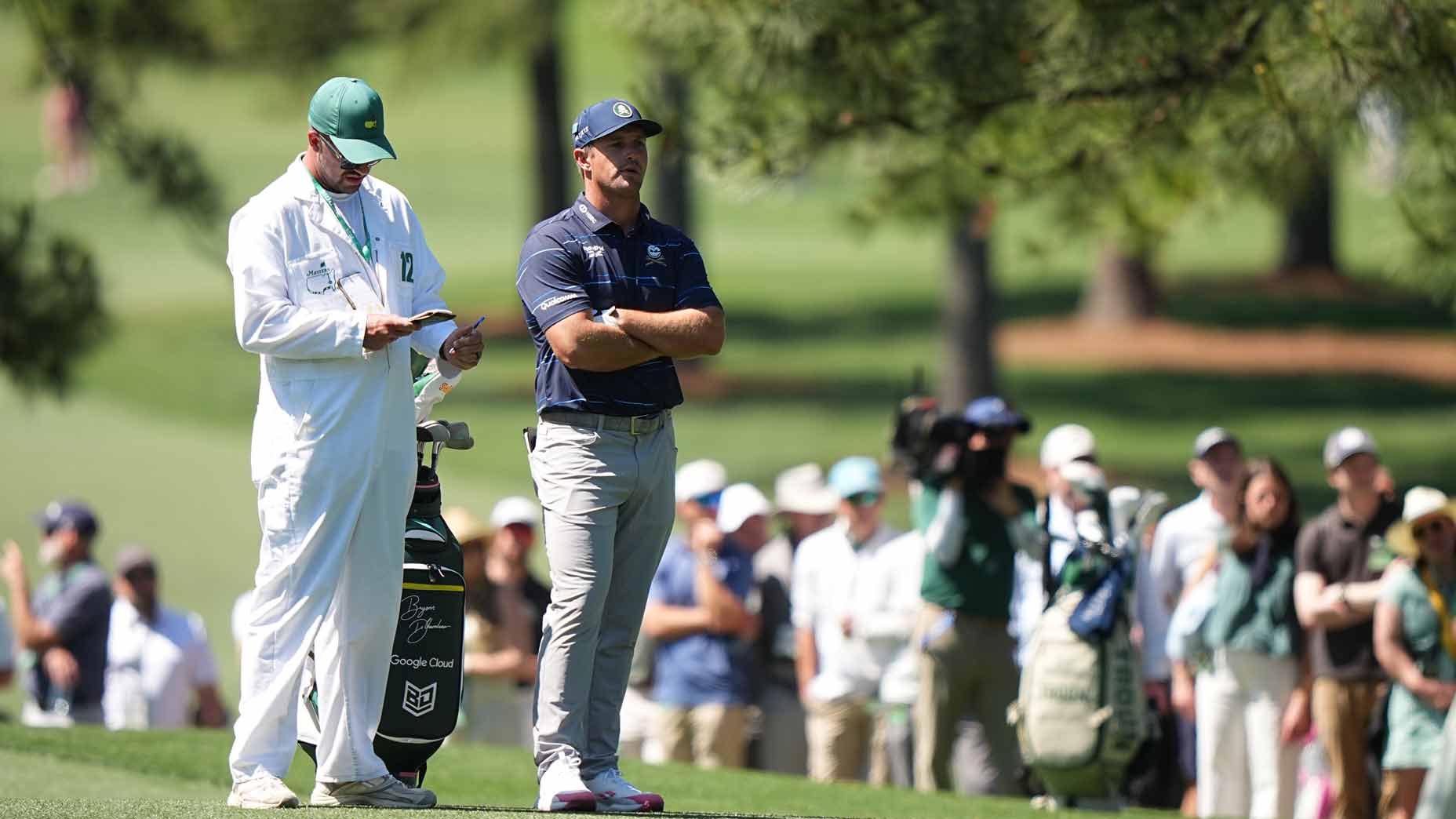
If you really want to dial in your irons, Wuertemberger has a clever trick he learned from Zach Johnson’s former caddie: track your ball marks.
Here’s how it works: After your approach shot into a green, note where your ball mark is in relation to the pin and where the ball actually came to rest. This lets you see if you had the right club. Did you land short and roll up to the pin, or were you pin-high? Tracking how far your ball rolls also helps you understand how shots respond to the course conditions — like if firm greens are giving you extra roll.
“All of this is a reference point to work from,” Wuertemberger says, “Then, later in the round you can draw from these past shots. Remember that shot you had on four that was 120-yards? This is that shot again.”
It’s a simple, tour-tested system: know your carry, log your ball marks and play to the middle. That’s how caddies keep their players pin-high — and how you can start hitting more greens.
Full Swing KIT Launch Monitor
The Full Swing KIT Launch Monitor is engineered with the most advanced radar technology and a high-resolution camera to give you 16 points of data and video to see your swing in perfect clarity. Tested & trusted by Tiger Woods, made for everyone.
5D Machine-Learning Enhanced Radar
The most innovative radar technology, patented to get the most accurate readings in a more compact design at a lower cost.
Heads-Up Display
The only launch monitor to let you see what mattes on a customizable full-color display.
Portable
Build to be taken to and from the course with quick & easy setup to get your practice started faster.
“I KNOW THAT FULL SWING IS MEASURING MY GOLF BALL, NOT GUESSING AT IT.”- Tiger Woods
View Product