Picture this: You’ve just crushed your drive right down the middle of the fairway. You’ve got a wedge or a short iron in your hands, and the pin is easily accessible right in the middle of the green. It’s the optimal time to fire at the flag and make birdie.
You pull the club back and make a swing … only to catch the turf several inches behind the ball. Instead of plopping down right next to the hole, the ball comes up woefully short of the green. What was only a few moments ago a prime birdie chance has turned into you scrambling just to make par.
If you’re anything like me, this is a scenario you’re all too familiar with. For the past few seasons, the chunks have plagued my iron play — and it’s killed my ability to score. When you’re laying the sod over simple shots from the middle of the fairway, it’s damn near impossible to put together a solid round.
Luckily for me, I’ve finally learned why I couldn’t seem to stop chunking the ball — and an easy fix to solve the issue. GOLFTEC Director of Teaching Quality Josh Troyer has more in the text below.
Why you chunk the ball
When you chunk the ball, you’re striking the turf behind the ball instead of in front of it. So, why does this happen? Often times, it’s a result of too much lateral movement in your swing.
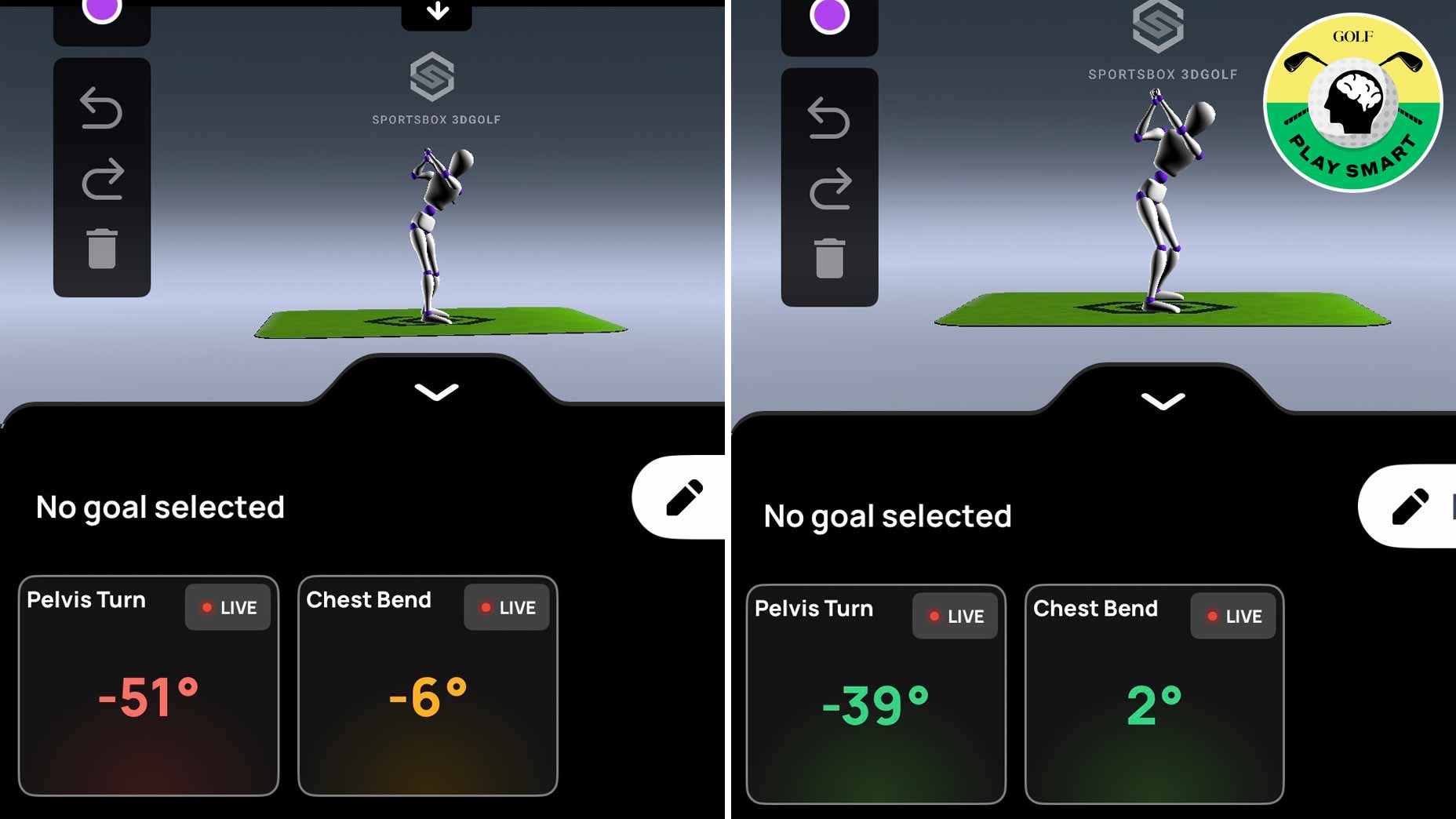
When a golfer sways too much during the backswing, they move their pelvis and upper body laterally away from the target during the backswing. That motion shifts the bottom of your swing arc — known as the low point — too far behind the ball.
“Golfers who tend to chunk tend to move more away from the target,” Troyer says. “So an inch, two inches, three inches, if you’re really bad at it.”
When you watch a Tour player swing, you’ll notice that this sway is minimal.
“The best golfers in the world basically keep their sways at zero,” he says. “So this end of their pelvis and the center of their shoulders [stay centered] as they make a backswing.”
The Tour benchmark
The key move Tour players use to make sure they keep their sways to a minimum is called “re-centering.” You see, when elite players make a backswing, they actually do sway off the ball just a touch. But once they get to about arms parallel to the ground during the backswing, they have already started shifting their weight back toward the target. And by the time they get back to impact, their hips are several inches closer to the target than they were at setup.
“Tour players have the center of their hips 3.1 inches more towards the target than they did at setup,” Troyer says. “So by not moving as far away on the backswing, you’re making it easier to move towards the target on the downswing.”
This movement toward the target ensures that the low point of the swing occurs in front of the ball — exactly where it needs to be for crisp, clean contact.
The fix
If you want to hit the ball like a Tour pro, you’ve got to learn how to perfect that re-centering move during the backswing. Then, during the downswing, you’ve got to get your hips to that point several inches in front of where they started.
“Your hips don’t recenter and stop,” Troyer says. “They keep moving three inches further towards the target when they start.”
If you can do that, you’ll eliminate the chunks for good and become a more consistent ball striker.
If you want to get some expert insights into your swing, book a swing evaluation with GOLFTEC below.
GOLFTEC Swing Evaluation
Shop GOLFTEC’s biggest sale of the year with up to 25% off a swing evaluation.