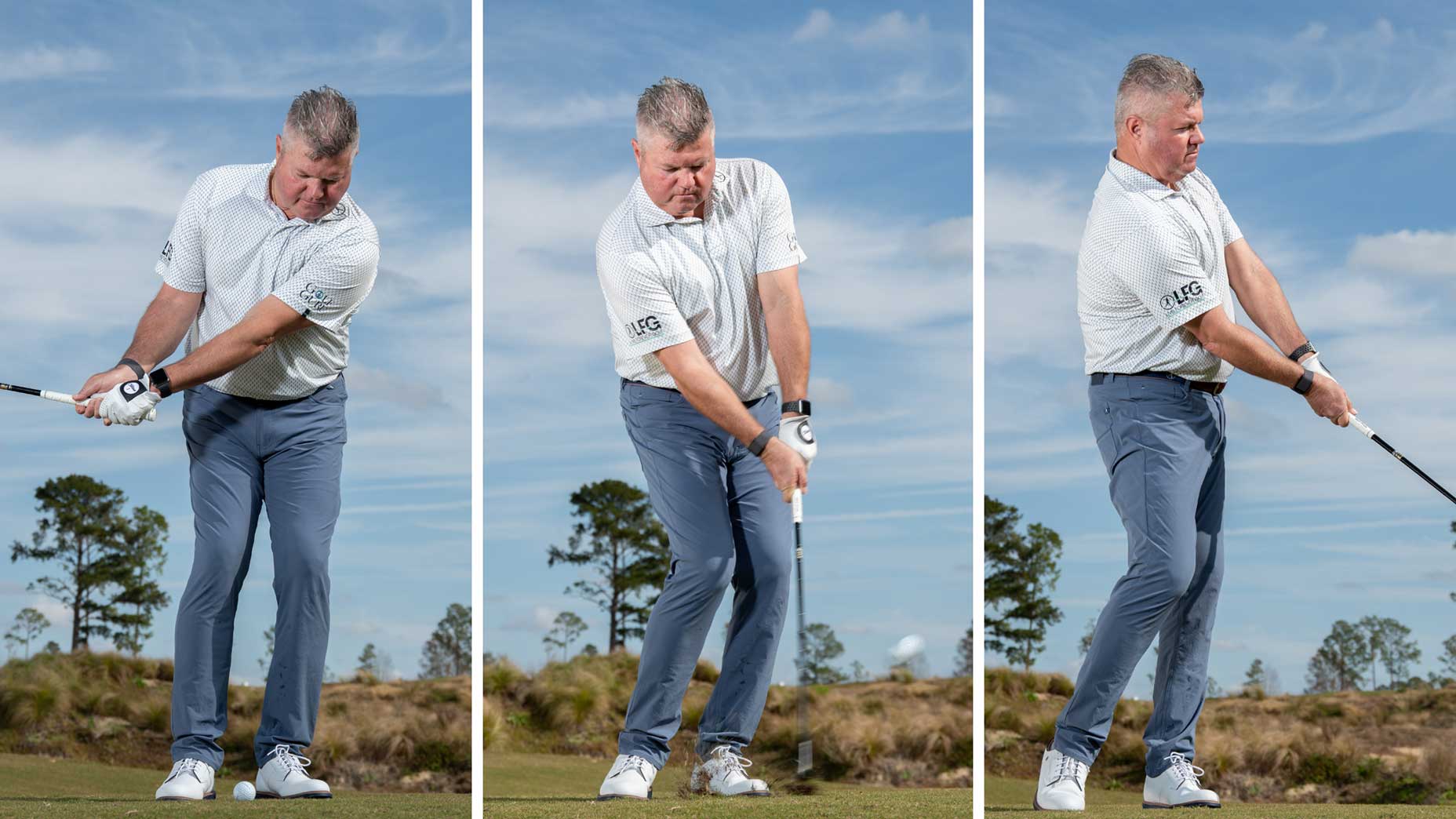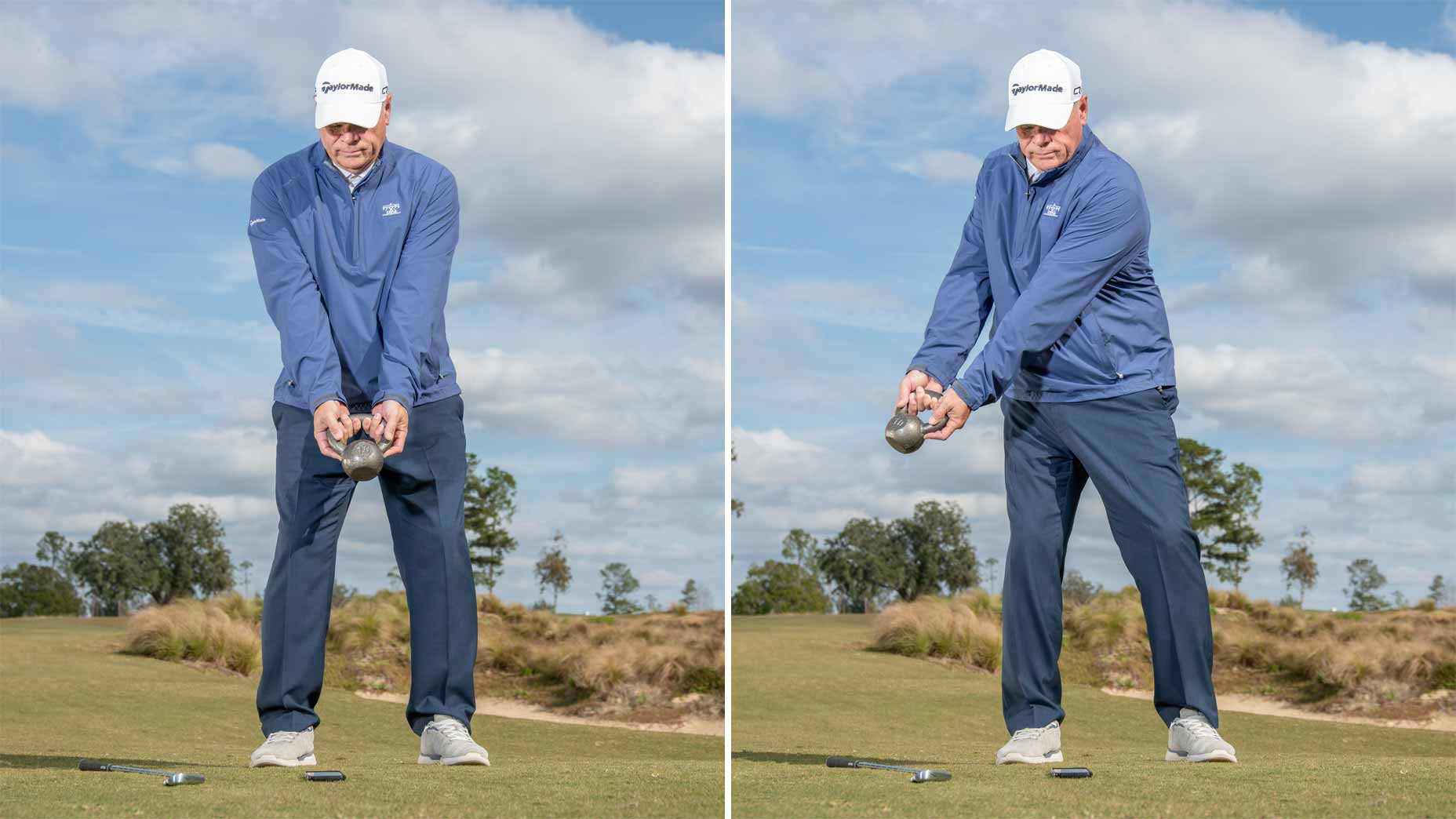
Learning how to sequence your downswing properly can be confusing, especially if you’re doing it on your own. The internet is flooded with swing tips, and for every great coach offering thoughtful guidance, there’s an armchair expert doling out bad advice to chase clicks, making it harder to tell what’s actually correct and what just sounds convincing.
That’s why it helps to listen to those who have spent a lifetime studying and mastering instruction. We turned to Brian Manzella, a GOLF Top 100 Teacher, to simplify the downswing and strip it down to the essentials.
Instead of a dozen swing thoughts, Manzella says you need to remember just three key moves. Follow along with his three-step approach to dial in your sequence and start striping your shots in time for golf season.
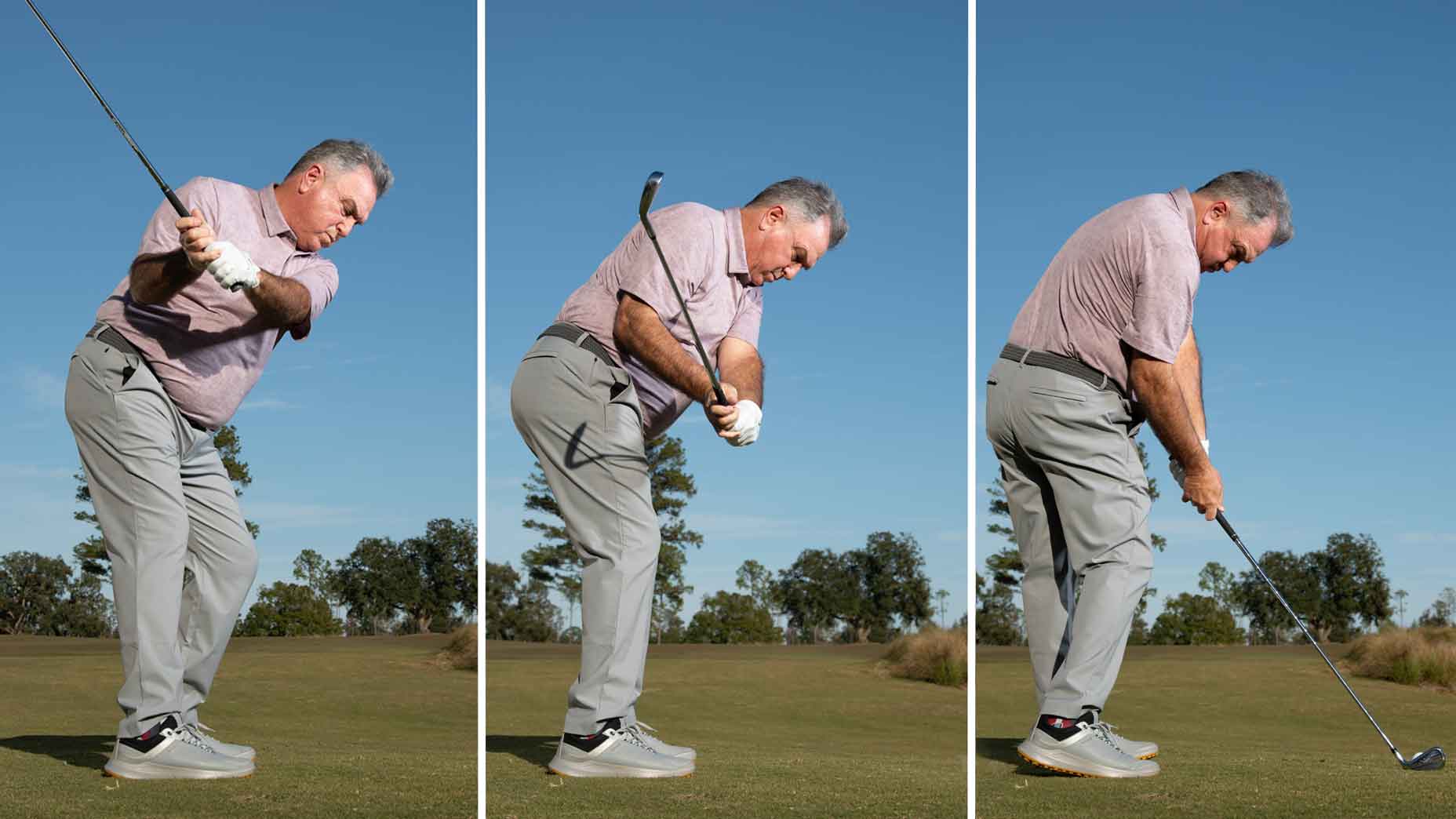
1. Drop from the top

There’s a common mistake amateurs make at the top of their backswing that can ruin your sequence before it even starts: spinning or turning your body to lower the club down. As Manzella explains, keeping the club in the same position and turning your body toward the target never works out well.
Instead, he says, something has to lower the club down to set you up for a successful following sequence. You just need to learn how to do that properly.
“The drop of your arms down to a normal hitting position — arms relative to the torso — early in the downswing is your first step,” Manzella says.
According to Manzella, before you practice dropping the club down, you first need to ensure that your lead arm is higher than it is across your chest. Meaning the club isn’t starting from a position that is too far inside, or behind you. Once you’re in the proper position at the top of your swing, let your arms fall straight down until your hands reach about hip height.
2. Twist or tumble to turn the clubface

“Your second step is, depending on the golfer, you’re either going to have to apply some twist pretty soon after this drop occurs,” he says, “or you may drop it so much that you have to apply another move, the tumble.”
Manzella explains that this “twist” move helps players turn their clubface toward the ball, which helps them square up the face as they enter impact. The ‘tumble,’ on the other hand, is a slightly more pronounced action where the club travels slightly more out and forward to get the face turning toward the ball.
The twist, it seems, is ideal for players who keep their club on plane during their initial drop in the downswing sequence, while the tumble is optimal for players who get slightly more laid off during their first step in the downswing.
If you tumble the club, Manzella says to remember one key thing: avoid dropping the club too far under plane. This can make it difficult to consistently turn the clubface toward the ball, and lead to poor face control and inconsistent contact.
3. Throw it into impact
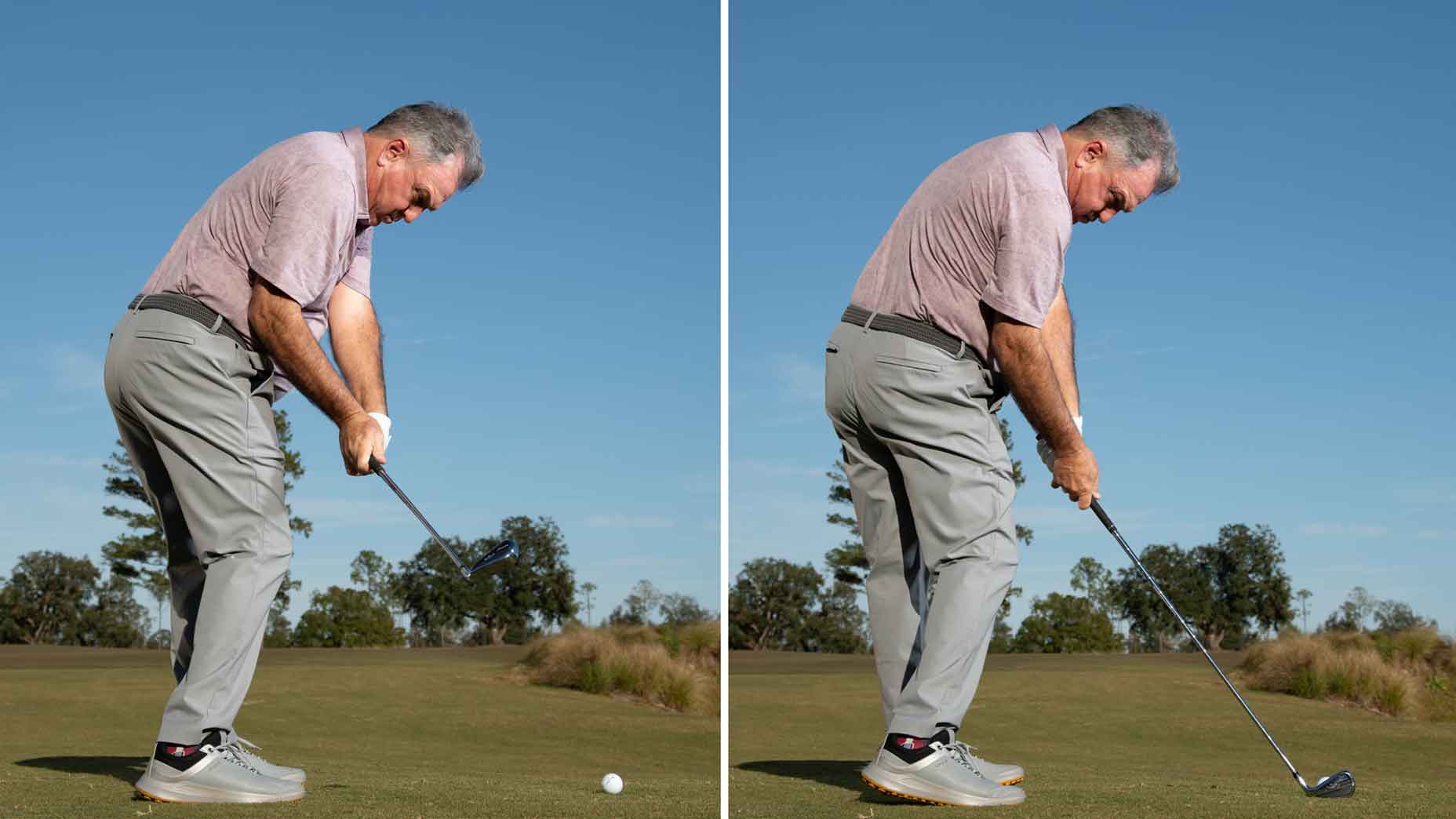
The final step in Manzella’s three-step approach to the downswing is throwing the club into impact, and it might be the easiest of all. The secret to a successful throwing motion? Clubface control.
As Manzella explains, when you’re throwing the club into the ball, you need to line it up for the shot you’re trying to hit. That means avoiding any twisting or turning of the hands as you deliver the clubhead into the back of the ball.
If you can control your face as you throw the club, you’ll nail this move and catch it clean every time.
While these three pieces work in tandem as a synchronized chain, Manzella encourages players to work on them both individually and together. Do that, he says, and you’ll have the club in position to hit textbook shots every time.

The Compression Ball: Golf Impact & Swing Training Aid
View Product