There’s a critical question often overlooked by golfers: Are your wedges truly helping your game, or are they holding you back?
Too many players suffer from a mismatched wedge setup, costing them strokes around the green. Let’s break down how to build a wedge arsenal that works for you.
Which wedges should you use?
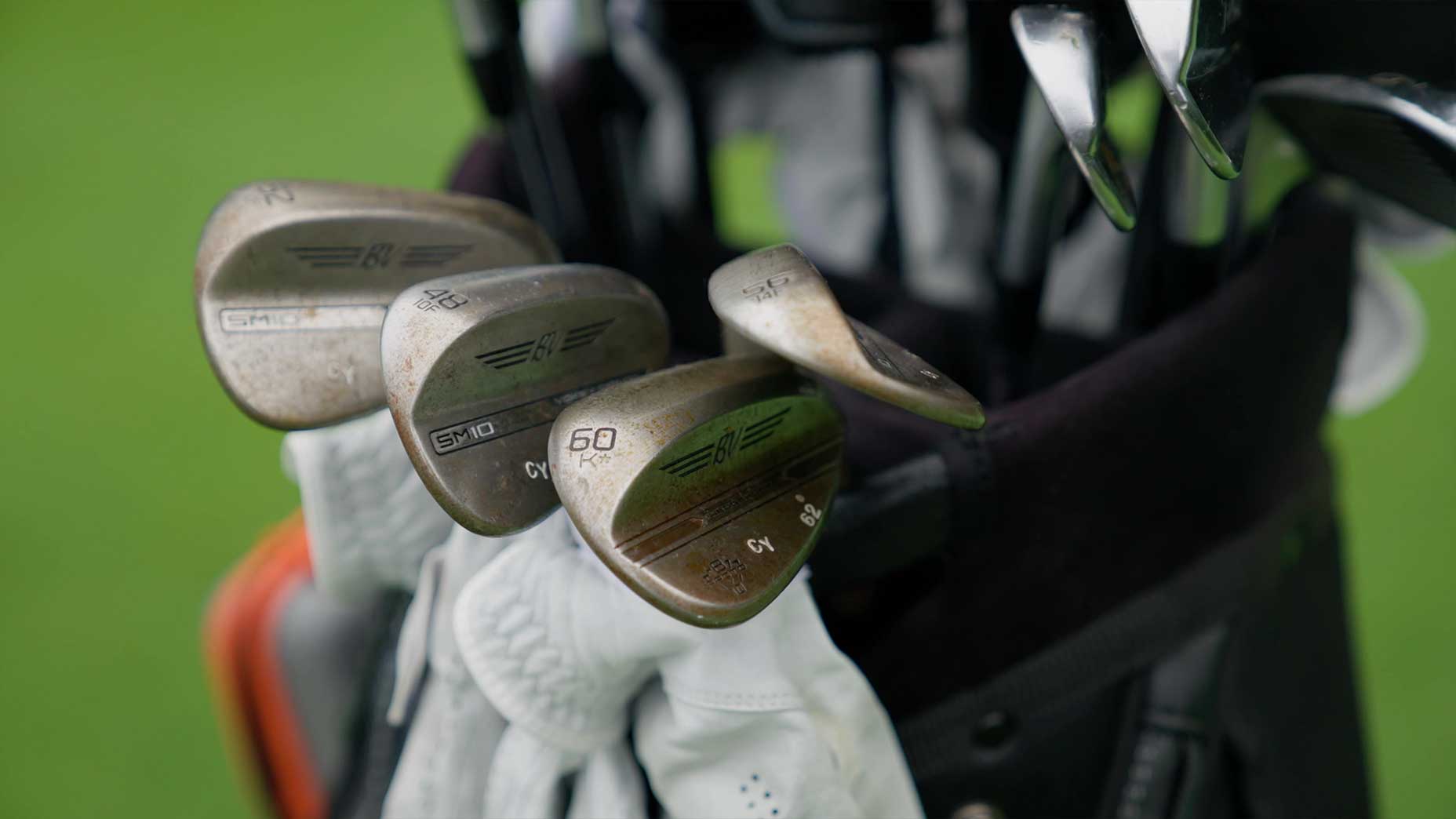
First, we need to talk about your wedge makeup. We’re not discussing specific brands like Vokey, Cleveland, or Miura here. Instead, the focus is on having the correct number of wedges from both your iron set and your dedicated wedge set.
From what I’ve seen fitting most members, golfers typically fall into one of two categories: either playing two wedges from their iron set and two from their wedge set, or one (usually the pitching wedge) from their iron set and three from their wedge set.
The right answer for you hinges on one club: your gap wedge. How do you use it? Is it exclusively a full-shot club, or do you rely on it for chipping, pitching, and longer bunker shots?
- If you exclusively use your gap wedge for full shots, it should come from your iron set.
- If you use it for a variety of shots, it should come from your dedicated wedge set.
How much bounce is right?
Once you’ve sorted your gap wedge, the next crucial step is determining the type of bounce you should be playing. Bounce is your wedge’s secret weapon, dictating how the club interacts with the turf.
- If you consistently take too much turf, you likely need more bounce.
- If you find yourself blading the ball, you’ll benefit from less bounce.
Unfortunately, you can’t stop there. Simply buying two or three wedges with the same amount of bounce—even if it’s the “right” amount for you—is a common mistake. While this might be great when conditions favor that specific bounce, it becomes a liability when the lie conditions work against it.
The problem with single-bounce setups
Consider a golfer who tends to be a “picker” and has purchased two wedges, both with 8 degrees of bounce. This setup will perform beautifully on fairways and tight lies around the green on tight lies. However, on a course like Metedeconk National, where I do my fittings for True Spec, especially in the thick rough this time of year, you’ll have a very hard time making good contact.

True Spec Golf Club Fitting
The leading edge will likely slip under the ball (resulting in contact high on the face, missing most of the grooves, and above the center of gravity). Both of these factors will cause the ball to come out soft with little to no spin, leaving you short of your target.
The inverse is also true. If you only carry high-bounce wedges, you’ll achieve great contact from 60-80 yards out and in the thick rough around the green. But when faced with touchy chips from tight lies, you’ll find them difficult and have an increased propensity to blade the ball over the green.