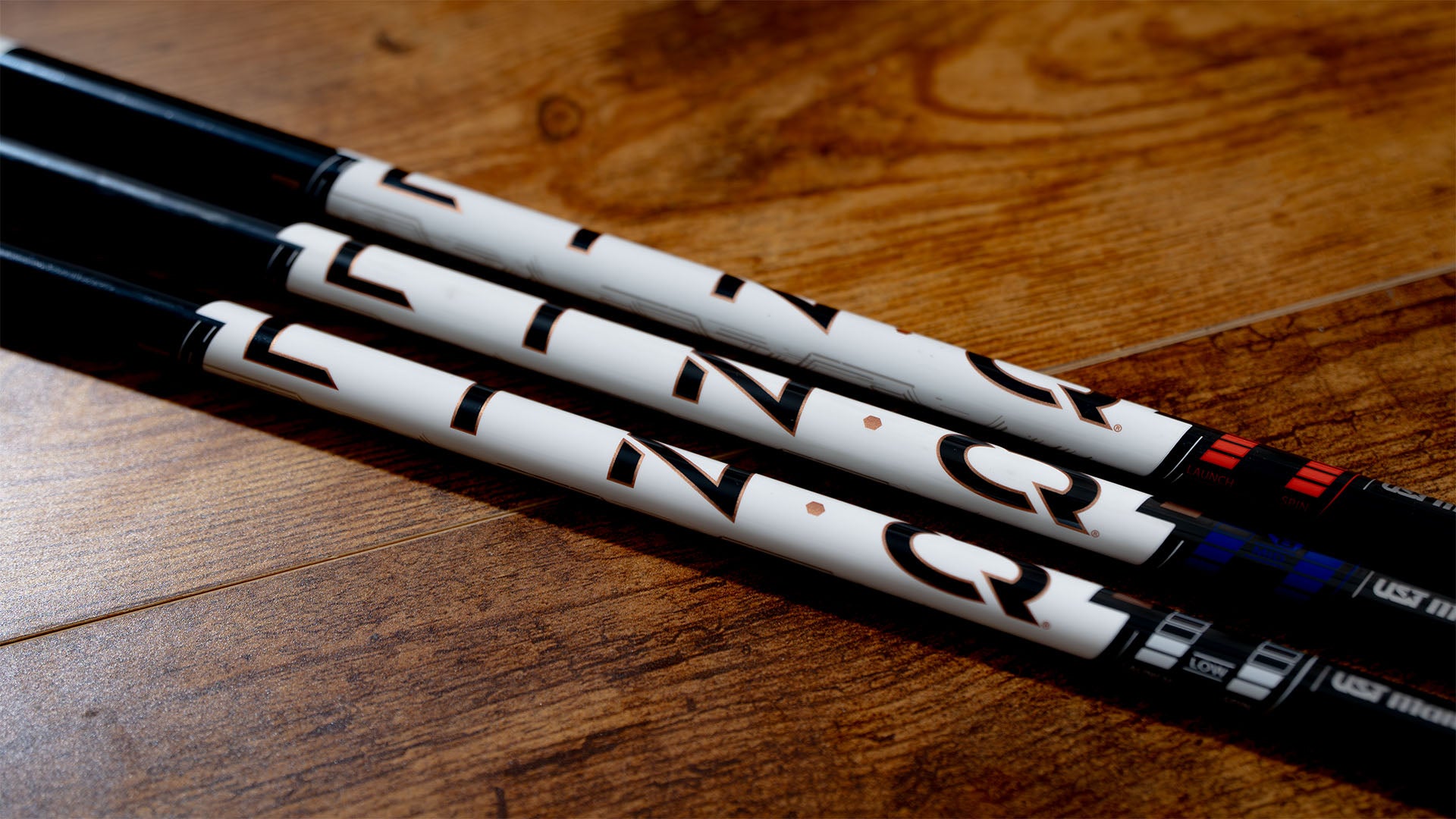
UST Mamiya has released its much anticipated LIN-Q PowerCore lineup of golf shafts, including three different launch/flex profiles. The hype around the product is intense, matching what the industry felt with the 2019 launch of the Fujikura Ventus. The PowerCore has already won multiple times on Tour, and is entering more Tour bags every day. (And mine, too!)
Question is, what makes the UST PowerCore so good?
Success on Tour
More driver changes from the TGL!
— Jack Hirsh (@JR_HIRSHey) January 3, 2026
Sahith Theegala is in the Ping G440 K and I didn't watch Sunday's match, but Xander Schauffele has switched into one of the Quantum TD models.
Not sure if it's the standard TD or the TD Max, but he was most recently in the Paradigm Ai Smoke… pic.twitter.com/F8jwpWh5w7
Not since Ventus can I remember a shaft that has created so much Tour buzz. You may not see it on the big screen yet, but there are many PowerCores in Tour players’ bags.
Ben Griffin has led the way as an official ambassador of the brand, and his LIN-Q PC White took him to the winner’s circle three times in 2025: at the Charles Schwab, the Zurich Classic and the WWT Championship. He was also a member of the U.S. Ryder Cup team at Bethpage. I’ve talked to Griffin about the switch, and, in short, he just feels confident in the shaft. I’ve seen him work with UST’s Tour rep Scott “Scooter” Wilkerson, and the relationship they have built is a rare thing.
It’s easy to see the progress and success Ben has attributed to his driver switch, and a large part of that was the adoption of the first prototype of the LIN-Q PowerCore White — which, by the way, was a pole of a shaft. I know Ben’s a strong guy, but I, for one, am thankful that they’ve backed it off just a little bit for the final retail model. Oh, and he’s playing a 7TX in his driver, which is 10 grams heavier than average. Wild, man.
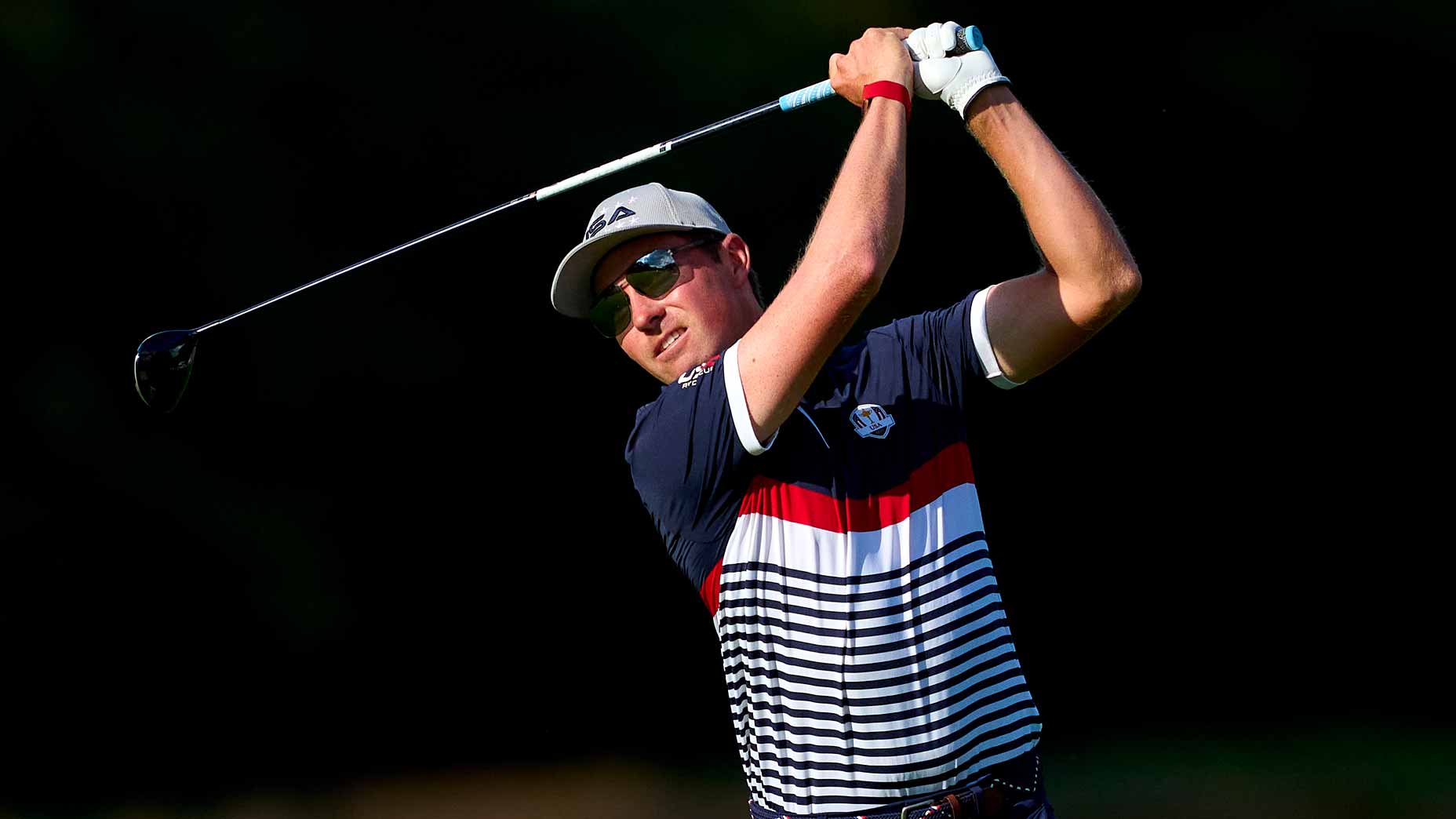
As you can see in the tweet above, our own Jack Hirsh noticed that Sahith Theegala switched into the LIN-Q PowerCore White recently with his new Ping G440K. He joins a long list of players who are currently gaming one of the LIN-Q PC profiles, and an even longer list of players who have been testing the shafts. I reached out to Sahith through Ping Tour Rep Kenton Oakes, and here’s what he had to say about the switch into LIN-Q PowerCore White:
“Shaft is so solid . . . feels consistent and kicks a little differently than what I was playing previously. Not as stiff in the middle of the shaft and lets me hit a release cut with a little less effort while still maintaining anti-left tendencies.”
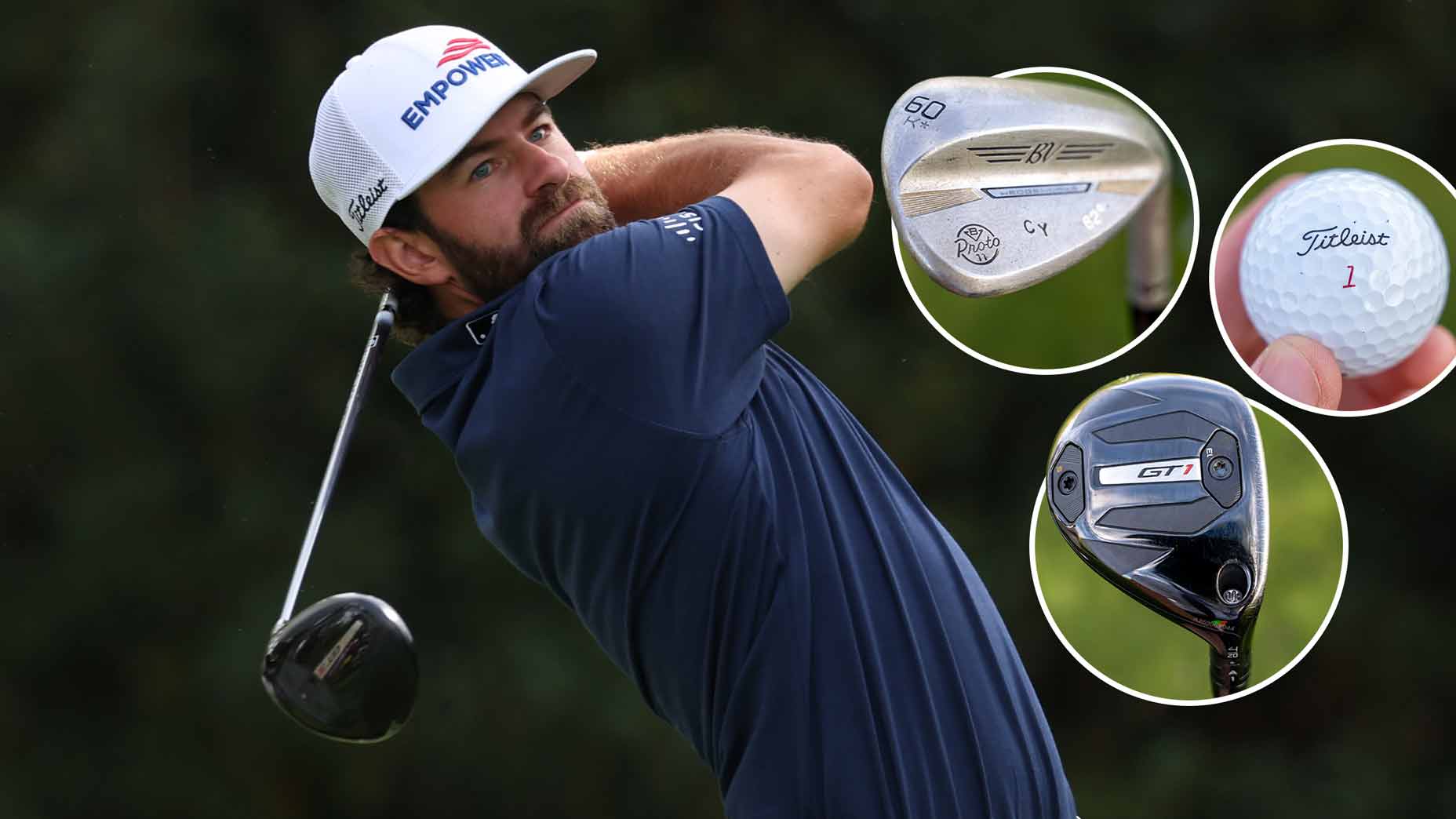
Theegala joins Ben Griffin (D, 3W, 7W), Rickie Fowler (D, 3W, 5W), Corey Connors (3W, 7W), Cam Davis (D,3W), Kevin Yu (DR), Hayden Buckley (DR, MD, 7W, 9W), Zach Bauchou (3W, 5W), Jeremy Paul (5W), Kevin Kisner (DR) and Sean O’Hare (DR, 3W) as players choosing to rock at least one UST LIN-Q PowerCore profile in their bag. And I know of several other players who are testing.
The new PowerCore lineup features three different profiles, and all are available now. No waiting on your preferred profile. By the time you’re reading this, they should be available for custom fittings and testing at local authorized UST Mamiya dealers.
PowerCore Technology
With the introduction of the PowerCore lineup comes the introduction of PowerCore technology, which is actually a combination of a couple of different design cues. The first is UST Mamiya’s new Q-Ply material that they’ve laid on the shaft in 90º angles. This helps to strategically strengthen specific parts of the shaft, depending on the profile.
This is combined with the new Nano Resin Matrix, which allows UST Mamiya to utilize less resin in between sheets of graphite when making the shaft itself. Less resin, or glue, in between layers means more feel in the shaft, as well as the ability for engineers to be more specific about where material is laid, how thick the section is and how long the section is. While each profile has a discrete design profile, they all work off of a constant taper design, which again helps to promote more feel.
This design also helps to create a level of cohesion between shaft profiles, which is something the UST team was focused on achieving. Each shaft is meant for a different swing type, but that doesn’t mean it’s necessarily for different types of players. For example, you may swing your driver and your fairway wood differently, meaning that you may prefer one profile in your driver and another in your fairway wood. Without a consistent feel between profiles, you’d probably feel uncomfortable with the switch and in a fitting bay you may move to other options.
With the LIN-Q PowerCore lineup, you can test each of the profiles. You’ll see a difference in the performance of each one, but it’s easy to swap between shafts and potentially find a group that works for your entire top end. I actually ended up finishing the season with a White in my driver, a Blue in my 4-wood and a Red in my 5-wood.

LIN-Q PC White: The Powerhouse
The White is the beast of the family, but not at the sacrifice of feel. It’s essentially a traditional “whiteboard” profile on steroids — for the modern, more aggressive golfer. The structure of the shaft is tight, but comparatively the handle is a little softer, the middle is in that mid-stiff category and the tip is the tightest section. By keeping the mid-section a little bit softer than some other competition, they add in more feel to an otherwise stout golf shaft. This allows players to feel like their more aware of where the club is during the swing.
As Theegala note, UST is pushing players to think more in terms of release profile rather than launch and spin, so while this may be marked as a low launch/low spin shaft, what the profile is really built for is the stronger player with a later release. Stronger players looking for a more generally more penetrating ball flight will get along nicely with the White.

UST Mamiya LIN-Q PowerCore White Wood Shaft
View Product
LIN-Q PC Blue: Counter-Balanced for Speed and Launch
The LIN-Q PC Blue is designed as a mid-launch/mid-spin profile great for players with a “mid-timed” release through impact. The Blue also has some counter-balanced properties, which make the shaft a bit faster than the rest of the lineup and a bit tighter in the handle section. It’s got a softer tip section than the White to help promote a little bit more dynamic loft through the swing, but the mid-section is beefed up a little bit to keep the shaft in control and still be able to work the ball up and down in flight windows.
Players who are more even-tempoed in their swings, or have a tendency to hold onto the transition a bit longer will like the feel that the Blue provides, and even more so the speed they’re going to see. I’ve loved having the Blue in my 4-wood and a mini driver as well. It seems to be the perfect shaft for my game as I get a little bit more neutral in attack angle, while still being more than workable when I want to flight the ball in a lower window either off the tee or the deck.

UST Mamiya LIN-Q PowerCore Blue Wood Shaft
View Product
LIN-Q PC Red: Soft but stable
The LIN-Q PC Red is the most interesting in the bunch to me. It’s got a handle section that resembles the White, but a mid-section that’s closer to the Blue. The tip is a bit more stable than the Blue’s, so the higher launch potential comes from the mid-section.
To me, the Red is the option that most shines when talking about release profiles rather than launch profiles. Players who may get a little early with their hands or have a tendency to rush the head in front of the hands will love the lag increase in the Red. Slower or smoother golfers will appreciate how easy the shaft is to load, which helps to keep the head behind the hands and deliver a more neutral face.
Early-release stronger players who are late in transition will also find the Red easy to square up. The Red gets faster the longer you hold the transition. It’s also been great for me in my 5-wood, and I’ve noticed that the profile responds well to tipping. There’s noticeable differences in a tipped Red vs. a non-tipped Red so it allows players to mess with their dynamic loft profile if the shaft isn’t 100% doing the trick for them.

UST Mamiya LIN-Q PowerCore Red Wood Shaft
View Product
Is the UST LIN-Q PowerCore series right for you?
It certainly might be, and, as I wrote above, the hype for this shaft lineup is legit. The best way to find any new piece of equipment is to go get fit, but hopefully you now feel a bit more armed to go in and explain to a fitter where you would like to start. Or if you’re like me and you’re just a true degenerate, you’ll go out and buy the profile you think best suits you and just give it a go.