Forged irons — clubs created from a single piece of metal — are beloved for their soft and responsive feel. But creating them is a labor-intensive process, which means forged models tend to be more expensive than their cast counterparts.
What’s the difference between forged and cast clubs? A few years ago, Patrick Boyd, founder of National Custom Works, offered a great answer on GOLF’s Fully Equipped podcast.
The best Valentine’s Day gifts for golfers
“The forging process is taking a solid billet of steel, and then through various steps, using heat, pressure, and tooling dyes to refine it into a part that can be used for golf clubs,” he said. “And in the process of forging a golf club, the grain structure — the internal structure of the metal — is further condensed. … [Forging is] really the most time-consuming and expensive way to manufacture golf clubs. With cast, you’re taking something liquid, pouring it into a mold, and then it’s cooling in that mold.”
How big is the price difference between the two? For Mizuno’s JPX 925 model, the forged option is $200 per club while the Hot Metal option is $149.99 — a significant difference, especially if you’re interested in buying a whole set.
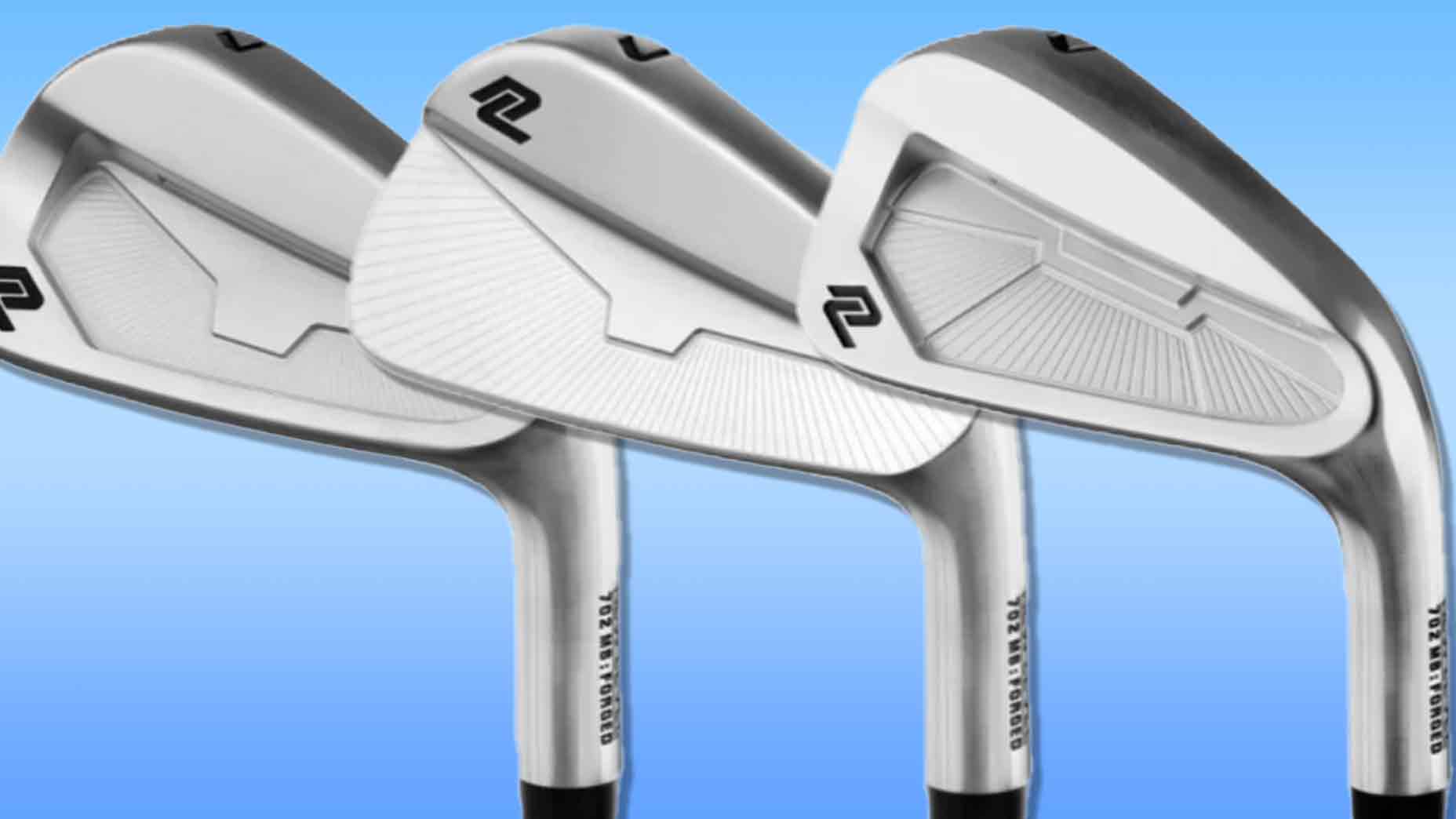
But New Level Golf Co.’s latest offering is hoping to bring forged irons to the masses — not only by designing their 702 series of irons to benefit the full spectrum of ability levels, but also by offering a more affordable price point of $149 per club.
“You don’t have to be an elite ball-striker to play a club like this,” said New Level’s Kevin Masterson on a recent episode of Fully Equipped.
New Level’s one-piece forgings also have weaker lofts than modern game-improvement irons, which helps players get the ball in the air.
Intrigued? Check out the selection of New Level’s forged irons below, and click the link to buy now!