
Golf is hard, though some rounds come easier than others. Why the variance? Well, golf is fickle. But that’s not all.
The skill and experience of the player matters. So does the difficulty of the course. In some respects, difficulty is subjective. Some of us are more intimidated by certain looks and shots than others. Some holes simply manage to psyche us out. But like a golfer’s handicap, the difficulty of a course is also quantifiable. It can be measured. The tool for doing so is the Course Rating System.
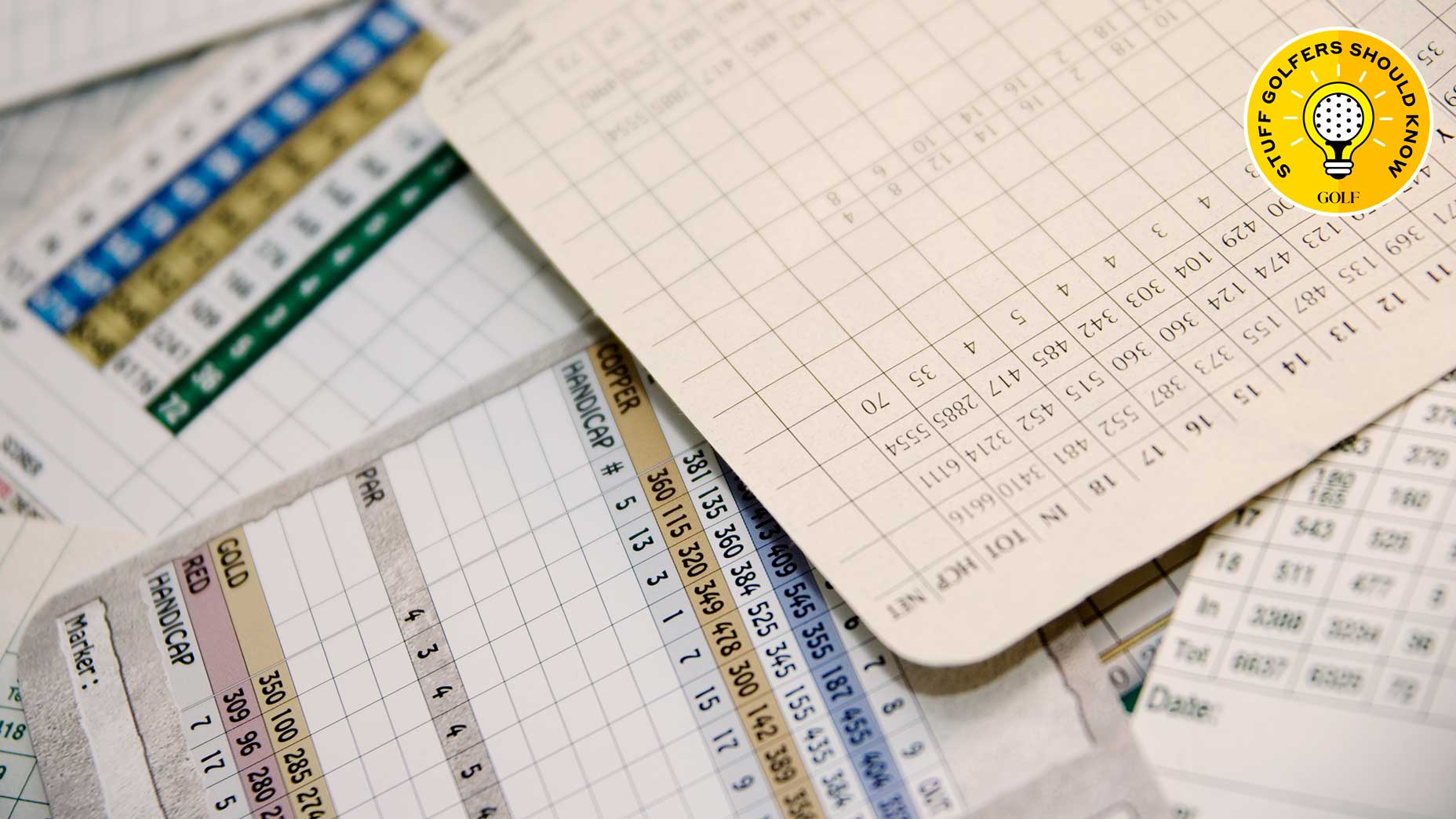
You’ll see both the Course and Slope Rating posted on the scorecard of the course you’re playing, assuming the course you’re playing has gone through the rating process, which it probably has. But what, exactly, do those numbers mean?
Plainly put, the course rating tells you how difficult a course is for a scratch player. If a course rating is, say, 72.3, that means a scratch golfer is expected to average 72.3 on his or her better rounds there. It’s a fairly easy metric to understand because it’s measured in strokes.
The slope rating can be harder to grasp because it gets into relative difficulty, taking into account players who are scratch and players who are not. That comparison gives you the Slope Rating. Arriving at this number requires the keen eye of experts and a good amount of math.


Those experts are raters from your local golf association, who inspect every nook and cranny of the course, measuring the distances to hazards, the size and contours of the greens, the severity of bunkers, and on. Hundreds of variables are taken into consideration on every hole. (For a more detailed overview of how a hole gets rated, check out this explainer). All of this information is then plugged into an algorithm, which generates the Course Rating and the Bogey Rating, both of which are need to determine the Slope Rating.
The Slope Rating can range from 55 to 155, but you won’t come across either extreme often. The average slope rating for a course is 113. If you want to come up with your course handicap (helpful if you want to know how many strokes you’re giving or getting against your opponent in a match), divide the slope rating of the course by 113 and then multiple that number by your Handicap Index.
The USGA also has a handy course handicap calculator you can use, and there’s an even more seamless version in the app (sometimes it’s best to let the app do the number-crunching for you).


