Welcome to Play Smart, a game-improvement column that drops every Monday, Wednesday and Friday from Game Improvement Editor Luke Kerr-Dineen to help you play smarter, better golf.
Over the past few months, we’ve paired with GOLF Top 100 Teacher and GOLFTEC VP, Nick Clearwater, to highlight a few different elements present in every golf swing. In our ninth and final edition of this little Play Smart mini-series, we’re talking about hip turn at impact. Here are the two things you need to know about the all-important metric.

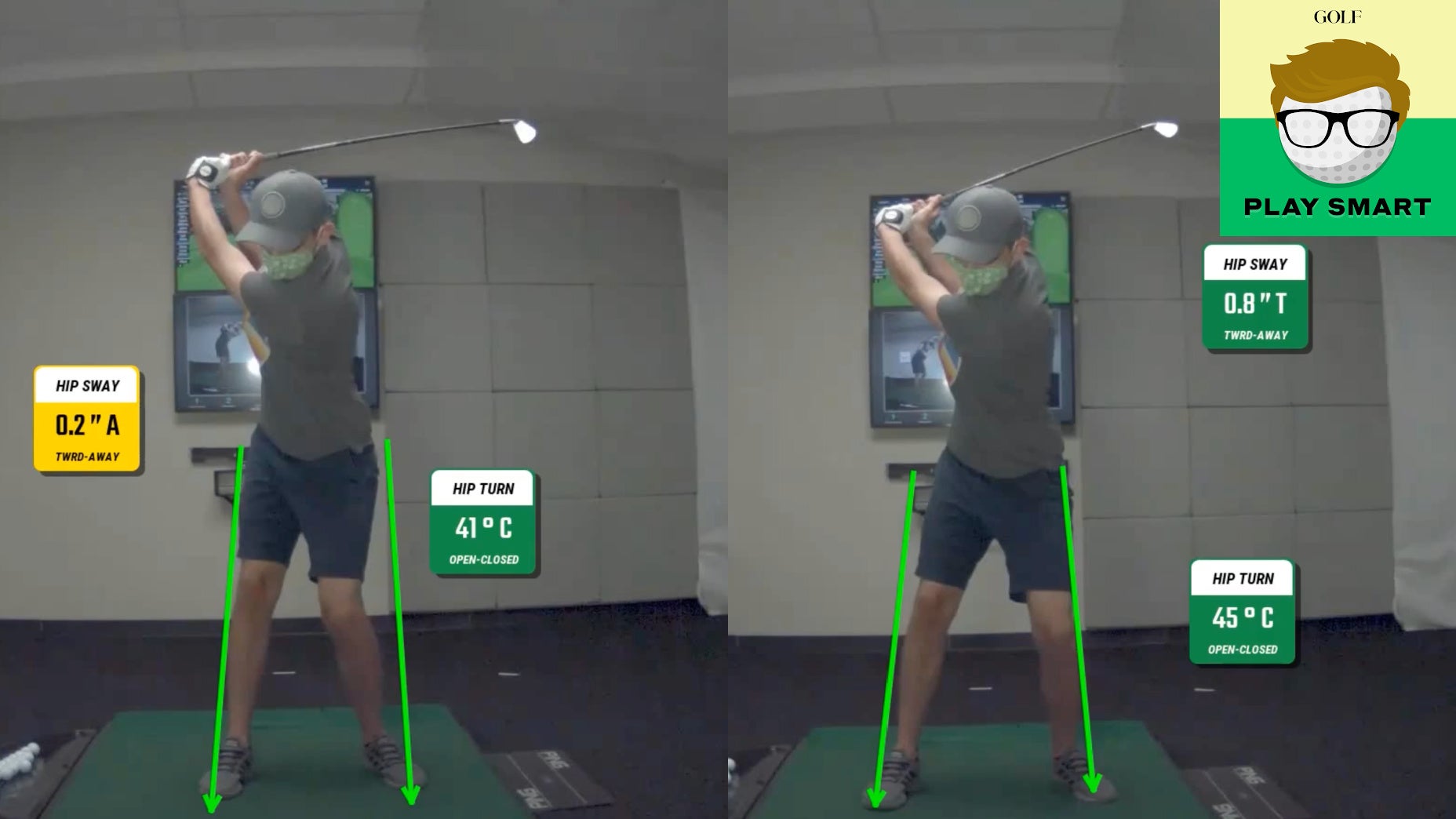
Try OptiMotion at a GolfTec near you
1. How much of it you need
As GOLFTEC’s Nick Clearwater says in the video above, average PGA Tour players turn their hips between 30 and 40 degrees, based on where they started, by the time they get to impact.
“There aren’t many who fall outside of that range,” Clearwater says. “Though it does happen on occasion.”
The ability to separate your hips from your shoulders is an important trait of good golf swings. Turning your hips and shoulders too much together tends to drag the club over the top and result in big slices. So, while hip turn is good (and powerful!) too much of it too soon can cause issues.

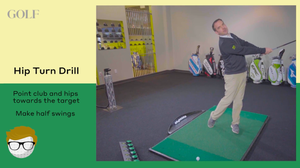
2. A drill to help
One way to help both turn your hips more, and to time that turn better, is to simply flare your left foot toward your target. As for a drill to help: Take your setup, make a miniature backswing (so your club gets no farther back than parallel to the ground) and then swing full speed, stopping when your club is back parallel to the ground.
When you do, Clearwater says your hips should be pointing at the target.