Welcome to Play Smart, a game-improvement column that drops every Monday, Wednesday and Friday from Game Improvement Editor Luke Kerr-Dineen to help you play smarter, better golf.
We talk a lot about ways to improve your backswing around these parts, and sometimes, it’s easy for golfers to get lost in the weeds of what a backswing actually is: A sequence of tilting, turning and bending.

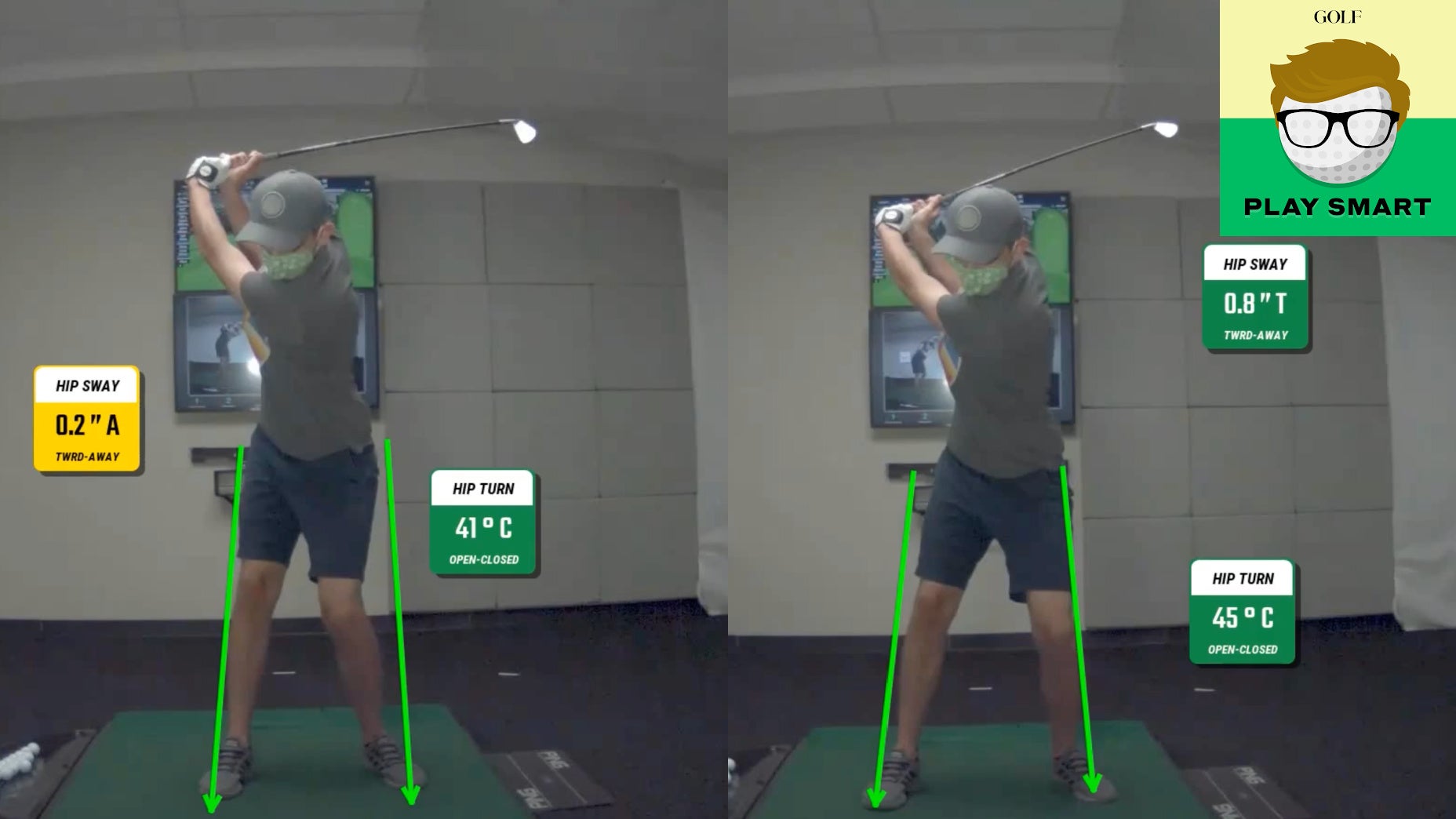
Try OptiMotion at a GolfTec near you
Recently, we’ve paired with GOLF Top 100 Teacher and GOLFTEC VP of Instruction Nick Clearwater for a series of articles about different elements of the golf swing. Today, he’s here with a few numbers that golfers should keep in mind if they’re looking to clean up their backswing…

1. Hip Turn: 44 degrees
A big, unrestricted hip turn is the key to more power and longer drives, Clearwater says. And while you most likely won’t be thinking about turning your hips exactly 44 degrees on the backswing, more hip turn is often better. Two things that can help with this: Flaring your right foot out, and straightening your right leg.
2. Shoulder Turn: 89 degrees
It may seem obvious to some, but you may not realize that no matter how much you turn your hips, your shoulders will always turn more than your hips. That’s a good thing! Most low handicaps turn their shoulders around 89 degrees, Clearwater says. And the good news is that the more you turn your hips, the easier it’ll be to turn your shoulders.

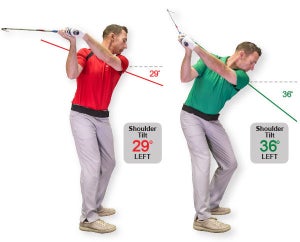
3. Shoulder Tilt: 36 degrees
But there’s one indispensable caveat to turning your shoulders: You have to maintain some shoulder tilt, too. About 36 degrees, Clearwater says. An easy way to think about this is to turn your left shoulder down towards the ground. That way, when you turn your shoulders, they’re turning on an axis, which will help you make a descending blow into the ball,
Struggling to make good contact? Get fit for irons by the experts at our affiliate company, True Spec Golf.