
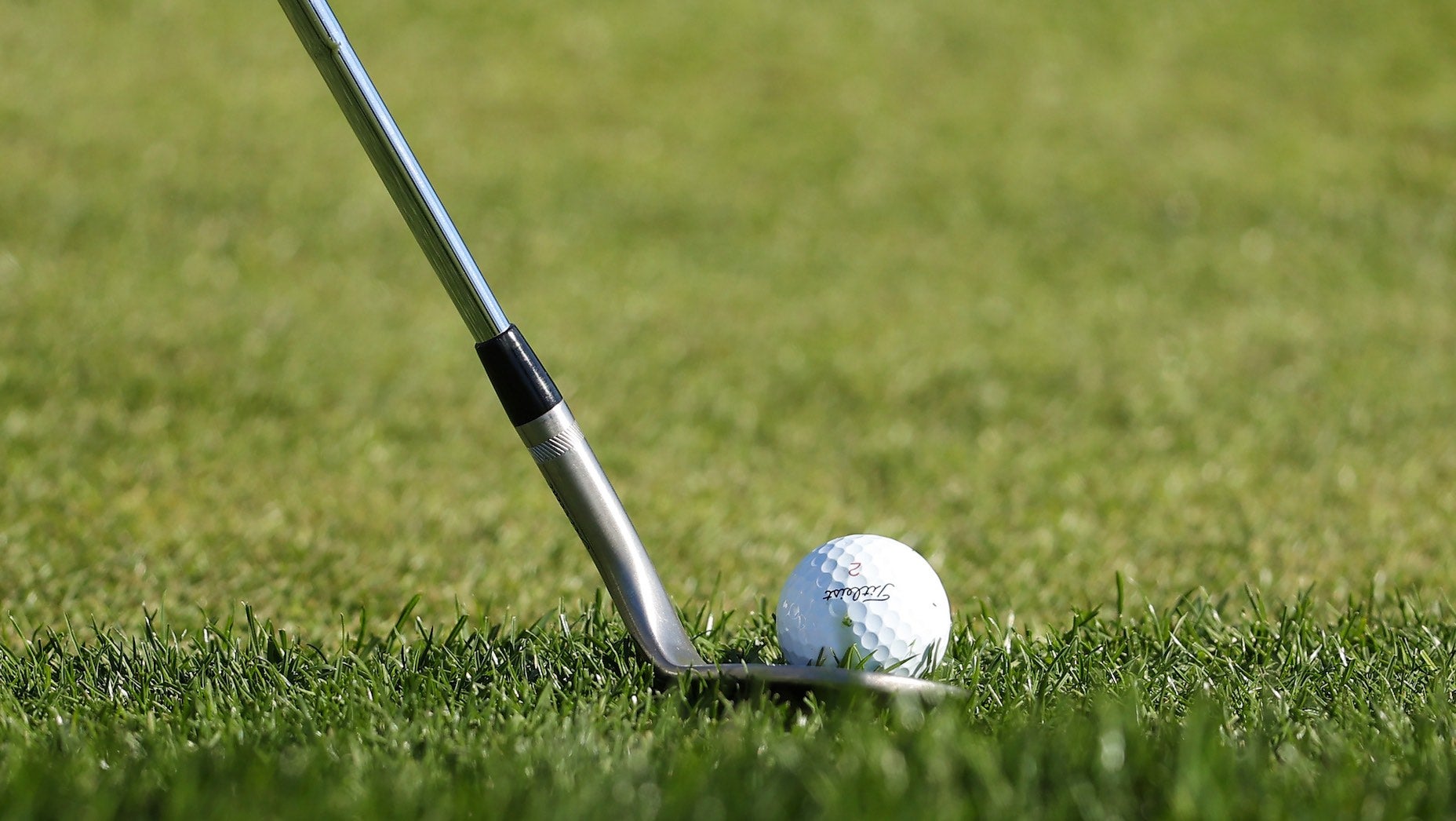
Why do you need this club? This is a question Parker McLachlin typically asks his amateur students when the conversation turns to set makeup and gapping, because as much as someone might think they need to carry 14 clubs, there are certain situations where a maximum of 12 might do the trick.
The same goes for the lob wedge, a club we’ve discussed extensively on this site in recent years. The general consensus from experts polled is that mid-to-high handicappers should remove anything with 60 degrees of loft (or more) from the bag. The club is designed for golfers who have better-than-average hands and know how to consistently deliver the head at impact. For the rest of the population, the club typically comes with more headaches than it’s worth.
In most cases, something with 56 or 58 degrees of loft is far more reliable — it’s easier to play a high-percentage pitch shot with less loft — than a full-blown lob wedge.
As the short-game instructor revealed on the latest episode of GOLF’s Fully Equipped podcast, McLachlin typically uses driver distance to determine set makeup, as well as the possible inclusion of a lob wedge.
“If you don’t hit the ball longer than 270 yards off the tee, there’s no reason to have anything more than a 60 degree,” McLachlin said. “If you hit it 240 yards, I’d probably want you to have a 58 as your highest-lofted wedge. How far you hit the ball is an important factor, because that’s how we’re going to back you into how high your highest-lofted wedge should be.”
To be clear, this isn’t a hard-and-fast rule. If you hit it 260 yards, there’s nothing that says you can’t play a lob wedge. What’s important to keep in mind is the length of course you typically play and how often you actually use a lob wedge during the round. In some cases, it might make sense to add another club at the top of the set and go to a three-wedge setup.
“If you hit it short, you’re going to want to include more high-lofted clubs. You’re not necessarily going to want a 64 degree,” McLachlin continued. “For someone asking about the 60 degree they need to get, I’ll normally tell them we should start with clubhead speed and ball speed to see where they’re at. If we can start there, you may not need a 60. You might want a 58, 57 or 56 as your highest-lofted wedge. If you’re shorter [off the tee], you need clubs to hit it further. Further will be your friend.
“Maybe you go down to a driver with 7 degrees and learn to hit up on it. Then you add a 12 or 13 degree — maybe a mini-driver or 2-wood — and a 5-wood on the stronger side. You want to stack the high end of the set, but it leaves less room for the wedges. That’s a good thing for someone who struggles with length. If you can address that, then we can address the wedges. Because you might need only three wedges.”
The next time you head to the course, pay attention to not only the number of times you pull a lob wedge from the bag but also the number of times you execute a successful shot with the club. If getting up and down feels like a coin flip with a lob wedge, then it might be time to take a closer look at the set makeup.
Want to overhaul your bag for 2023? Find a fitting location near you at True Spec Golf.


