The Golden Gate Bridge, the Eiffel Tower and your putting stroke. All three are improbable feats of man, all three required the meddling of great minds to reach their present appearance and now all three feature the same stabilization technology.
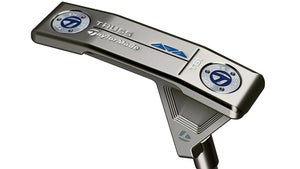
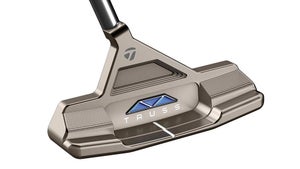
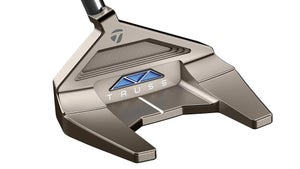
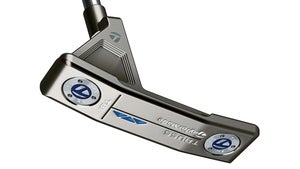
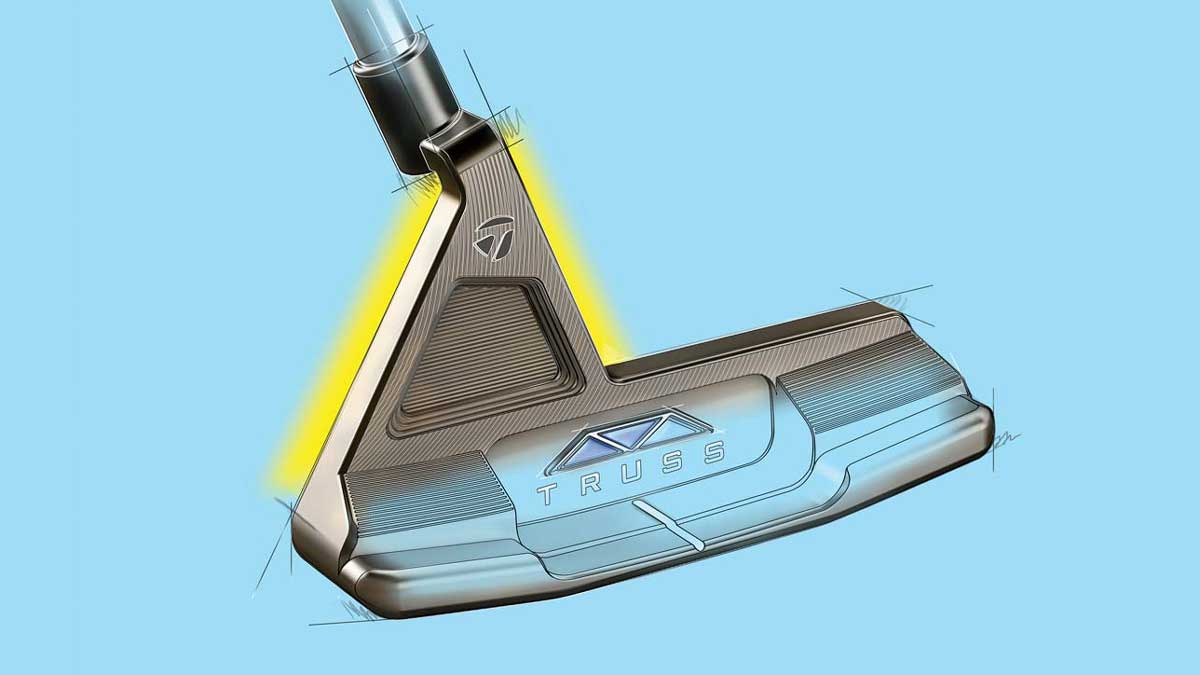
In TaylorMade’s new Truss blade putter, a girder-like mini-structure sits prominently at the base of the club’s hosel. It’s definitely an unorthodox blueprint, but “anytime you have innovation, you have to push the envelope on design,” says Bill Price, senior director of product creation, putters and wedges at TaylorMade.
Pushing the envelope or not, Price knows it’s only weird if it doesn’t work. Here’s how it does.
1. THE TRUSS
Trusses are load-distribution linchpins redirecting external forces to improve structural stability and durability. In the putter’s case, this means a wider sweet spot. “On off-center hits we found 60 to 80 percent improvement on twisting,” Price says. “It provides stability for someone who’s not hit-ting the center as well as they should.” The increased surface area of the blade contacted by the truss (from the heel to nearly the midpoint) also means golfers should feel more control.
2. TOE WEIGHTING
To counteract increased heel weight caused by the truss, engineers inserted weights into the toe twice the size of the weights in the heel. In the standard 34-inch Truss, the weight in the toe is 15 grams, while the weight in the heel is 7.5.

3. THE CENTER SHAFT
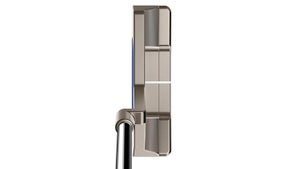
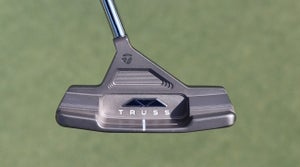
In order to ensure the Truss had the necessary elements to improve forgiveness and stability without affecting the look of the putter at address, engineers incorporated a center-shaft design. At address, the Truss is nestled in the area be-tween the heel and center of the blade and is blocked from the view of the player by the putter shaft. Price says: “When you stand over it, it looks just like a regular blade putter.”
Editor’s Picks


4. THE CENTER CAVITY
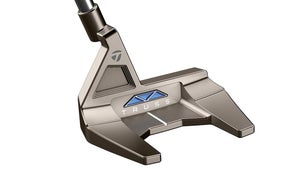
You’ve seen the Golden Gate Bridge and the Eiffel Tower, and you might wonder why TaylorMade’s Truss—which comes in four models—doesn’t have a similar hollowed-out design. The answer is simple: TaylorMade preferred that the Truss have an open design, but USGA guidelines forbid it. As a workaround, the area filling the would-be opening is an extremely thin layer of metal. Price says any change caused to the putter by the cavity—if there’s any at all—is nominal.
MORE PHOTOS OF THE TAYLORMADE TRUSS PUTTERS