
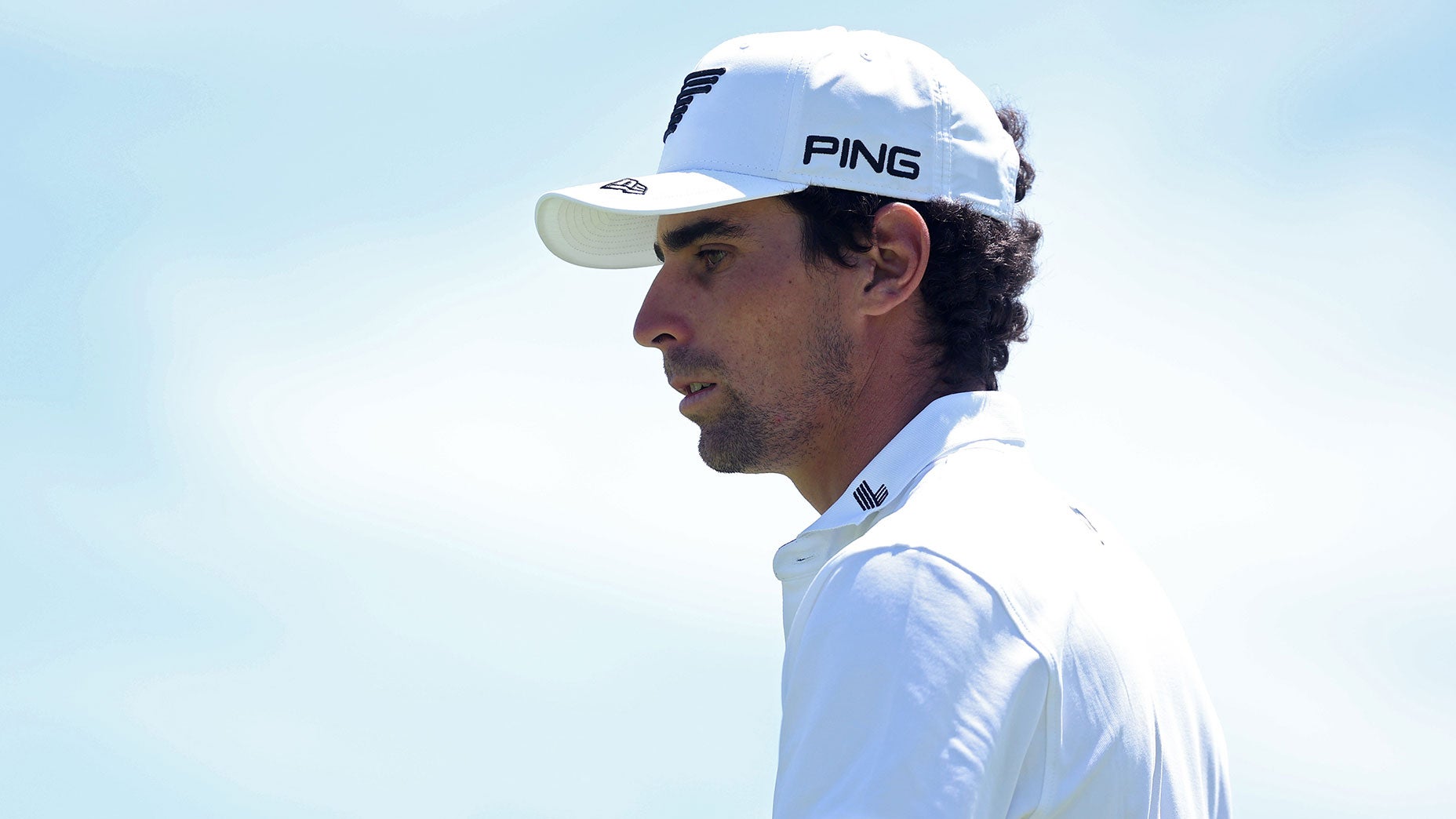
SOUTHAMPTON, N.Y. — We were always going to get here, where a governing body hands out a messy penalty to a player who doesn’t think he deserves it. Messy because there was no footage of it, and because the USGA had no intention of filling in the gaps.
For those slow to this morning’s golf news, Joaquin Niemann received a two-shot addition to his scorecard Friday morning once he finished his (delayed) first round of the U.S. Open. His behavior late Thursday night, while playing the 6th hole and making a 9, was so far removed from expectation, the USGA ruled, that they added a two-shot penalty to his score. A member of the USGA rules committee was on hand. So was a marshal who outlined the incident to The Athletic.
The impetus for the penalty is new: a 2026 code of conduct policy that is the result of collaboration between the game’s governing bodies (the four majors and the PGA Tour). The desire is simple: a standard of decorum for the world’s best players. As Kerry Haigh of the PGA of America put it last month, a policy ensures “everyone is behaving appropriately, professionally, and as we would want our children and people watching to see the major championship.”
The only problem is that each major interprets the rule differently, implements it differently, and varies in the transparency they provide when infractions occur. Put another way, who is to know the line between penalty and warning? Between warning and Play On? Who is to know how long a club throw must be for it to merit an auto-infraction? The fans at home certainly don’t.
Each governing body rules in their own way, but they haven’t been particularly good at clarifying it. During the final round of this year’s Masters, Sergio Garcia damaged a tee box and snapped the shaft of his driver over the leg of a cooler. He received a warning from an official mid-round and declined to talk about it afterward. Club officials confirmed the warning to the press. Bob MacIntyre received a similar warning when he was caught flipping the bird at the 15th green when his shot fell short and into a water hazard.
At the PGA Championship in May, there were no such warnings given … we think! The PGA of America does not acknowledge warnings. They’ll publicize only when a player infracts again, after the warning.
Now here, at the U.S. Open, whatever Niemann did was so egregious that it blew right past the need for a warning, straight to a two-shot penalty. And not mid-round, but the next morning, between rounds. His 6th-hole 9 became an 11, and he said it took him about 30 minutes to cool down after finding out. But only after making a hearty argument with officials. He felt two strokes was a “little bit extra-penalized,” but it didn’t matter. He eventually accepted it and, to his credit, held a quick press conference on the topic Friday afternoon. Most importantly, though, as we move forward in a Code of Conduct World, one thing is worth noting:
Niemann didn’t know the rule existed.
Despite sound reasoning to keep its competitors in line, the golf world had agreed to operate with a bit of a black box. Never fully publicizing how a penalty should be disseminated, or what exactly crosses the line. Posting guidelines in the locker room on corner walls that players stroll by without concern. The governing bodies mostly want to protect the competing class from themselves, to gradually rein in behavior — see: Wyndham Clark’s last U.S. Open — but they have not wanted to over-communicate when things do happen, keeping everything so … grey. It was only a matter of time before a moment like Thursday evening took place.
Which is exactly why the work of Gabby Herzig was so important. The golf writer for The Athletic — facing a lack of intel — went to one of the few people who could speak to the incident: a course marshal who saw it first-hand. Herzig chatted with several people at the scene and tweeted the details she found. Hundreds of fellow media members were suddenly less confused about what constitutes a serious offense. Hundreds of thousands of golf fans were made smarter about how future golf tournaments will be policed. (The PGA Tour is working on its own code of conduct and will surely consider this moment seriously.)
Disseminating info the USGA wasn’t inclined to was a favor for the entire industry, players included. It might have been a shock to the system, but now his actions will be remembered as a sort of third rail. You just hope everyone was paying attention.


