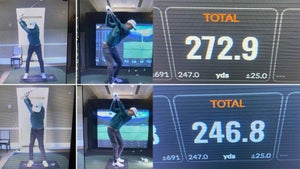
If there’s one thing that’s both really difficult to do in your golf swing, yet really important that you actually do, it’s rotating. A big turn on the backswing creates power, and similarly big rotation through the ball allows you to release that power into the ball.
But golfers get into trouble in a variety of ways when it comes to rotating. Either they don’t turn enough on the backswing, which costs them power, or they struggle to turn on the downswing and flip at the ball with their hands, which will lead to consistency issues. That’s the problem GOLF Top 100 Teacher George Gankas designed his new training aid — the G Box — to try and solve.
“I designed this to help every golfer, of every ability level,” he says.
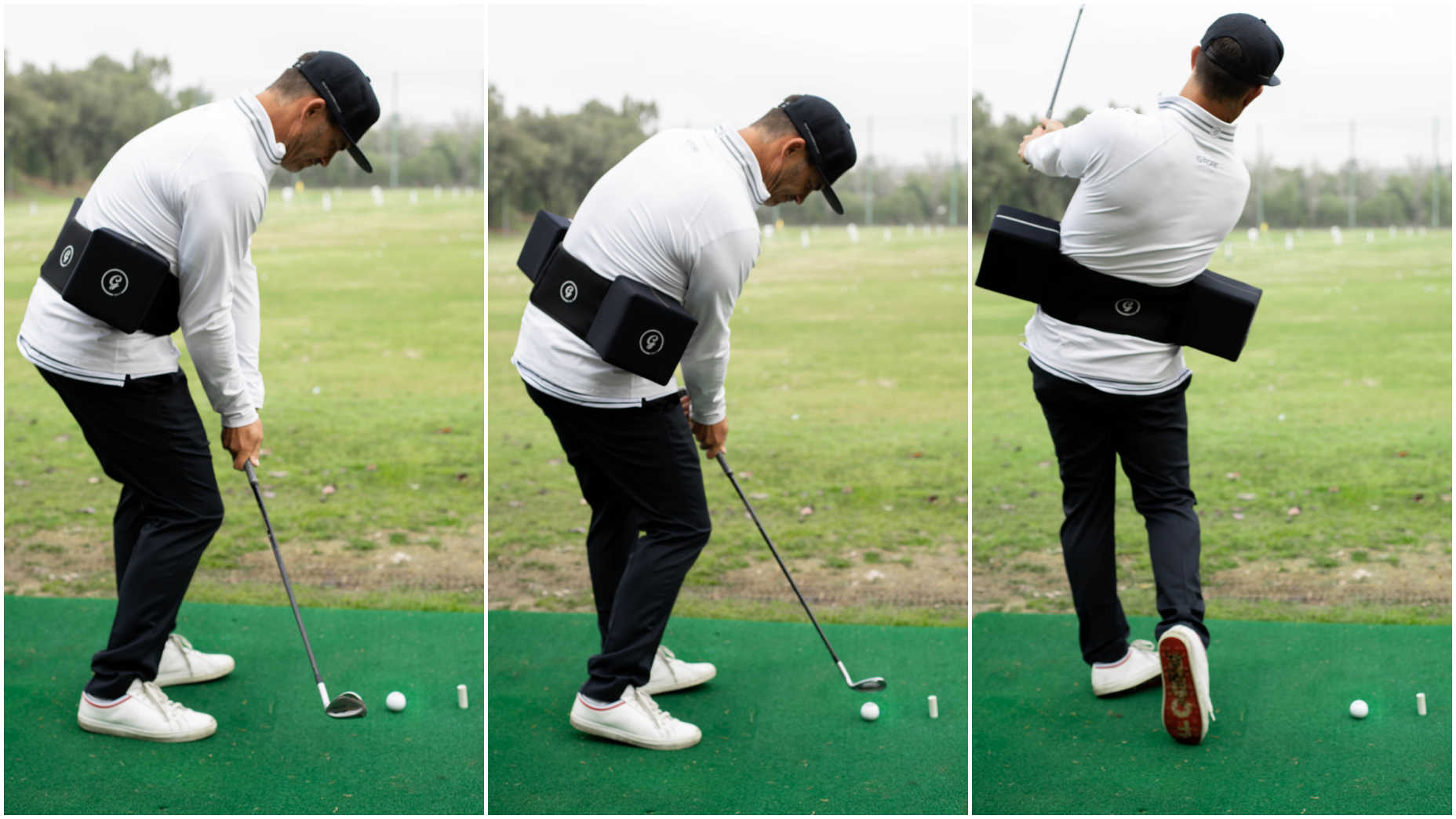
The training aid works like a belt. You wrap it around your stomach, making sure the belt is centered and that the two boxes are on either side of your torso. From there, you simply have to start hitting balls, keeping two things in mind:

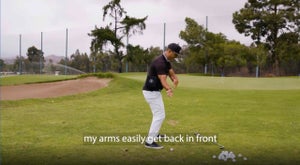
1. Arms in front of the box
The primary purpose of the G Box, as Gankas explains here, is for the boxes to serve as an obstacle for your arms to swing around. Without the boxes, many golfers get their arms too far behind their body on the downswing and compensate by flipping their hands through impact. You may know it as “getting stuck.”
The boxes being there mean you can get your arms back out in front of your torso — if you get stuck, your elbows will hit the box on one side. And while this movement will help your swing, to prevent you from overcorrecting, you need to add one more thing, Gankas says.

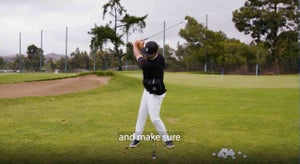
2. Turn on the backswing
In order to make sure you don’t cheat the training aid by making a short backswing, Gankas suggests putting a club on the ground so it’s perpendicular to the ball. As you make your backswing, make sure the box on your lead side (the one facing nearer the target) moves level to or behind the club on the ground.
Doing this, combined with your natural inclination to keep your arms in front of the box, will help solve one of the most common problems in golf, Gankas says.