Collin Morikawa’s incredible success over the last two years has not only made him one of the game’s hottest players, it’s also helped raise the profile of his longtime coach, GOLF Top 100 Teacher Rick Sessinghaus.
Sessinghaus has been working with Morikawa since Morikawa was only eight years old, and is understandably proud of the success they’ve achieved together.
On this week’s episode of Off Course with Claude Harmon, Sessinghaus and Harmon talked about a range of topics, one of them being the importance of the pre-shot routine. According to Sessinghaus, there are four questions players should ask themselves as they prepare to hit a shot: What is the situation? What are your options? What is the shot you’re trying to hit? And finally, what is your target?
When it comes to assessing the situation, Sessinghaus said, there are a lot of factors in play. Among them: the lie, the slope, wind direction and carry distance required.
“The player has to know their game, be able to internalize all that broad information: What does this mean to me?” Sessinghaus said. “You have to know your game. How far do you hit the ball? What’s your normal ball-flight pattern?

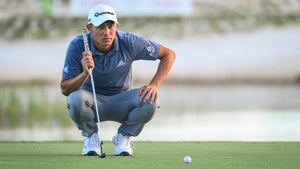
“The stage two part is really internalizing and analyzing, what do these cues mean to me, based on my strengths, based on my shot patterns, how I’m feeling that day,” Sessinghaus continued. “Then we get into stage three, and we take all of that information, we’ve gotta narrow it. A challenge for really good players is, they have too many options at their disposal. But the average player should only have really one option. Let’s not overcomplicate it.”
Stage three, says Sessinghaus, is the time when players make a decision, and get closer to execution. At this point, some players may visualize the shot they’re trying to hit or take a practice swing.
“In a perfect world, we are now thinking about a target and reacting to a target,” said Sessinghaus.
Sessinghaus says having a swing thought at this point is fine, but it’s better to keep it tempo-based or timing-based.
“Those things that are definitely in our control that’s not going to get in the way of being an athlete and in the motion,” he said.
For more from Sessinghaus, including how recreational players can play their best more often, and how Morikawa is managing his expectations after winning two majors, check out the full interview below.