
The thing that’s so wonderful about the golf swing is the same thing that makes it so confusing: Something may work for another golfer that may not work for you.
That’s the basis of the phrase “swing your swing.” The best players may have certain things in common, but their golf swings are also their own. A product of their unique biomechanics.
One of the most obvious differences between golfers comes in the literal way they grip a golf club. Some golfers have stronger grips, with their hands more “under” the grip. Others have a weaker grip, with their hands more “on top” of the grip. A neutral grip, with your hands on the “side” of the club is somewhere in between.
Your best grip depends on your unique body, and however you hold the club, the towel drill works for every kind of golfer, as GOLF Top 100 Teacher Josh Zander explains below.
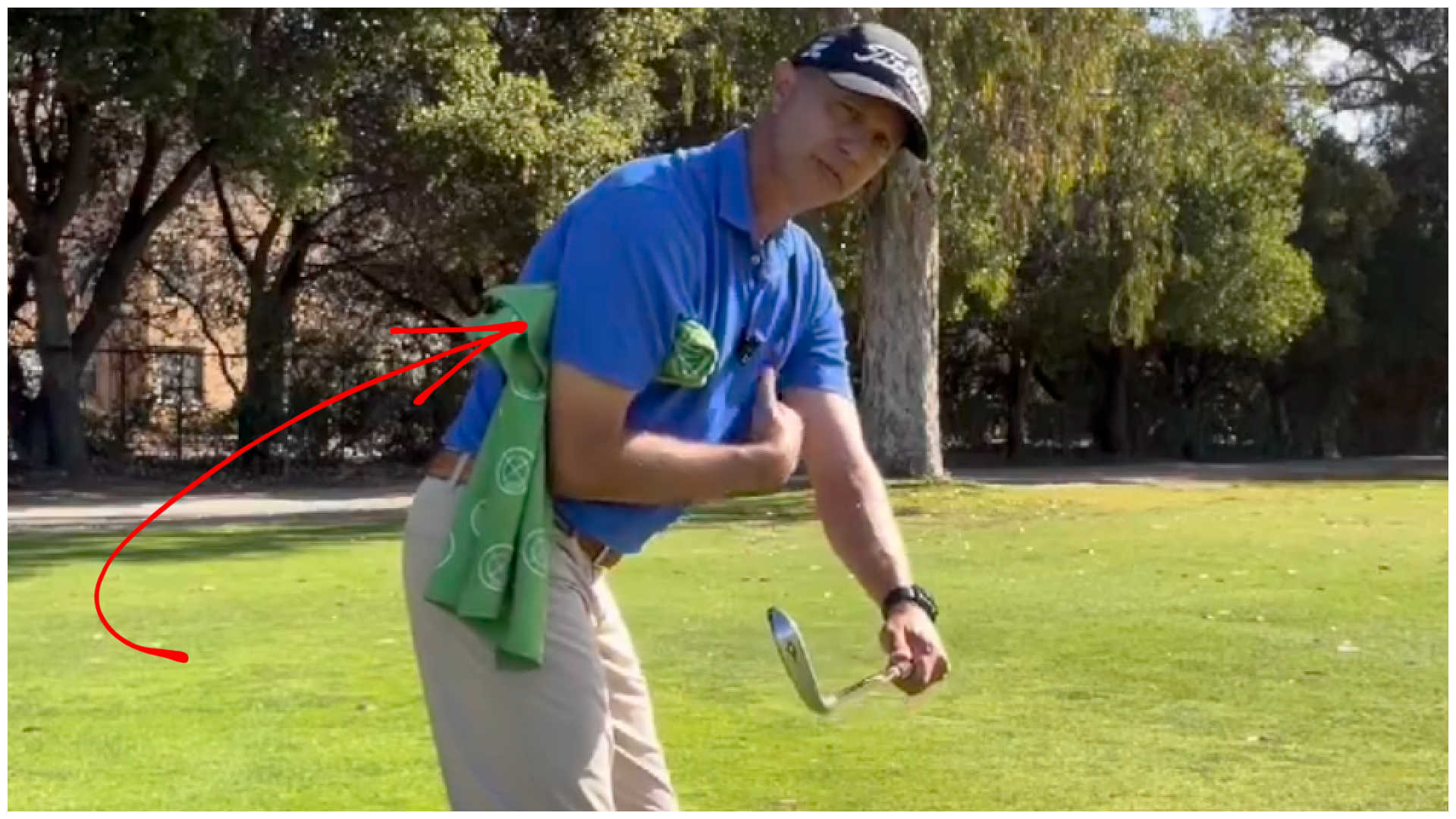
If you have a stronger trail hand grip, with it situated more under the grip, this will naturally make your arm want to fold into your body. You can practice this by placing the towel underneath your trail arm’s armpit as you hit balls.
“As I swing the club back, the lead arm disconnects, but the trail arm stays very connected,” Zander says.

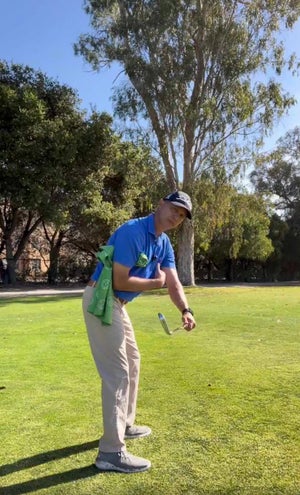
If you have a weaker, more on-top, trail hand grip, Zander suggests the opposite: Putting the towel under your lead arm to help the club release more around you.
“As you go back, your left arm will stay connected but your right arm will have some space,” he says. “If there was a towel [under your right arm] it would fall out.”

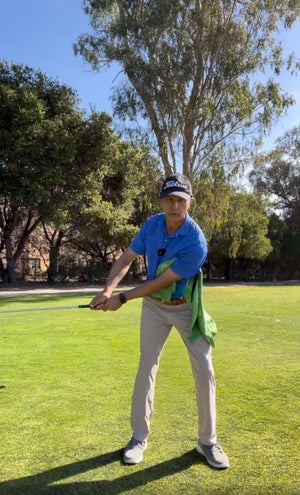
And if your grip is somewhere in between,
“You’re going to feel that connection of your left arm against your torso and your right arm against your torso as you swing the golf club,” he says.

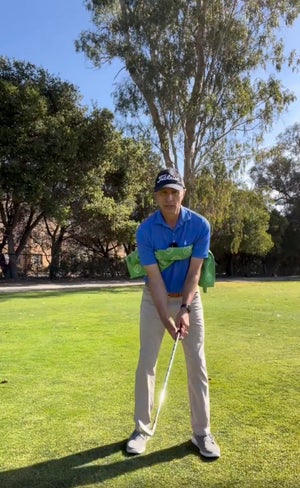
Whatever your grip, this drill is best for when you’re hitting balls with a wedge or short iron. But nevertheless, it’s three different variations for three different types of golfers. Stick to the one you’re best suited for, and you’ll hopefully be playing better golf at the end of it.


