
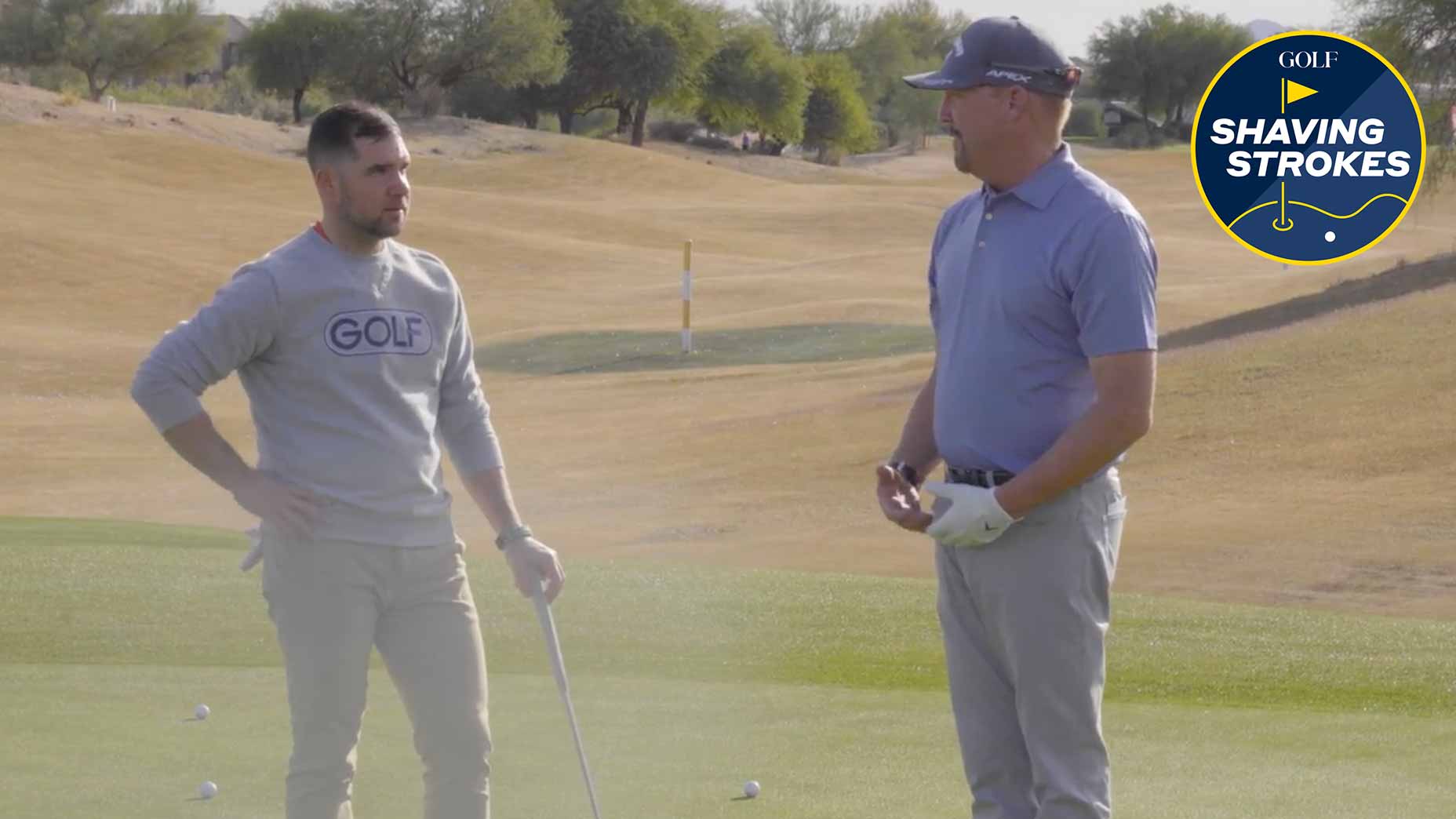
Welcome to Shaving Strokes, a GOLF.com series in which we’re sharing improvements, learnings and takeaways from amateur golfers just like you — including some of the speed bumps and challenges they faced along the way.
If you’re missing more putts than you probably should be, it’s time to rethink how you approach the flat stick.


As someone who has given away way too many strokes on the greens so far this golf season, I needed some firsthand advice on how to lower my putts per round. Luckily, GOLF Top 100 Teacher Scott Munroe was happy to assist, and shared a few traits that all great putters have in common.
In the video below, Munroe reworks my setup, my aim, and my contact — so take a look for yourself to see how his tips can help you sink more putts!
Improve your putting by following these keys
Munroe starts the video by getting straight to the point, revealing a trait that all great putters have.
“One thing that all real good putters have in common is topspin,” Munroe tells me.
So how can a mid-handicapper like myself roll more pure putts? Munroe shares a few different ways, telling me how he likes to set up in order to get perfect topspin.
“I put my elbows into my side, I bend from the hips, and from here, all I need to do is rock my shoulders back and through,” he demonstrates.
As I mimic his motion, he reminds me to keep my lower body still, eliminating unnecessary movements with my legs during my putting stroke.
Next, Munroe and I talk about how he likes to use the line on the golf ball when putting — which, he tells me, isn’t actually for aim.
“I don’t like to use the line for aim, I use it to [determine] where I want the ball to start,” he tells me. “I want the ball to start on the right lip because it’s going to break about a half a cup.”

After making my first stroke, Munroe has me stand behind him to get a view of the putt straight down the line, which helps me figure out why I push so many of my putts to the right.
“A lot of your putts go to the right, don’t they?” he asks. Nodding my head yes, he explains that it has everything to do with my aim.
“There you go. It wasn’t anything wrong with your stroke, it was your aim [that was off],” he explains.
To help me improve where to aim, Munroe tells me to set the clubface down, square it up to the line on my golf ball, and then make my stroke.
“I want you to set up to the clubface,” he says. “So put the clubface down first, look at the target, and, it’ll feel uncomfortable at first — like you’re aiming way left — but you’re not. You just have to trust it.”
As the video shows, my ball rolls with perfect topspin, dropping softly into the cup.
“Nothing but net,” Munroe says.


View Product


