Welcome to Play Smart, a regular GOLF.com game-improvement column that will help you play smarter, better golf.
Holing putts is one of the most valuable skills a golfer can possess. No matter how good your ball-striking is, without the flatstick to match you’ll never reach your full potential. You’ve got to have the ability to convert chances on the greens if you want to post low scores.
Making putts requires two distinct skills. Your putting stroke is one (obviously), while the ability to read greens is the other. The two are complimentary of one another, and you must have both skills to hole putts.
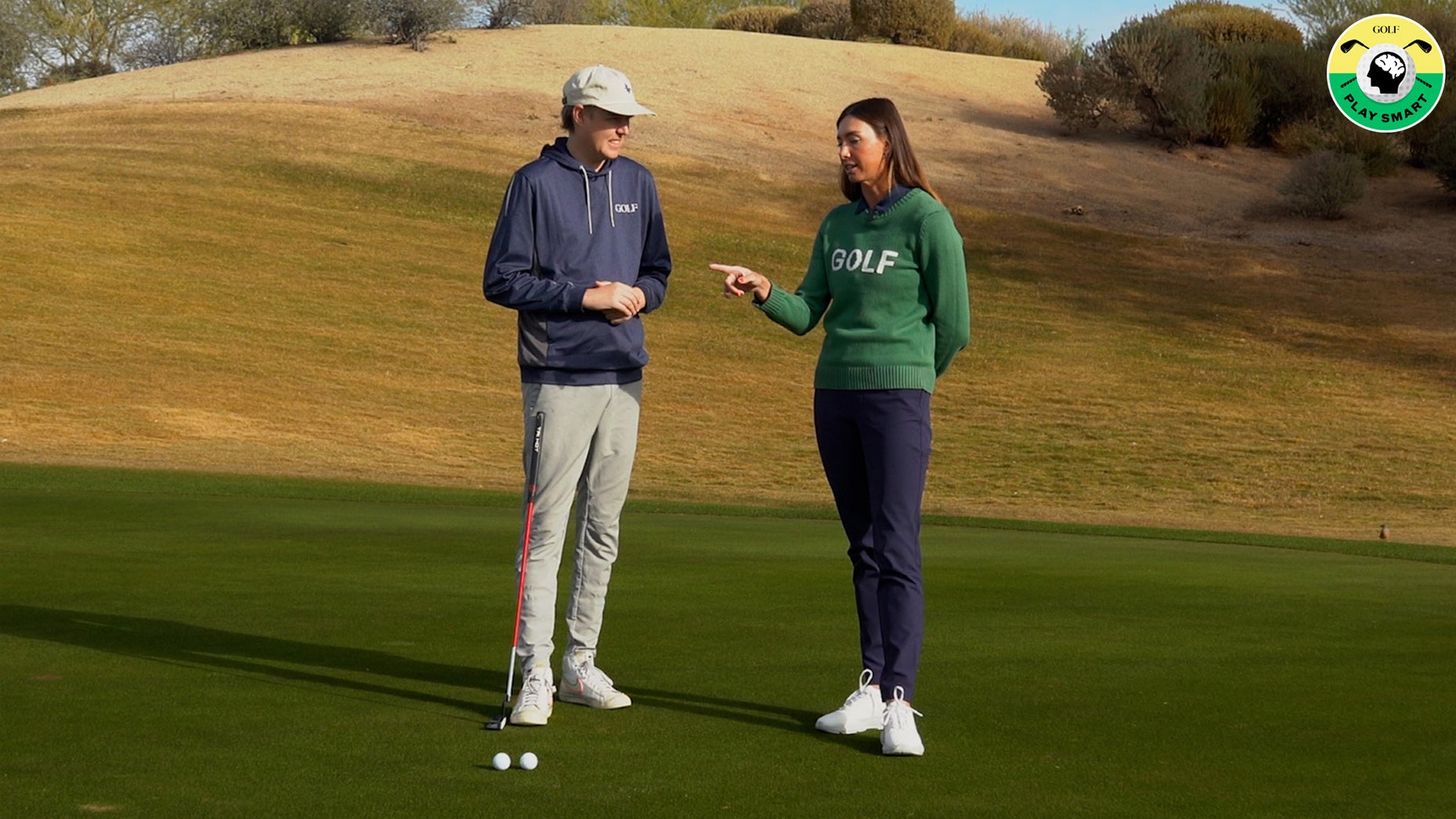
We’ve written plenty in this space about putting technique, so today we’re going to cover the other crucial skill — reading greens. And for more on that, we turn to instructor Carly Schneider.
How to simplify your green reading
Everyone has their own method when it comes to green reading. Some are very scientific in their approach, while others have a more artistic method. There is no right or wrong way to read greens — all that matters is you find something that can consistently give you the proper reads.
If you’re a recreational player and don’t have hours to dedicate to practice on the greens each week, it’s best you keep things simple in your approach. Don’t get too bogged down in your green-reading technique.


Instead, you just need to ask yourself two questions: Is the putt uphill or downhill? And does the putt break left or right?
“In a practice setting what I’d do is have my students throw a bunch of balls around the green and practice answering those two questions over and over again,” Schneider says.
Train your eyes (and if you want, your feet) to understand what putts on different slopes look and feel like. Move around the practice green and rolls putts, always asking yourself those two questions before you hit the ball.
If you can confidently answer those two questions when reading every putt, you’ll put yourself in a great position to roll in many more.