
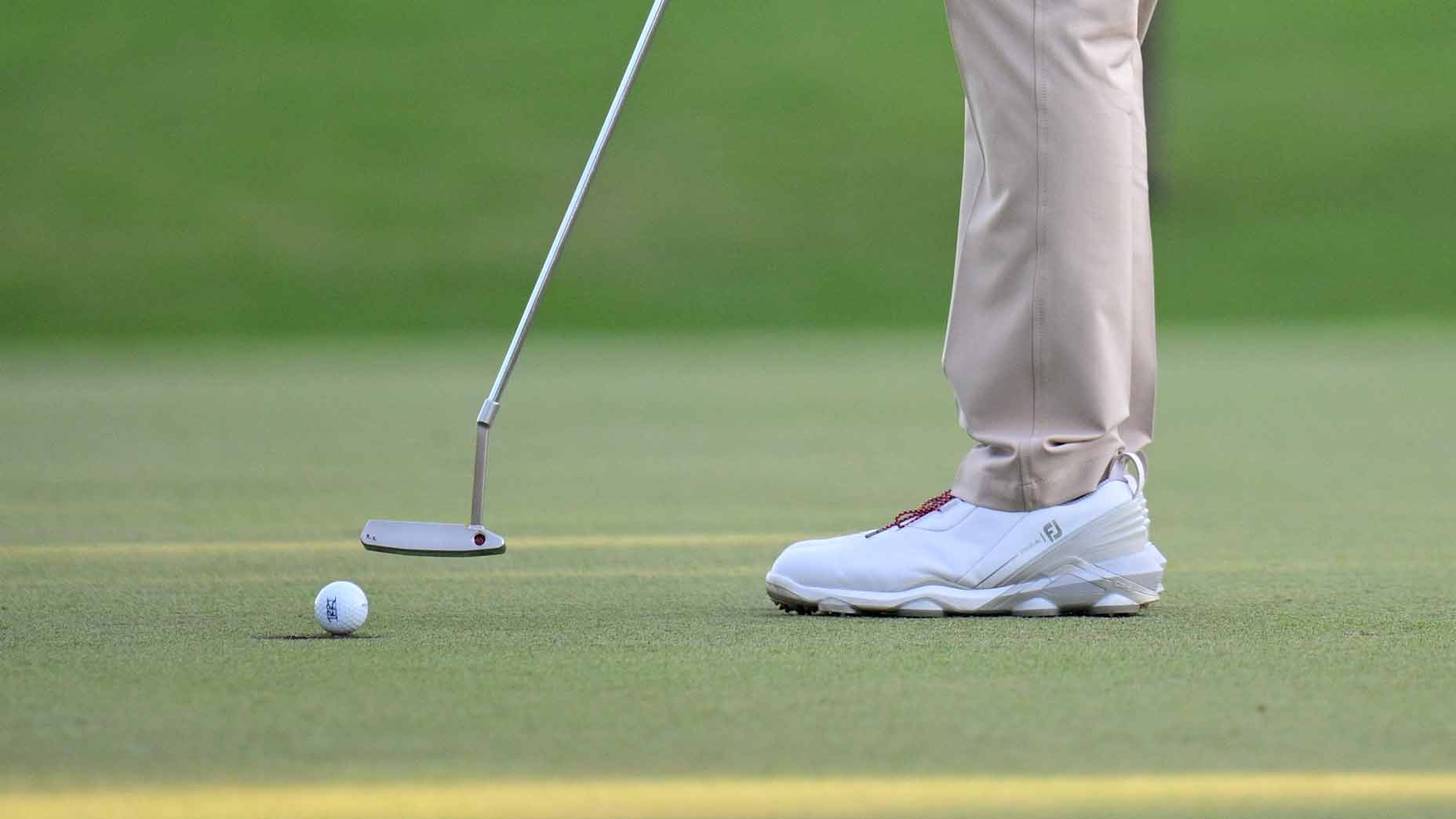
PGA Tour pros make golf look easy. They can fly the ball 300 yards with ease, flag irons to tucked pins, and stop chip shots on a dime. But perhaps the most impressive element of their games comes on the greens. With a flatstick in their hands, they are absolutely deadly.
For the 2022-23 season, the Tour average for made putts inside 10 feet was 87.8%. The Tour leader, Denny McCarthy, made over 91% of his putts inside that same 10-foot circle. Heck, even the worst performer in this range made nearly 85% of his looks. If any recreational player made 85% of their putts inside of 10 feet, they’d be the best putter at their club.
One of the most stark differences in putting between the pros and the joes is the speed they play their putts. A majority of the time, the pros play their putts with just about perfect speed. The ball isn’t motoring past the hole if it misses. Instead, it’s settling right near the cup.
This is advantageous for a couple of reasons. For one, it helps eliminate three putts by making their second putts much shorter. But it also makes the cup bigger when playing putts at this speed. When the ball is dying just as it gets to the hole, it has a much better chance of going in.
Once you understand this fact, it makes it a whole lot easier to make long breaking putts.
Stephen Sweeney, a GOLF Top 100 Teacher and one of the most well-respected putting coaches in the game, likes to teach his pupils to focus on the last third of the putt when they are trying to make a long breaker. The key to making these long putts is keeping them on the high side of the hole.
As you can see in the video above, he chooses the highest point in the break and places a marker on the ground to aim at. And as long as he rolls the ball over that spot with the correct speed, the ball should roll into the hole on the high side.
“Go ahead and try this drill,” Sweeney says. “You’ll make more putts, and miss less putts on the low side.”
If you can keep the ball from dipping below the break, it’ll have a much better chance of going in the hole.


