Unless you are hitting the ball close on your approach on every single hole, you will have to stroke some long putts — also known as lag putts — throughout your round. These putts can give people fits and are often the reason golfers rack up three-putts on their card.
Lag putting is a skill that you must practice if you want to make par even when your approach is lackluster. Pros spend tons of time dialing in their feel on the greens, and you should, too. In this week’s episode of How to Hit Every Shot, instructor Erika Larkin shares some tips on dialing in your feel on long putts.
Watch the video above or read below for five tips on how to cozy the ling putts close.


1. Pendulum rhythm
Focus on getting your stroke nice and smooth before you start hitting lag putts. Make sure you are making a pendulum motion and not using any wrist in the stroke and alter the size of the strokes to hit it different distances. Try to match up your rhythm to that of a metronome or a clock, making sure the backswing and follow through are roughly the same length.

2. Evaluate putt
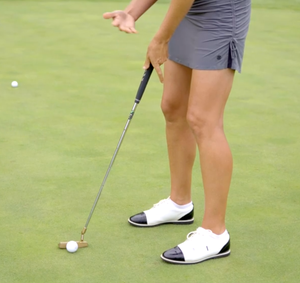
Next, evaluate your putt and assess how large your stroke will need to be in order to roll the ball close. Use your feet as a reference at first, making a stroke from toe to toe. See how far the ball rolls out at that distance and then work from there.


3. Increase length
Start to increase the length of your stroke slightly and make note of how far the ball rolls out. As you start hitting more and more putts, it will be easier to examine how far each size stroke send the balls.


4. Read putt
Now you should be ready to read the putt and make a game plan for your putt. Read your putt and make note of which way the putt will break. Then, aim for the high side of the hole. Always remember that long putts will break more than short putts, so take that into account.

5. Set goal
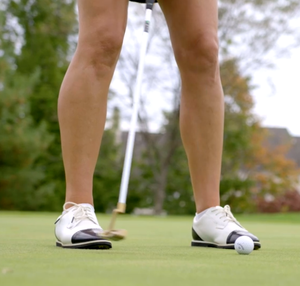
Before you hit the putt, set a goal for yourself near the hole where you want the ball to end up. If you can leave the ball within three feet, you’ll be in excellent position to two-putt and save your par.


