
There are few things in golf more demoralizing than a three-putt. Hitting the green in regulation only to walk away with a bogey is deflating and can halt momentum in any round. Obviously, you want to avoid three-putting, but that’s easier said than done.
On the PGA Tour, even the best in three-putt avoidance still three-putt from time to time. Wyndham Clark led the Tour in this statistical category in 2019, three-putting just 1.44% of the time. However, across the course of 87 rounds — 1,566 holes — that still comes out to 22 three-putts on the season.
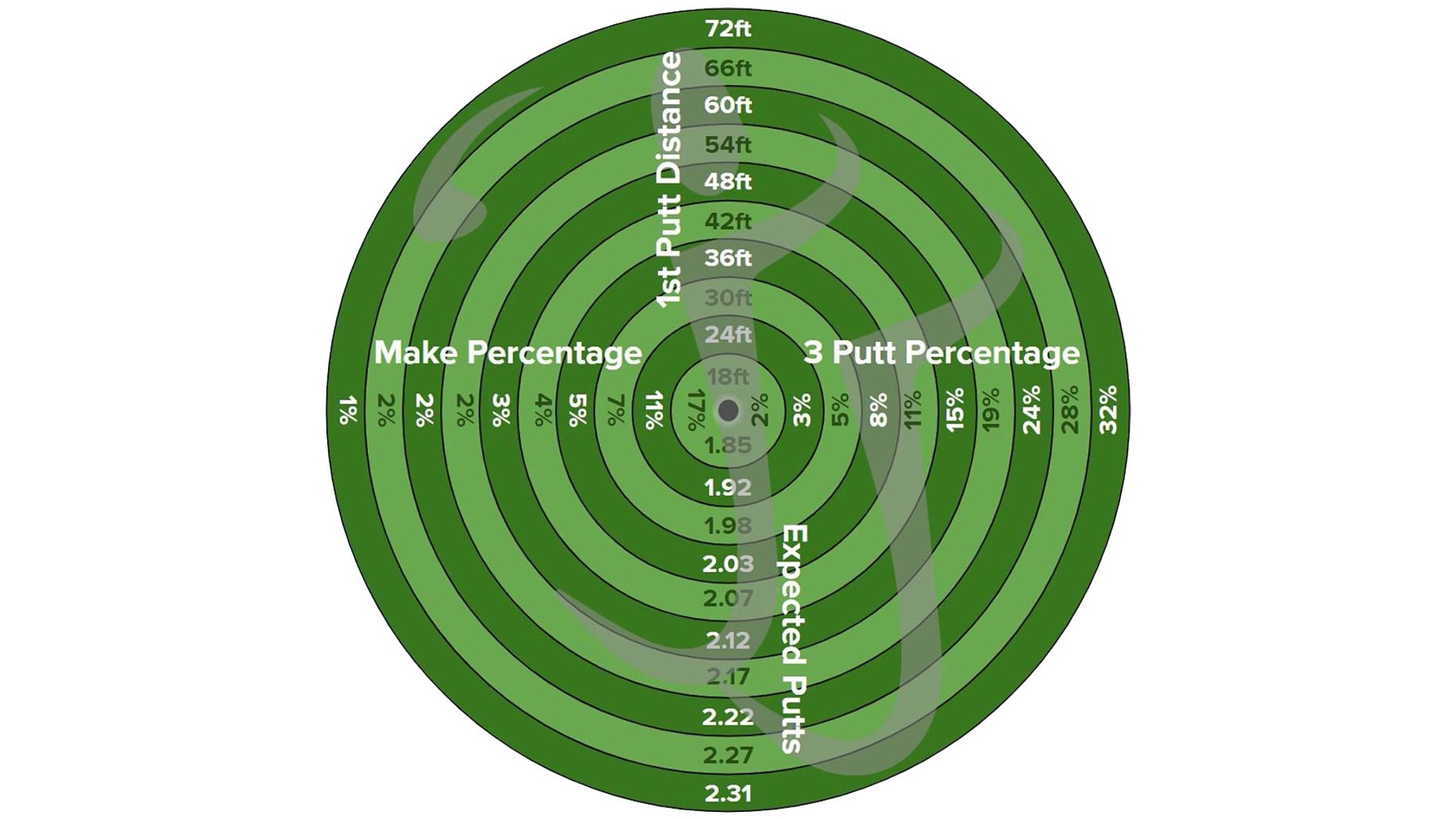
In order to diagnose these issues within your own game, it can be beneficial to look at the data behind it to better understand why they happen. For three-putting, take a look below at this handy chart that putting coach James Jankowski posted on Instagram.
The data is a compilation of PGA Tour data, so it might not extrapolate perfectly to the amateur game, but it is still handy for understanding the general numbers about three-putts.
The chart starts at 18 feet and states that the expected make percentage is 17%, the expected three-putt percentage is 3% and the expected number of putts is 1.85. But as you move farther from the hole, these numbers change drastically. For every six feet farther from the hole you are, you three-putt percentage increases by between 1 and 5 percentage points, topping out at a whopping 32% when 72 feet from the hole.

Another interesting thing to note is that once you get 36 feet from the hole, you are more likely to three-putt than you are to one putt. So while it might be tempting to make a run at a deep bomb, it is more statistically prudent to just lag it close, tap in your shorty and head to the next tee box.
It’s also important to note how crucial proximity to the hole is to three-putt avoidance. It might seem obvious that hitting the ball close to the hole will benefit your game, but this chart helps understand just how important your approach shots are. While practicing your stroke is always beneficial, dialing in your ball-striking can greatly reduce the stress you put on the flat stick as well.


