
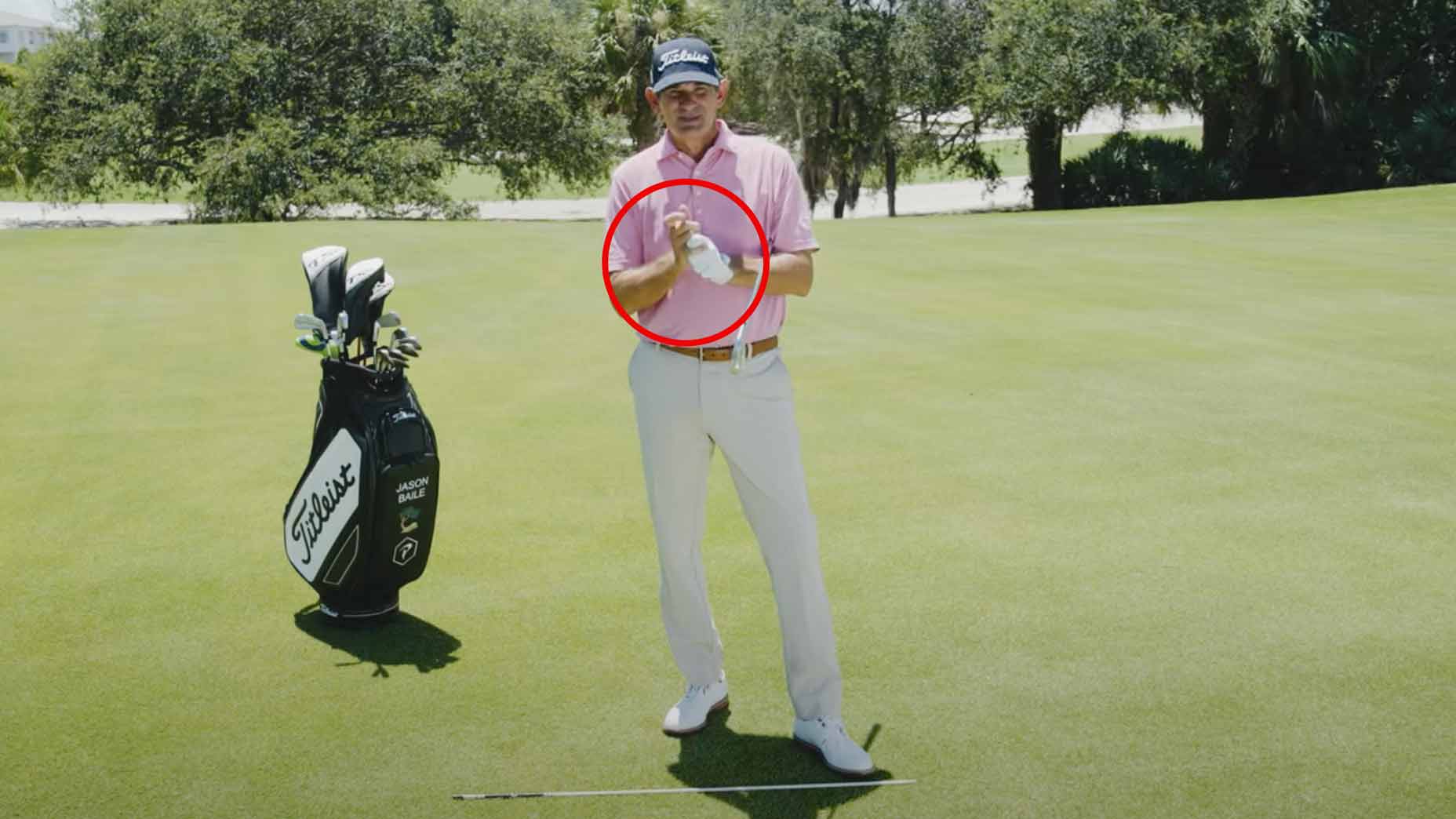
Every person reading this has, presumably, heard the phrase “grip it and rip” when it comes to hitting the golf ball. But does the saying actually hold true, or is it time to rethink the amount of grip pressure you have on the golf club?
Like most of you, I tend to use extreme pressure with most of my clubs — especially the driver and my irons. When it comes to wedges and the putter, though, I tend to loosen things up a bit more, making sure my hands are softer. Even then, though, it still feels foreign to me.
So how much grip pressure should you actually have on the club? GOLF Top 100 Teacher Jason Baile gives a quick refresher in the video below (courtesy of Titleist’s YouTube channel). Check out Baile’s tips to rethink how hard (or how soft) you hold the golf club.
How to dial in your grip pressure

To kick off the video, Baile quotes the legendary Sam Snead, who often said that the grip pressure should be quite fragile.
“Sam Snead once famously said that you should hold [the club] like a baby bird,” Baile begins the video. “I love Sam to death, but I’ve got to disagree with him. If I were a baseball player hitting a 90 mile per hour fastball, the last thing I’d be doing is holding the bat like a baby bird.”
Instead of envisioning a baby bird in your hands during the golf swing, Baile says you must use some grip pressure in order to generate power — but it’s important to determine where you apply it on the golf grip.

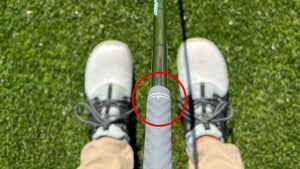
“I want to make sure that I’m applying pressure to the grip, I just don’t want to make that pressure be pushing down,” he explains. “That’s going to send a lot of tension in my forearms, my shoulder, and probably my lower jaw.”
First, as you grip the golf club, remember that it should be supported by the last three fingers of your top hand (the left hand for a right-handed golfer).
Next, Baile says to apply that grip pressure by pulling up with the fingers that are beneath the club, ever so slightly. (The inverse of pulling up with those fingers would be pushing down with the thumbs on the top part of the grip, which is not what you want.) Emphasizing that feel of the weight of the club hanging in those fingers will help you control the clubface better. It should feel as if you’re pulling the grip up towards the middle of your chest. This is going to help the club rotate and pick up speed — while also keeping you free from tension.
“I want to make sure that I have all that grip pressure pulling up. If I pull up into the grip, I can still have supple wrists, elbows, and soft shoulders, yet have really good control of the face,” Baile explains. “When I step in [over the golf ball], I want to feel that grip pressure pulling up with my fingers, relaxing my forearms, my shoulders, and my jaw.”


