
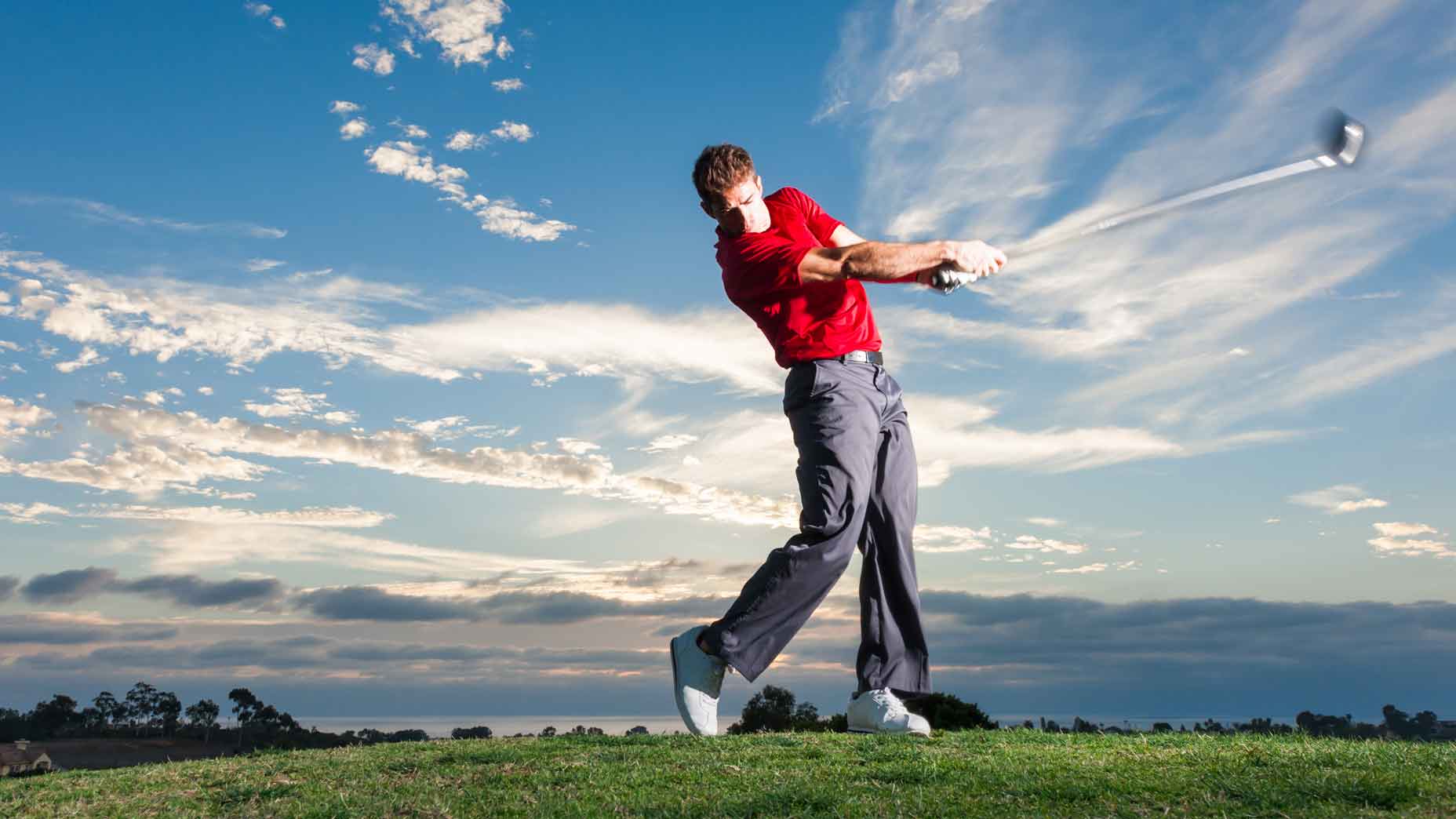
Although the golf swing appears to be all hips and upper body, the best ball-strikers understand how to use their feet with each swing.
Think of it this way: The goal of every swing is to hit it flush, and in order to do that, you need to create as much rotation as possible. This is where having fantastic footwork is imperative, as your feet will allow you to maximize the “coil” motion of your swing, allowing you to load up and increase your distances.
Another way that the feet play a big role in the golf swing is when you’re shaping shots.
While trying this might be an advanced strategy that many mid-to-high handicappers avoid even trying, it’s an important skill to develop if you’re looking to improve your game.
With that, GOLF Top 100 Teacher Josh Zander shows you how to use the lead foot in the golf swing the right way.
Let’s take a look at Zander’s tips below.
How to properly use your lead foot in the golf swing
In the video, Zander provides tips for a student who chronically hooked his shots.
To help correct the problem, Zander says using the lead foot in the golf swing will go a long way in determining where the club face is located at impact. The lead foot can flare in or out.
“The more you flare, the later the club face will close. The more you square-off, the earlier it will close,” he says.
“For example, when I’m trying to hit a hook around a tree, I’ll go ahead and keep my toe in. But if I’m trying to hit a fade, I’ll flare it out.”
In his student’s case, Zander mentions that the player’s lead foot was too square, leading his club face to close too soon, resulting in a hook. By experimenting with how the lead foot is positioned at address, you’ll have more control on where the club face is at impact.
“So play around with your foot flare,” Zander says. “[If you hook], use a little bit more flare to allow the clubface to close later, therefore being square at the moment of strike rather than closed.”


