
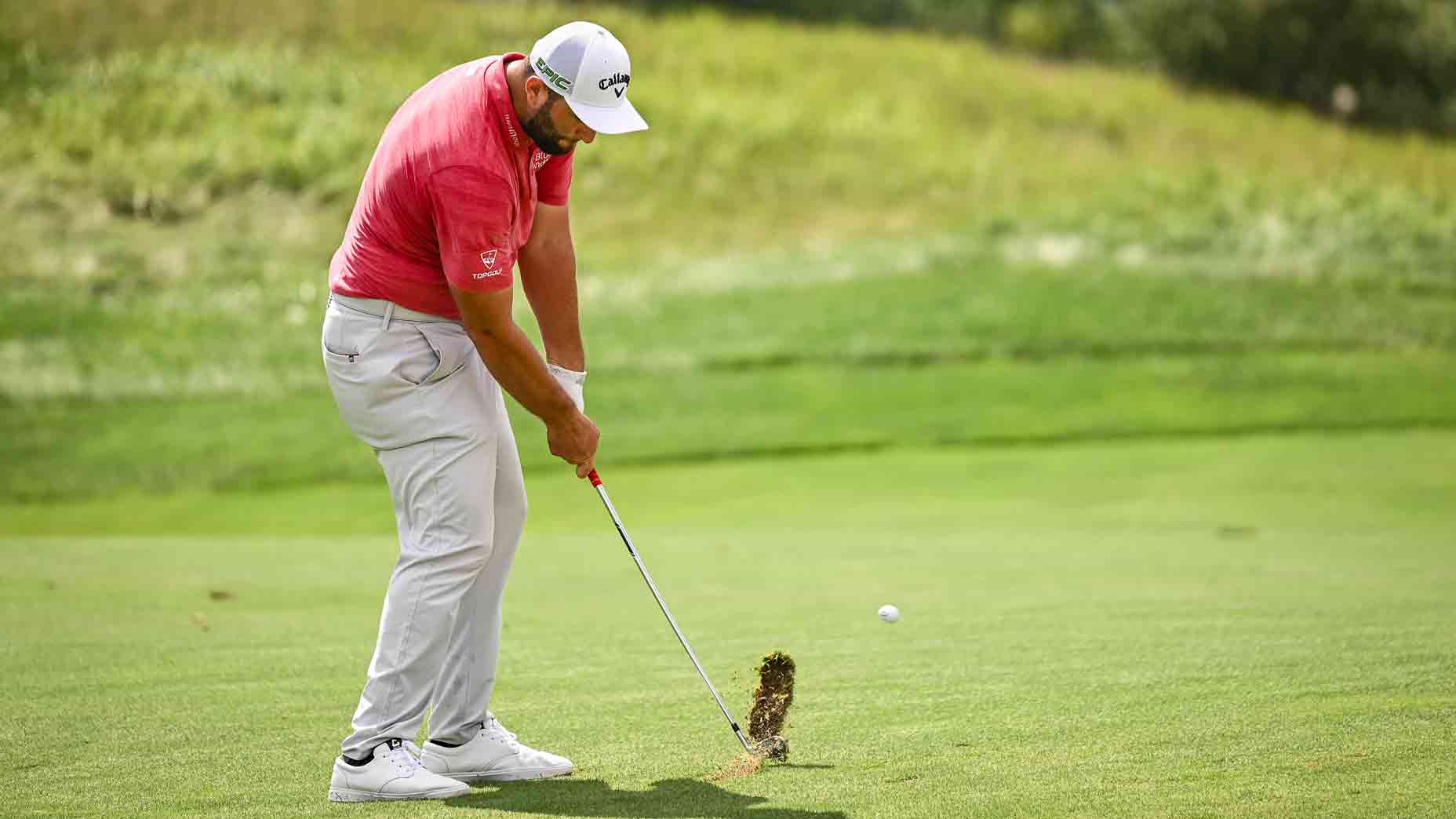
If you’ve ever watched professional golf on TV, you probably noticed something: men and women playing at the highest level tend to take a divot when they hit their irons.
Taking a divot — after impact, not before! — is often the mark of a well-struck shot. It means you’re hitting the ball with a strong, descending blow, and also imparts spin on the ball.
But learning how to take a divot on your own can be difficult. That’s why I turned to Top 100 Teacher Brian Manzella, who shared his best advice.


“What I like to do it take a tee — a broken tee works best — and put it about three or four inches ahead of the ball,” Manzella said. “See if you can hit both the ball and the tee. It’s possible to do it without taking a divot, but the odds are, the focus of not just hitting the ball straight and up in the air, but hitting the ball and then hitting a little stem of a tee on the ground, encourages you to hit down on the ball.”
The secret to this drill, Manzella says, is that you won’t be able to reach the tee if you don’t have your hips, torso and hands far enough forward at impact.
“The sequence should be hips first, chest second, hands last,” Manzella said.
While you can be a good golfer without ever taking a divot, Manzella said that the value of learning to take a divot is that you can then be confident in hitting a solid shot regardless of where your ball lies, whether it’s a hard-pan lie or perfect lie in the fairway.
“If you can hit ball first, you can hit a fairway bunker shot, you can hit anything,” he said. “And really, at the end of the day, you can put golfers into three categories: golfers who can’t hit a right-to-left shot (if they’re right-handed) — the slicers — the people who can but can’t take a divot, and then the people that can and can also take a divot doing it, which is the smallest percentage of people.”
Give Manzella’s tee drill a try to start taking divots today, and for more tips from Manzella, click here.


