

We have all been there. We play well for a few rounds or longer, and then the wheels come off. It is frustrating because you have no idea why, when, or what has happened. Here’s the great news. Many times, the answer lies in the setup. I refer to this as the “silent swing killer” because it is too often overlooked and taken for granted.
Here are four common setup faults and how they can affect your swing.
1. Poor posture
Too much knee flex — When you have too much flex in your knees, the pressure at setup moves too far into the heels. This limits the body’s ability to turn and forces the arms to control the swing too much.
C-posture — I call this the business person’s posture because it resembles sitting in a chair too much. This posture also limits the body’s ability to turn as the pressure is usually on the golfer’s toes. This leads to swaying and inconsistent strikes.
2. Bad alignment
When a player’s alignment gets off, it can cause a host of problems as it changes the swing direction, which can cause hooks or slices. For example, when a right-handed golfer is aimed too far left, sometimes they’ll swing too far to the right and close the clubface, causing hooks. Other times, they will come over the top to offset their alignment and hit pull slices. Make sure your alignment is square on the driving range by practicing with an alignment stick aimed at your target.
3. Incorrect ball position
This is one of the most common faults and can affect all aspects of the golf swing and setup.
Too far from the ball — This forces the player to lean on their toes. Too much weight on the toes reduces the ability to turn. A typical result is an inconsistent direction and or poor contact.
Ball too far forward or back — When the ball position changes, the golfer tends to adjust their upper body alignment. A ball too far forward leads to open shoulders, and too far back tends to close the shoulders. The shoulders’ alignment determines the club’s swing direction, thus changing the curve of the ball.

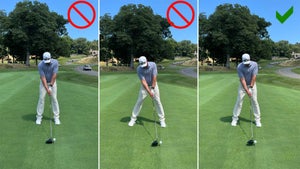
4. Clubface closed or open
The clubface is the most important aspect of the swing all golfers need to control. Poor face control disrupts distance and direction.
How a golfer places their hands on the club is important. However, I find many golfers start with a closed club face at address, typically compensating for a slice. My issue with closing the face at setup is it doesn’t let the golfer improve; it’s only a Band-Aid. Which I’m okay with to get through the round, but not on a long-term basis. A properly square clubface happens when the clubhead’s leading edge lines up with the shaft. This is best viewed by holding the club up in front of you.
If you find you are not playing as well as you recently were, take a moment to look at your setup in a mirror, or have one of the pro’s take a quick look. Even a 30-minute lesson to check on everything may prevent a disaster or help fix one.
Kevin Sprecher is a GOLF Top 100 Teacher and is the director of instruction at Sleepy Hollow GC in Briarcliff Manor, N.Y.


