

For golfers, age brings wisdom … and a greater chance of rotator cuff pathologies. Sports with repetitive overhead motions, like golf and baseball, often have higher incidents of tears and bursitis, and older people are already susceptible to these issues. The good news: With common sense, training and physical therapy, most rotator cuff injuries won’t prove as impactful as their reputation suggests.
Symptoms: Rotator cuff pain isn’t generally felt at the rotator cuff itself. Instead, you’ll feel discomfort not deep in the shoulder but rather on the outside of the upper trail arm, usually at the top of the backswing but sometimes accelerating on the downswing. This comes from an impingement of the rotator cuff or its being overloaded.

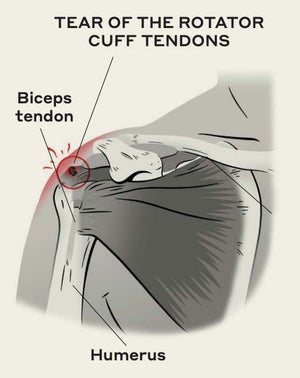
Self-Care: Prevention remains the best medicine. Golfers are good about limbering up their back prior to play. That’s great, but you need to think of yourself like a baseball pitcher and both train and warm up the entire shoulder musculature so it can withstand golf ’s stresses. Google “the Thrower’s Ten” exercise program and get cracking on internal and external rotation strengthening. Once you experience shoulder discomfort, use common sense. Rest and ice and, if needed, an over-the-counter anti-inflammatory should reduce the swelling; combined with strengthening exercises, you can expect improvement in three to seven days.
Doctor Visit: If after two weeks of doing all the right things, the pain persists and starts crossing over into daily life, go see your doctor. The exam usually entails an X-ray (or, with lots of pain and/or other possible pathologies, an MRI); if it’s bursitis or tendinitis, a cortisone injection can shut down the inflammation 1-2-3. Sometimes, even with tears, physical therapy and building up the accessory muscles suffice as a sort of workaround. Surgery is a last resort. Larger tears in older patients tend to result in more dysfunction and weakness typically requiring operative intervention. There is still a high success rate with nonoperative treatment if you do everything else you should.
Related Articles


