
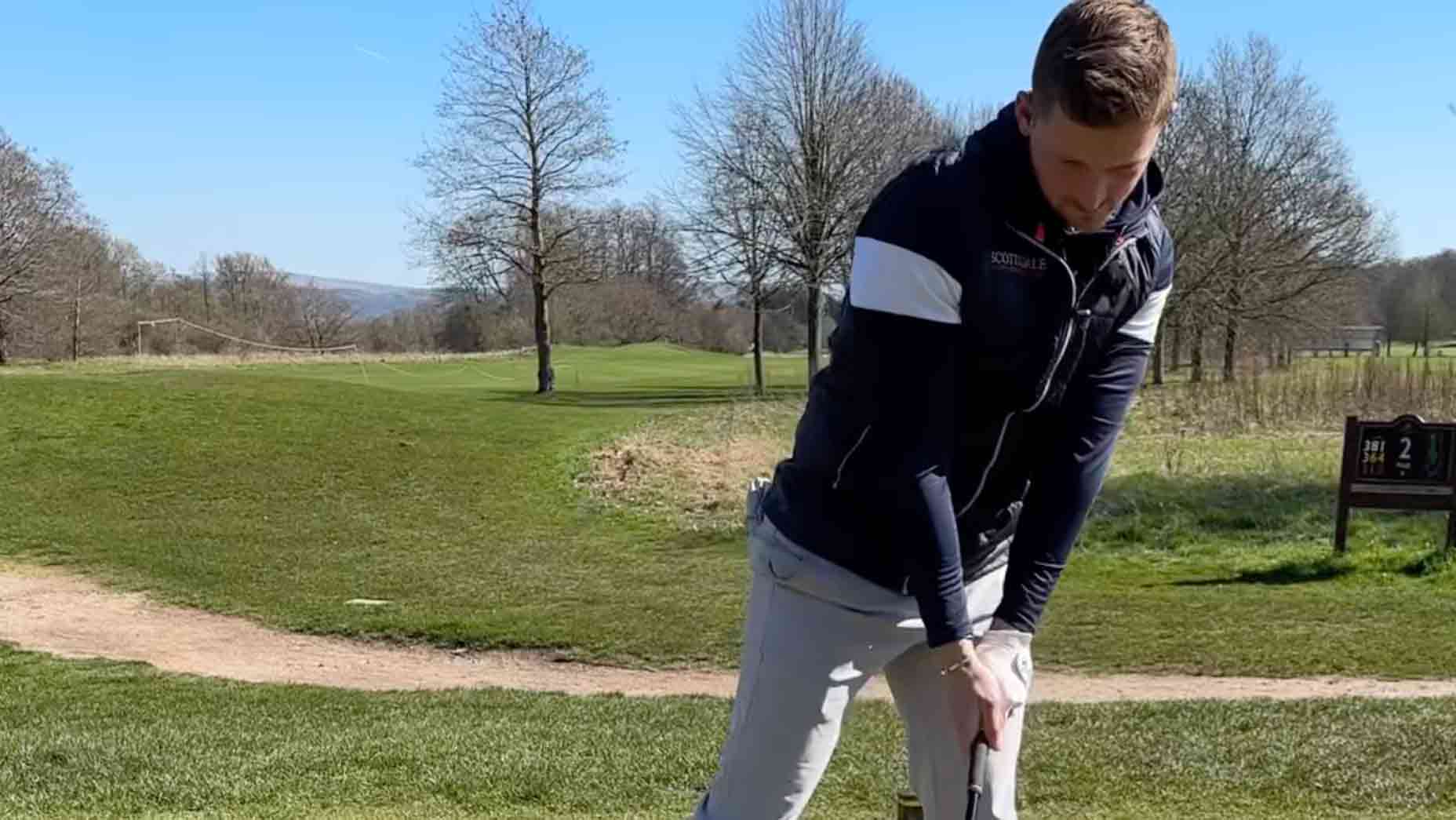
Gaining confidence with your driver requires practice, patience and an understanding of the mechanical issues you’re incorporating every swing.
For instance, until recently, I never used an open stance with my driver. After implementing it into my setup, I’m starting to see better contact — resulting in longer, straighter shots.


I was always sacrificing distance for comfort off the tee. With two bad shoulders, my weight wasn’t properly distributed, so I was falling forward, forcing my hands to try and catch up with the rest of my body. Naturally, this would lead to mishits, shanks and slices.
While every golfer has a different type of swing, the one constant is this: We all try to square the clubface upon impact. That’s the secret sauce.
To help players who struggle to do this consistently with a driver, instructor Alex Elliott offers some easy tips via Instagram. Take a look at what Elliott suggests if you feel your weight go too far forward when on the tee box.
Try this for better weight distribution with your driver
In the video above, Elliott says the No. 1 thing players must learn how to do is “hit the ball on the up.” So what does this mean? It means maximizing your distance by creating the optimal launch and spin conditions with your driver’s clubface.
Of course, that’s what every amateur wants. So how can we make it happen?
According to Elliott, the first thing you’ll want to do is to place a club to the inside of your left heel on the ground (for right-handed players). Now make it a fist-width from your foot, as seen in the photo below.


Next, Elliott discusses how the club on the ground should stay centered with your sternum as you swing through. If your chest gets too far over the club, it means you’re swinging down on the ball — which is costing you distance and accuracy.
To help correct this issue, be sure to keep your left ear behind the golf club on the ground. By doing this, the spine is tilted back, providing better posture through your swing — which puts you in position to slightly swing upwards.


As the image above shows, Elliott keeps his upper body behind the club on the ground, which stabilizes his swing sequence and provides him the opportunity to drive his club through the golf ball.
Give this drill a go on your next visit to the driving range and start to see how it can help you hit those bombs you’re seeing the pros hit on Sunday afternoons.


