
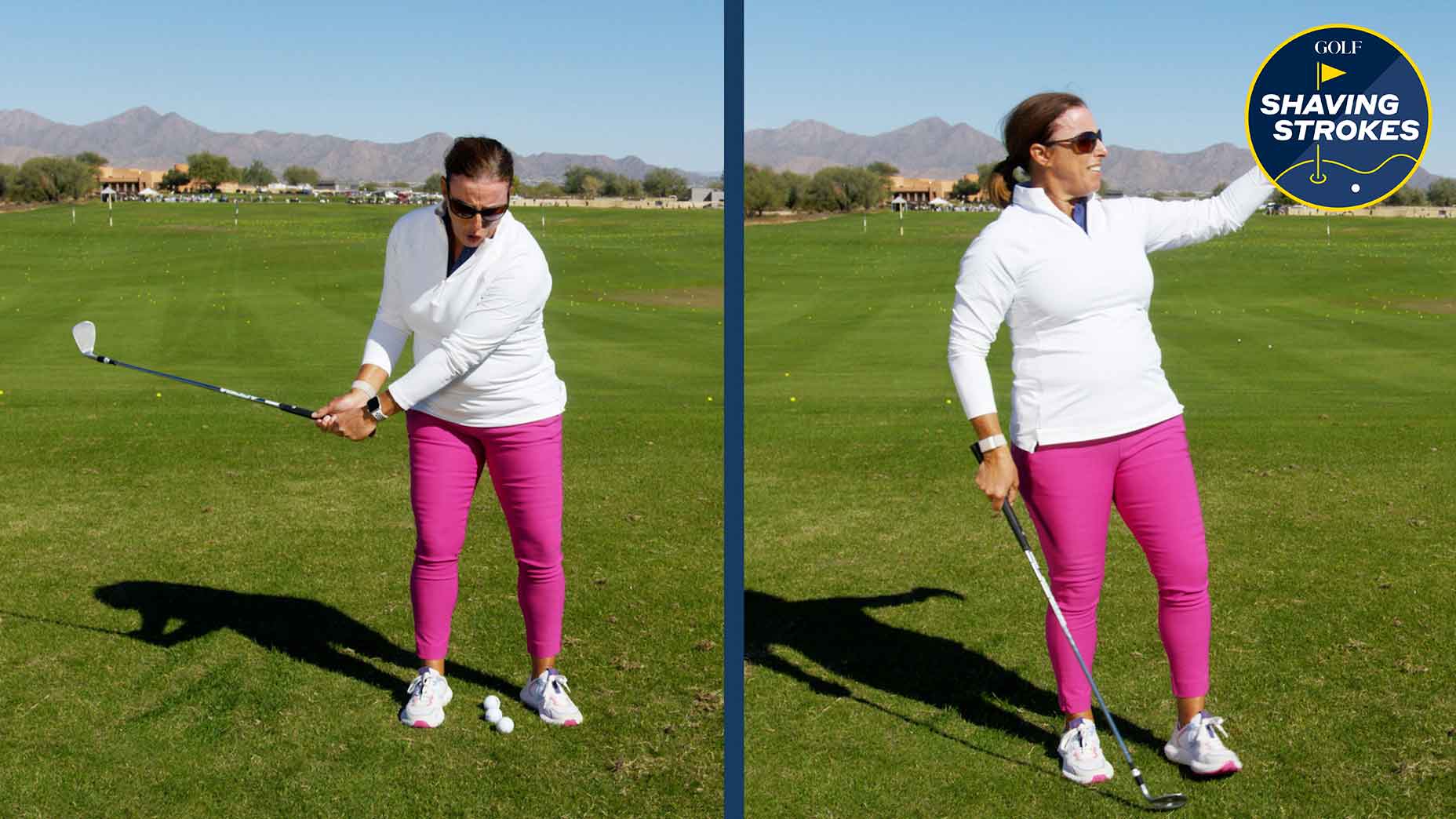
Welcome to Shaving Strokes, a new GOLF.com series in which we’re sharing improvements, learnings and takeaways from amateur golfers just like you — including some of the speed bumps and challenges they faced along the way.
Ball flight can be a tricky proposition for a lot of amateur players. That’s because it takes some practice to understand how the swing should look in order to hit the shot you want to.
For example, you might be playing the smart shot by using a bump and run around the greens — allowing your ball to stay low and roll toward the pin. But when you go to execute it, your backswing is too long and your follow through is compromised by stopping short.

If you’re guilty of doing something like this, you know how the shot typically ends up: Not good.
On the contrary, what if you need to hit a shot with a higher ball flight in order to clear an obstacle like a tree? Most amateurs make the mistake of leaning back to try and get beneath the ball — believing that it will help add loft.
In reality, you need to know how to swing correctly in order to add height; along with choosing the right club for the shot.
To better understand how to control ball flights, Christy Longfield, the Director of Instruction at Spanish Oaks Golf Club, shares an easy-to-understand practice tip in the video above.
According to Longfield, learning how to execute different ball flights “doesn’t take a lot of practice, you just need to understand backswing and follow through.”
She continues by demonstrating how to flight your wedges low, medium and high.
“When we want to hit something low, I want you to think of something very simple; low backswing, low follow through,” she says. “This will bring the trajectory down.
“If we want to go higher with the flight and land it softer, we’re going to go higher backswing and higher follow through.”

If you’re struggling with how to gauge your golf swing to control your ball flight, here’s a good tip.
For low flight, try keeping both the backswing and follow through at about knee height. For a medium flight, try going waist high for each. And for high ball flight, you’ll want to go shoulder height.
By following the above advice, you’ll have better command of your ball flights, which should put you in better position to shoot lower scores.

View Product


