Finally a membership that pays for itself.

InsideGOLF Premium
Instruction

Follow these 2 straightforward steps to find out your natural swing path

matthew wolff swings

Everyone has their own unique swing.

Getty Images

GOLF Hall of Fame Teacher Mike Adams has been a pioneering voice in instruction for four decades. One of his most helpful lessons is rooted in an oft-asked question: How does arm length affect swing plane?

Based on years of research, Adams found that golfers whose forearms are shorter than their upper arms need to swing more around their body, getting the club shaft to a “flatter” position at the top of the backswing. Players with longer forearms should elevate the club in a more upright position. What’s your natural swing? Take the following test.

1.

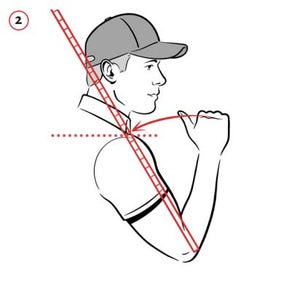
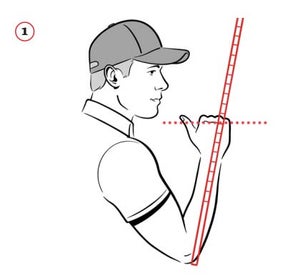
Hinge your right arm at the elbow, with your thumb in a hitchhiker’s position.

2.

Look at your thumb relative to the top of your right shoulder. If it’s even or below your delt (1), you’re a candidate for a flatter backswing. If it’s hovering above (2), start experimenting with a steeper swing.

Related Articles

Instruction
6 positions from J.J. Spaun's swing that every golfer should copy
By: Brian Manzella
Instruction
Why poor setup may be causing one of the most common golf-swing faults
By: Zephyr Melton
Instruction
Nelly Korda's risky grip change paid off — but she wouldn't recommend it
By: Zephyr Melton
Instruction
Improve putting alignment by changing how you look at the hole
By: Maddi MacClurg
Short Game
Insiders Only 5 mistakes with wedges that cost golfers the most shots
By: Kellie Stenzel, Top 100 Teacher
Instruction
Why you aren't compressing your irons and how to fix it
By: Maddi MacClurg
Instruction
This high-tech app exposes the biggest flaws in your golf swing
By: Zephyr Melton
Instruction
What amateurs can learn from Brooke Henderson's warm-up routine
By: Maddi MacClurg
Driving
Insiders Only Greg Norman's 3 best power tips for golfers who hit it short and straight
By: Zephyr Melton
was:
Exit mobile version