
Welcome to Gear 101, GOLF.com’s weekly dive into an equipment topic that will make you smarter and more knowledgeable when it comes to the tools in your bag. We continue with the role a wedge grind can play in improving your short game.
Not all 56-degree wedges are created equal. This has nothing to do with the head material or groove configuration, but rather the grind found on your trusty wedge. These days, nearly every equipment manufacturer offers at least a handful of grind options to satisfy every conceivable short game need on the planet.
From the “digger” to the “sweeper,” it’s important to not only pay attention to your loft gaps but the grinds in your bag. In layman’s terms, the “grind” on your wedge is the geometry of the sole, which can be manipulated by removing (grinding off) material from the heel, toe, trailing edge and leading edge to perfect how the club interacts with the turf. (This is a process that should only be done by a certified clubmaker, so don’t get any ideas of grinding your wedges at home. You’ll ruin them.)


Depending on where material is removed from the sole, a particular wedge can benefit a golfer with a steep or shallow swing. If you’re unsure of the grind needed for your swing, get a certified clubfitter involved. It’s the easiest way to guarantee you’re not paying for something that’s ill-fitting.
If you want to do your own research before seeking out a fitter, follow this general rule of thumb: a wide-soled wedge with more bounce and camber (the curvature from the leading to trailing edge on the sole) is a good option if you tend to have a steep angle of attack and take significant divots.
If you’re someone with a shallow angle of attack who tends to sweep the ball, finding a wedge with a narrower sole — some will have material removed around the toe, heel and trailing edge to create a narrow low bounce sole — will certainly benefit your short game.
Course conditions can also play a role in the grind you select: low bounce with a leading edge that sits tight on the turf for firm conditions; more bounce for soft conditions. If you’re feeling a little uncertain about the process and everything that’s involved with finding the ideal bounce and grind, just know that most of today’s wedge are packed with the kind of versatility that allows golfers to essentially get two wedges in one.
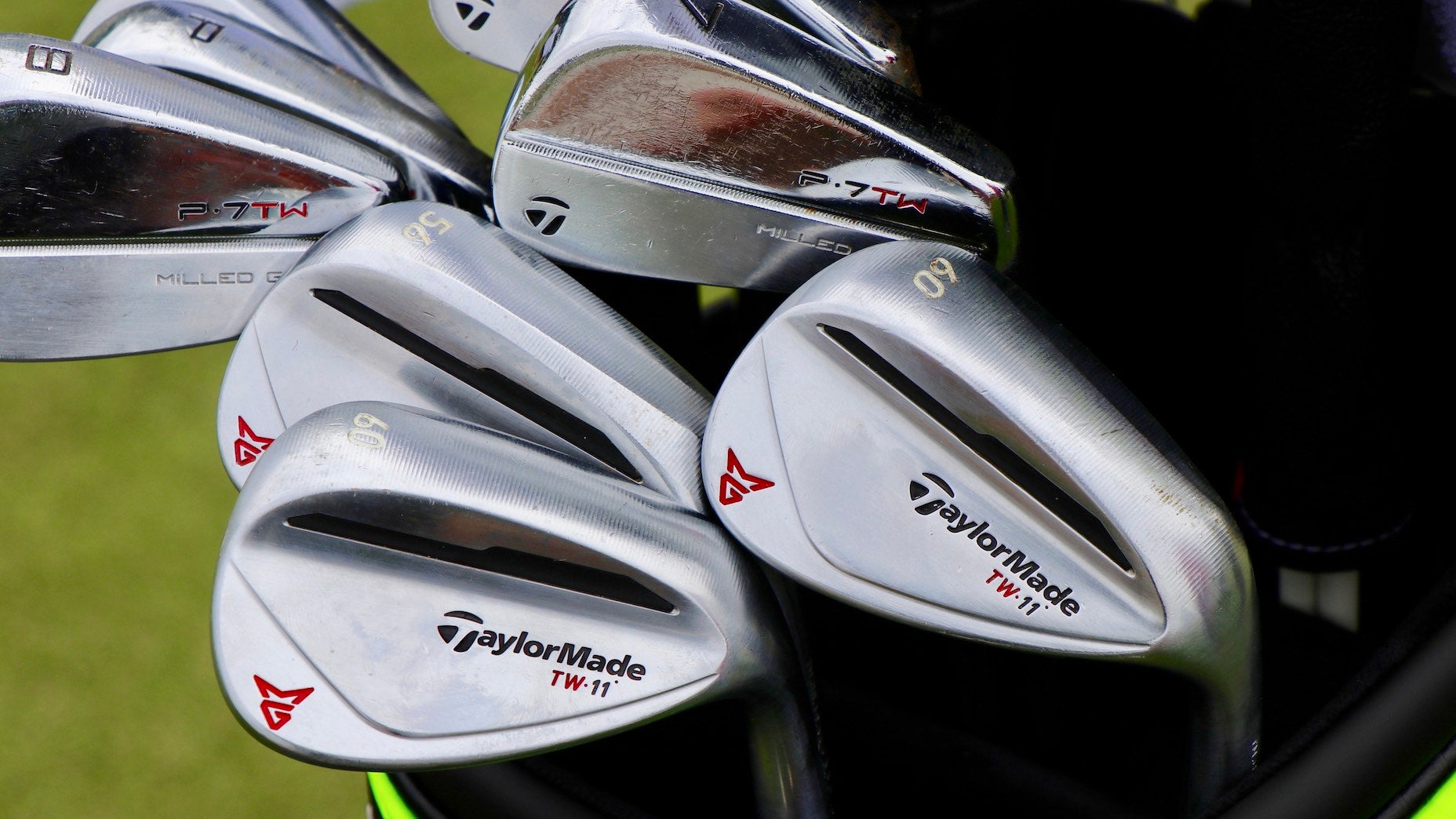
For example, Tiger Woods’ TaylorMade Milled Grind 2 lob wedge has an overall bounce of 11 degrees when it’s square to the target, but with a shaved down heel, it’s possible for him to open the face to hit extreme flop shots with a bounce that measures just four degrees. All of this is possible thanks to the grind.
So the next time you’re in the market for a wedge, pay close attention to the sole. It’s a vital part of the wedge fitting process that needs to be considered.


