
It’s one of golf’s greatest silver linings: a wayward drive lost in the woods results in a pocket’s full of found balls. Some of them good, new and happy to have been found. Others that were lost for years and were resting comfortably, if deteriorating.
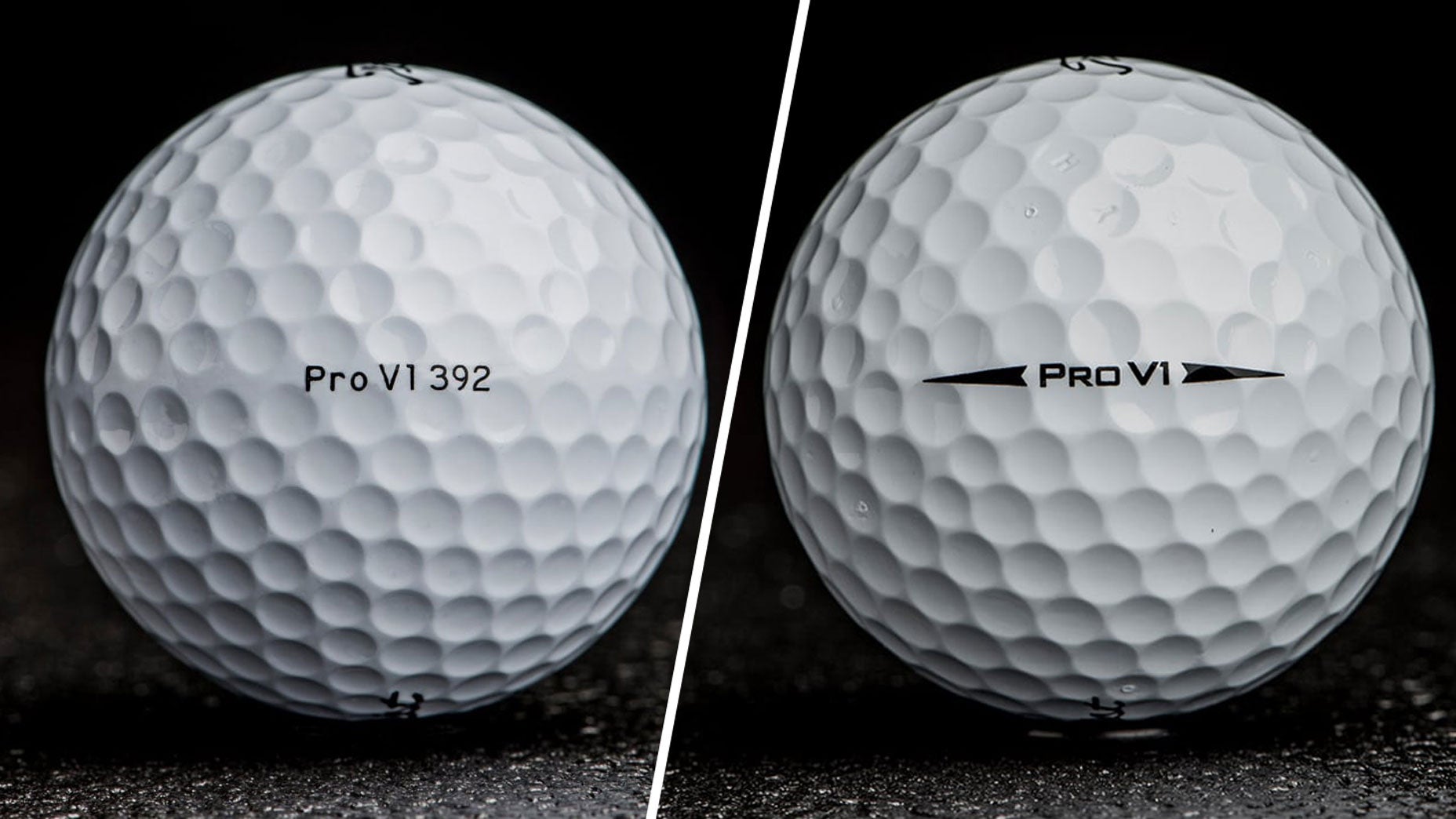
On occasion, you find a gem. Like, say, a Titleist Pro V1. What a score! That is, as long as it’s a new one, right? Well, you may want to bookmark this handy tweet from Golf Balls Gone By that will tell you just how old your Pro V1 is.
For starters, finally some clarity on that classic bar-trivia question: How many dimples on a golf ball? At least at the outset of Titleist’s production of the Pro V1, that number was 392. As you can see by reading through the progression, that number changed to 332 when the company launched the Pro V1x.
Over the years, the brand has stuck with tradition and kept things straightforward and clean with its most top-shelf ball. If you find a ball that has “392” stamped on it, trust that it’s at least 14 years old. But the subtle differences in the past decade are certainly worth knowing as well.
Notice the slight difference between the 2011 ball and the 2018 version. The elongated arrows are similar, and yet there’s at least six years worth of technology — as well as sitting in the woods, a box, etc. — between the two. Will it still go plenty far and spin a lot? Yes.


For the most part, golfers use the side stamp to line up putts or tee shots.
“Based on our player research and testing, we know that the overwhelming majority of golfers today are interacting with the sidestamp on their golf ball at some point during the round,” Frederick Waddell, Titleist’s senior golf ball product manager, told my colleague Jonathan Wall. “But that’s not anything new. We’ve been incorporating alignment features into our Pro V1 models and implementing the feedback of tour players and dedicated golfers going back to 2002.”
A grey-arrowed Pro V1 narrows the gap a little bit — it’s definitely on the new end of the spectrum — but it could be from 2013 … or absolutely brand new. Or if there’s a tiny gap within the arrow, it’s from 2015-16, and was the ball Jordan Spieth used to chase the calendar year Grand Slam.
So, now you know how to identify the age of your Pro V1s. Simple, right? Or at least simple-ish. By the way, if you routinely use balls you find in the woods, be sure you look for a few things on the cover before putting that semi-worn ball back in play. It could save you some headaches (and strokes) on the course.
For a clearer look at how the Pro V1 and Pro V1x have evolved over time, check out Titleist’s timeline here. To pick up a case of the the latest model, click below.


View Product


