
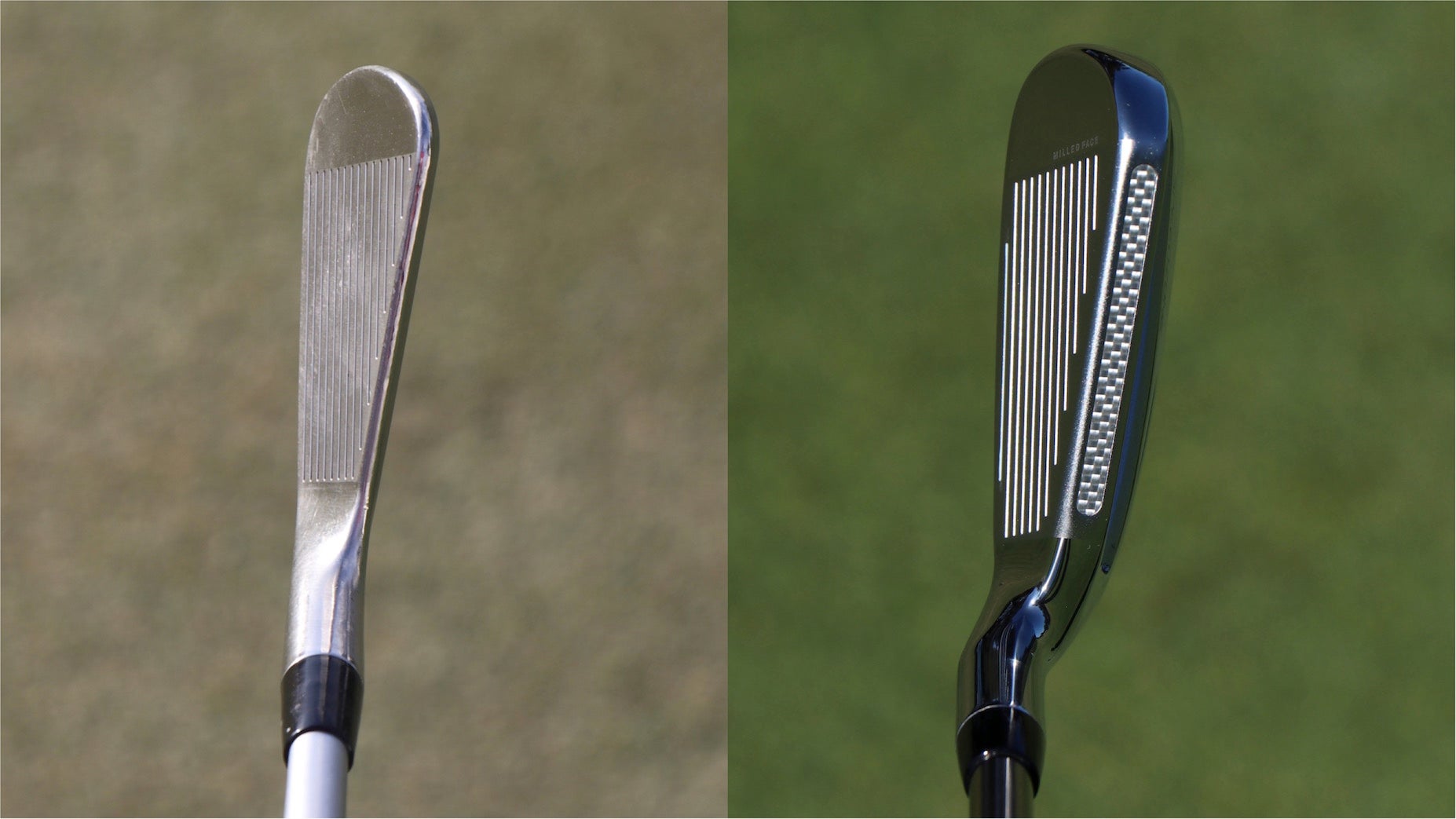
Golf club manufacturers constantly reference two essential terms in relation to new products: CG and MOI. Since we’ve already covered the basics of CG (center of gravity), it’s time to nail down MOI.
MOI is an acronym that stands for “moment of inertia.” This measurement (grams per centimeter squared) shows how much resistance a clubhead has to twisting. The higher the MOI reading, the more resistance it has and the more forgiving the club will play.
For most golfers, high MOI is a good thing.
Typically, when a golf ball is hit on the toe of a club, the face gets twisted open; when it hits the heel, the face gets twisted closed. The result is a golf ball that flies offline and with less speed. A high MOI golf club, however, resists that twist and reduces the effect of a mishit.

In driver design, most club manufacturers try to get CG low and rearward. By placing weight far away from the face, the design will reduce twisting at impact. The result is a more forgiving club head that produces more spin and higher launch.

While most golfers relate MOI only to driver designs, it can actually be helpful on all clubs through the bag. The higher MOI your irons have, the more stable they become at impact and the better chance you have at hitting them online and the correct distance. Even when it comes to putters, high MOI mallet designs (or blade styles with heel-and-toe weighting) can help the ball roll online without losing much speed on putts hit off-center.
High MOI isn’t always ideal for ALL golfers, however. Highly skilled players, such as PGA Tour pros, often opt for clubs — especially irons — with a bit less MOI, or forgiveness. That’s because less twisting of the face actually reduces the ability to hit draws and fades on purpose.

Many PGA Tour pros and better players use blade irons or sleek cavity-back designs that are made for workability. Essentially, to work the ball left or right, skilled players hit controlled mishits to manipulate spin and launch. High MOI simply hinders that ability.
Think about it like this: A high MOI golf club is like a four-door sedan, while a lower MOI club is like a sports car. The four-door sedan is easy to drive and control going into turns. The sports car, on the other hand, allows the driver to take tighter turns at faster speeds, but it’s more difficult to control.

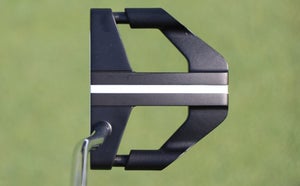
Most amateur golfers want the four-door sedan of golf clubs; high MOI and built for forgiveness. The high MOI club will be more stable at impact, and you won’t lose ball speed on those inevitable shots hit off-center.
Leave the low-MOI designs to the professionals; they’re the ones racing metaphorical sports cars out on Tour.
To hear more gear insights from Jonathan Wall and True Spec’s Tim Briand, subscribe and listen each week to GOLF’s Fully Equipped podcast: iTunes | SoundCloud | Spotify | Stitcher


